I once convinced myself that I could become a coffee roasting savant in the confines of my kitchen. Picture this: a naive optimist armed with a popcorn popper and some green beans, ready to revolutionize the morning ritual. Predictably, what ensued was a symphony of smoke alarms and a floor strewn with charred hopes. Turns out, transforming raw beans into liquid gold isn’t as straightforward as flipping a switch. But, like any good suburban misadventure, it offered a rich tapestry of lessons wrapped in the scent of burnt ambition.
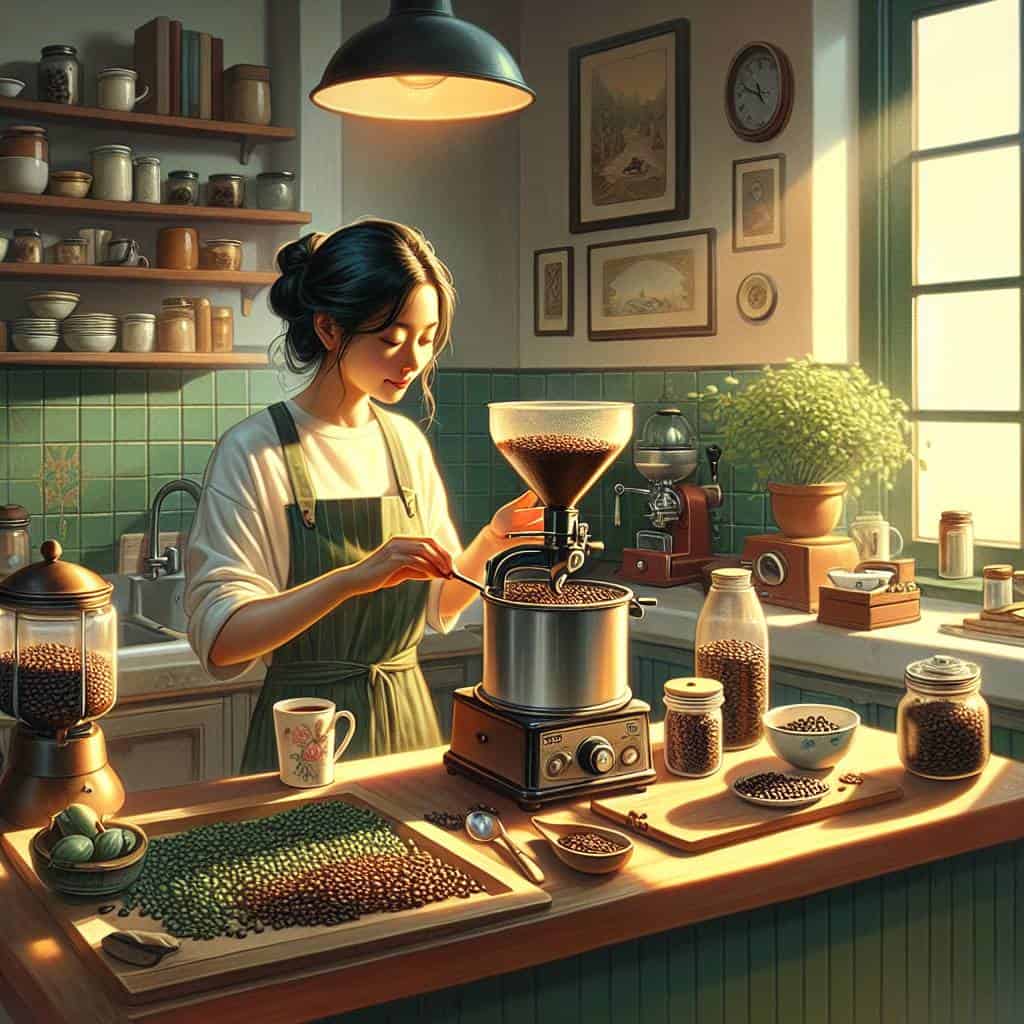
So, if you’re still intrigued by the art of home coffee roasting, despite my cautionary tale, let’s dive into the nitty-gritty. Sure, there’ll be more smoke and possibly a few tears, but also the promise of better mornings. We’ll explore the quirks of green beans, the peculiarities of roasting machines, and maybe even find a way to make it all feel a little less like a chaotic science fair project. This isn’t just about coffee; it’s about embracing the mess and finding joy in the unexpected twists.
Table of Contents
An Introduction to home coffee roasting
Picture this: It’s a quiet Sunday morning, and I’ve decided to embark on a quest that promises both adventure and caffeine. I’m talking about roasting coffee beans right in my own kitchen. Now, before you imagine sophisticated machinery and lab coats, let me break it to you—home coffee roasting is more like a mad scientist experiment than a refined culinary art. We’re talking green beans that look suspiciously like peas, a popcorn machine (yes, really), and the ever-present possibility of setting off the smoke alarm. But the allure? The moment those beans start to crackle and pop, releasing their intoxicating aroma, you’ll know you’re onto something extraordinary—albeit slightly chaotic.
Now, there’s a wild charm in turning unassuming green beans into the rich, brown nectar of life. It’s not just about the coffee; it’s about the journey. You start with these raw, unroasted beans that, frankly, don’t look much like the coffee we know and love. And then, with a bit of heat and a lot of patience, they transform. The process is a dance of time and temperature, where each decision—when to start, when to stop—shapes the flavor profile. Do you want a light roast that sings with floral notes? Or a dark roast that wraps you in a warm, smoky hug? The choice, and the power, is all yours. Just remember, this is no place for perfection. Embrace the mess, the learning curves, and the occasional smoke-filled kitchen. That’s where the magic happens.
Key Considerations and Final Thoughts
Roasting coffee at home is like embarking on a culinary odyssey, one that promises both triumphs and disasters in equal measure. The first key consideration is the green beans themselves. They’re the blank canvas of your coffee masterpiece, and choosing the right ones is as much an art as the roasting process. You might find yourself lost in a sea of options—Ethiopian, Colombian, or maybe something from a small farm in Guatemala. Each origin offers its own unique tapestry of flavors and aromas, and it’s your job to unravel them. The thrill is in the experimentation, the trial and error that leads you to that perfect cup. But beware: not all beans are created equal, and the temptation to buy in bulk can lead to stashes of stale beans mocking you from the pantry.
Then there’s the machine—or lack thereof. You could go the purist route, wielding a cast iron skillet over a stovetop, intimate and unpredictable, like a jazz improvisation. Or perhaps you invest in a dedicated roasting machine, a gadget with enough dials and buttons to satisfy even the most ardent technophile. Each method has its own learning curve, its own quirks. And don’t forget the smoke. Oh, the smoke. Roasting coffee in your kitchen can quickly transform your home into a scene from a disaster movie, complete with frantic waving of dish towels to silence the smoke detector. But here’s the thing: after your senses have been overwhelmed, after you’ve tasted the bitter, the burnt, and occasionally, the sublime, you’ll find a simple truth. The journey, the act of creation, is its own reward. So, grab your beans, embrace the chaos, and let each batch tell its own story.
The Bean Whisperer’s Wisdom
In the art of home coffee roasting, it’s not the gleaming machine or the exotic green beans that define your brew, but the imperfect dance between anticipation and aroma.
When Green Beans Meet the Machine
I still remember the first time I heard that satisfying crackle, as the green beans surrendered to the heat of the machine. It wasn’t just the coffee that was transforming; it was me. The process felt like alchemy, a delicate dance of timing and temperature. Each batch was a new experiment, a lesson in patience and unpredictability. I learned more from the beans that turned too dark and the ones that never quite made it to a rich brown. They were reminders that perfection is overrated, and sometimes, the beauty lies in the journey.
But here’s the thing: home coffee roasting, with all its trial and error, reminds me a bit of exploring the unexpected corners of life, like stumbling upon a hidden gem in a bustling city. Take Oviedo, for instance. It’s not just about the historic architecture or the cobblestone streets. It’s about the vibrant, sometimes secretive, life that pulses underneath. And if you’re curious enough to dig deeper, you might just find yourself chatting away with fascinating people in unexpected places. Speaking of which, if you’re ever in the mood for something a bit more adventurous, the Putas de Oviedo platform offers a unique way to connect with some intriguing personalities. It’s like finding that perfect roast amidst the chaos—once you discover it, you wonder how you ever lived without it.
This hobby, if you can call it that, became a reflection of life itself: unpredictable and a little messy. My kitchen was often filled with smoke and laughter, as friends gathered to share in the chaos. We sipped our imperfect brews, each cup a testament to the quirks and imperfections that make us human. Home coffee roasting taught me to embrace the unexpected, to find joy in the process rather than the outcome. And as I sit here, sipping a cup that I might have over-roasted just a tad, I realize that the true reward isn’t the perfect cup—it’s the stories we brew along the way.
