
In the late 1980s, the National Alliance on Mental Illness (NAMI) made a big step. They aired public service announcements that really brought mental health into the spotlight. This was just the start of a long journey to raise awareness about mental health.
Every campaign, from Mental Illness Awareness Week to the ‘You Are Not Alone’ campaign, helped change how we see wellness and psychology. These efforts have made a big difference over the years.
Advocates have fought hard against social stigma and fought for the rights of those with mental illness. Groups like NAMI have shared personal stories and highlighted the complexity of mental health. This shows how society is changing and how important it is to talk about mental health.
As we explore this topic, it’s clear that understanding mental health is an ongoing journey. Our conversations about psychology are more important than ever.
Key Takeaways
- 1984 marked a significant milestone with NAMI’s first public service announcements aimed at raising mental health awareness.
- The 1990s brought national attention to brain research, recognizing mental health as a fundamental public health issue.
- NAMI’s Campaign to End Discrimination initiated a critical movement against stigmatizing serious mental illnesses.
- Starting in 2010, a shift to positive storytelling has encouraged sharing stories of hope and recovery in mental health.
- The Movement for Global Mental Health was launched to address treatment gaps for mental disorders worldwide.
The Evolution of Mental Health Awareness
The journey toward better Mental Health Awareness has changed a lot over time. Looking at its history shows how advocacy and activism have shaped our views on mental health. Early leaders like Clifford W. Beers helped start conversations and education about mental health.
Historical Context and Early Advocacies
Clifford W. Beers changed the game after seeing the harsh treatment in mental institutions in the early 1900s. His book, A Mind That Found Itself, published in 1908, exposed the mistreatment of those with mental illnesses. This sparked a movement for change.
In 1909, he co-founded the National Committee for Mental Hygiene, now Mental Health America. This group has taught millions about mental health, helping to remove barriers to care. The Mental Health Bell symbolizes the movement’s goal to support those with mental health issues.
Grassroots Campaigns and Public Engagement
Grassroots efforts have been key in raising Mental Health Awareness. Groups like NAMI have led the way through advocacy and public outreach. Their 1996 “Campaign to End Discrimination” aimed to show mental illness as a real medical issue.
This shift in how we view mental health has been helped by social media. It allows people to share their stories, making mental health discussions more common and accepted.
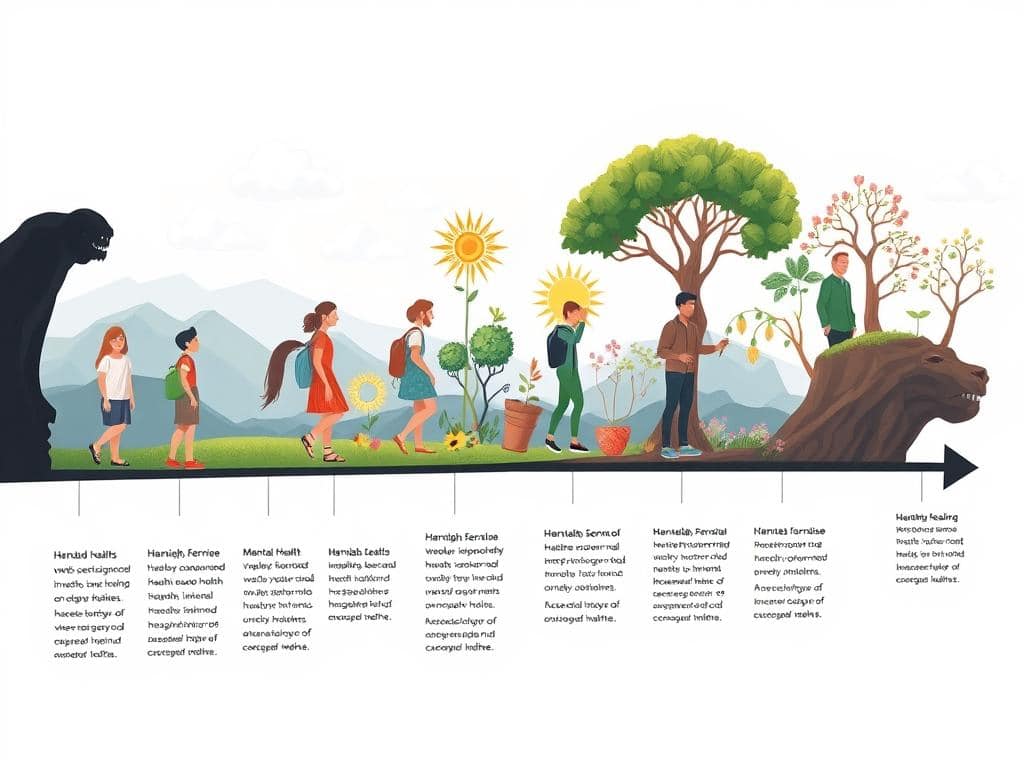
Mental Health Awareness in Contemporary Society
In recent years, mental health has become a hot topic. Celebrities have played a big role in raising awareness. They use their platforms to talk about their mental health struggles, helping others feel more comfortable talking about theirs.
This shift shows how society is changing. We’re moving towards a place where mental health is valued as much as physical health. This is thanks to the efforts of celebrities and the changing views of younger generations.
Celebrity Influence and Public Platforms
Celebrities like Simone Biles and Naomi Osaka have made a big impact. They’ve talked openly about their mental health, even when it’s hard. This has started important conversations on social media.
By sharing their struggles, they’ve helped break down the stigma around mental health. They show that success and well-being aren’t just about achievements. It’s about taking care of your mind too.
Generational Shifts in Mental Health Perspectives
Younger generations, like Gen Z, are changing how we see mental health. They’re more open about seeking help and talking about their feelings. This is a big change from past generations.
The pandemic has made them realize how important mental health is. Social media, like TikTok, has become a place for sharing mental health stories and resources. This helps create a supportive community around mental health.
Conclusion
The Mental Health Movement is a big change in how we see mental health. It shows how far we’ve come in understanding and accepting mental health issues. Early advocates and today’s brave public figures have helped a lot.
Studies show that many college students feel less social stigma after learning about mental health. This shows how important awareness is. It helps people feel more comfortable asking for help.
But, there are challenges. Almost two-thirds of people worldwide with mental health issues don’t get the help they need. Even college students don’t always use counseling services. This shows a big gap in mental health literacy.
Stigma around mental health is a big problem. It stops people from getting help. If we talk more about mental health and make resources easier to find, we can help more people.
As we focus on mental health awareness, we must keep working for better mental health initiatives. By understanding mental health better and reducing stigma, we can make a difference. We can help people feel more comfortable asking for help.
The time to act is now. Every step we take helps make society more inclusive for everyone. Let’s keep working together for a better future.
