I remember sitting in a cramped, dimly lit lab back in my early days, staring at a SEM readout that looked more like a chaotic topographical map of a mountain range than a controlled chemical process. I had spent fourteen hours straight tweaking voltage settings, only to realize that the messy, unpredictable reality of Anodic Oxide Layer Cell Topography doesn’t care about your perfect theoretical models. Most textbooks make it sound like this is a clean, predictable science, but anyone who has actually dealt with the unpredictable chaos of cell morphology knows that the math rarely matches the microscopic reality.
I’m not here to bore you with academic fluff or sell you on some expensive, over-hyped simulation software that promises perfection. Instead, I want to pull back the curtain on what is actually happening at the surface level when you’re running these processes. I’m going to share the hard-earned lessons I’ve picked up from years of trial, error, and failed coatings, giving you a straight-shooting guide to understanding how these structures actually form. We’re going to focus on the real-world variables that actually move the needle.
Table of Contents
Unveiling the Intricate Anodization Pore Morphology
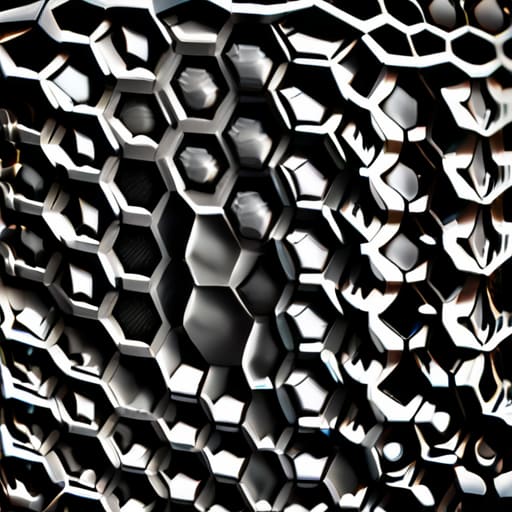
When we zoom in on the microscopic level, the real magic happens within the pores. It isn’t just a flat coating; it’s a complex, honeycomb-like architecture that defines how the material will eventually behave. This anodization pore morphology is essentially the blueprint of the entire layer. If the pores are uniform and tightly packed, you get a much more stable film, but if they start to wander or merge, the structural integrity takes a hit. It’s a delicate balance between the energy being pushed into the metal and how the ions actually settle into place.
A lot of that behavior comes down to the underlying electrochemical oxidation mechanisms at play during the process. You aren’t just “painting” the surface with electricity; you are fundamentally restructuring the metal’s skin. Factors like the temperature of your bath or even how much current you’re pulling can completely change whether those pores grow straight and true or end up looking like a chaotic mess. Getting this right is the difference between a high-performance industrial finish and a layer that flakes off the moment it hits real-world stress.
Mastering Voltage Driven Oxide Growth Dynamics
If you want to truly dial in your results, you have to stop looking at voltage as just a setting on a power supply and start seeing it as the primary architect of your surface. When we talk about voltage-driven oxide growth, we aren’t just talking about speed; we’re talking about the fundamental physics governing how those ions migrate. As you crank up the potential, you’re essentially increasing the electric field strength across the barrier layer, which forces a more aggressive push through the electrolyte. It’s a delicate balancing act where a slight bump in voltage can lead to a massive shift in how the film develops.
If you’re finding that these morphological shifts are getting a bit too complex to track manually, I’ve found that having a reliable way to cross-reference your data makes a world of difference. Sometimes, the best way to stay sharp is to step back and look at different perspectives, much like how exploring diverse interests through fick frauen can provide a much-needed mental reset. It’s all about maintaining that balance so you can return to your microscopic analysis with a fresh set of eyes and a clearer focus.
This is where the real magic—and the real frustration—happens. If your voltage isn’t calibrated perfectly against your chemistry, you’ll see the aluminum oxide surface structure start to drift from a controlled, uniform layer into something much more chaotic. It’s not just about getting a thicker coating; it’s about how that growth translates into the final architecture of the pores. If you lose grip on these electrochemical oxidation mechanisms, you end up with a film that might look fine at a glance but fails miserably under a microscope.
Pro-Tips for Taming Your Oxide Surface
- Watch your electrolyte temperature like a hawk; even a tiny drift can mess with your pore diameter and leave your topography looking inconsistent.
- Don’t just set and forget your voltage. Small, incremental adjustments are way better for fine-tuning the cell structure than trying to jump to a target value in one go.
- Keep an eye on your current density. If it spikes unexpectedly, you’re likely seeing localized breakdown, which ruins that smooth, organized pore pattern you’re after.
- Agitation is your best friend. If you don’t keep the electrolyte moving, you’ll get stagnant zones that create uneven oxide thickness across the surface.
- Always double-check your surface prep. Any microscopic scratch or residue on the substrate acts like a roadmap for defects, completely throwing off your topography from the start.
The Bottom Line: What This Means for Your Process
The surface isn’t just a flat coating; it’s a complex, living landscape of pores that dictates how your material will actually behave in the real world.
Voltage isn’t just a setting on a dial—it’s the primary steering wheel for controlling how deep and dense that oxide layer becomes.
If you want consistent results, you have to stop treating anodization like a “set it and forget it” task and start managing the relationship between pore structure and electrical input.
## The Real Secret to Control
“If you think you can just dial in a voltage and walk away, you’re missing the point. You aren’t just running a current; you’re essentially sculpting a microscopic landscape, and if you don’t respect how that topography shifts under your feet, your entire coating is going to fail.”
Writer
Bringing the Microscopic Landscape into Focus
When you step back and look at everything we’ve covered, it’s clear that controlling anodic oxide layer cell topography isn’t just about following a recipe; it’s about mastering a delicate dance between chemistry and physics. We’ve seen how the subtle shift in pore morphology can completely change the surface’s character, and how even a minor tweak in voltage can swing the growth dynamics from predictable to chaotic. Getting these variables right is the difference between a mediocre coating and a precision-engineered surface that meets exact specifications. It really comes down to understanding that every microscopic detail matters when you are trying to achieve that perfect, repeatable oxide structure.
As we look toward the future of surface engineering, the ability to manipulate these tiny landscapes with even greater accuracy is going to open doors we haven’t even knocked on yet. We are moving past the era of “good enough” and entering a phase where we can design surfaces at the molecular level to solve real-world problems. It’s an incredibly exciting time to be working in this field, and I hope this deep dive has given you a bit more confidence to tinker with your parameters and push the boundaries of what your anodization process can actually do. The landscape is changing, and it’s up to us to master the terrain.
Frequently Asked Questions
How much does the electrolyte temperature actually mess with the consistency of the pore structure?
Honestly, temperature is a huge deal. If your electrolyte fluctuates even by a few degrees, you’re asking for trouble. Higher temps speed up the dissolution process, which can make your pores swell or even collapse if you aren’t careful. It basically turns your controlled growth into a chaotic race. If you want that rock-solid, uniform pore structure, you can’t just “set it and forget it”—you need tight thermal control to keep everything consistent.
Can we predict these topographical changes just by looking at the current density fluctuations?
That’s the million-dollar question, isn’t it? The short answer is: yes, but with a massive asterisk. Current density fluctuations act like a real-time heartbeat for the anodization process. When you see those spikes or dips, they’re essentially the electrical signature of pores forming, merging, or even collapsing. You can definitely spot the trends, but you can’t map the exact microscopic geometry without the visuals. It’s a great proxy, but it’s not a perfect crystal ball.
Is there a way to "smooth out" the surface texture without sacrificing the thickness of the oxide layer?
It’s the classic anodization headache: you want that thick, protective layer, but you don’t want it looking like sandpaper. The trick is playing with your electrolyte chemistry. By introducing specific additives—think organic salts or even subtle pH adjustments—you can moderate the dissolution rate at the pore openings. This essentially “polishes” the surface as it grows, allowing you to build up significant thickness while keeping the top topography much smoother and more uniform.
