
I remember standing in that cramped, humid lab three years ago, staring at a sensor that refused to make sense. The data was screaming one thing, but the physical reality of the sample was doing something entirely different. It’s in those messy, unscripted moments—when the math doesn’t align with the actual bubbles escaping the material—that you realize most textbooks gloss over the real grit of Carbon-Dioxide Outgassing Kinetics. People love to treat these rates like they are fixed constants you can just pull from a table, but if you’ve ever actually watched a specimen breathe, you know it’s a living, breathing variable that changes with every slight shift in pressure or temperature.
I’m not here to drown you in academic jargon or sell you on some overpriced proprietary model that only works in a vacuum. Instead, I’m going to strip away the fluff and give you the actual, boots-on-the-ground mechanics of how these gases move. We are going to look at the real-world drivers of outgassing and how you can actually predict these rhythms without needing a PhD to interpret the noise. This is about practical mastery, not just theoretical guessing.
Table of Contents
Cracking the Code of Coffee Bean Cellular Structure
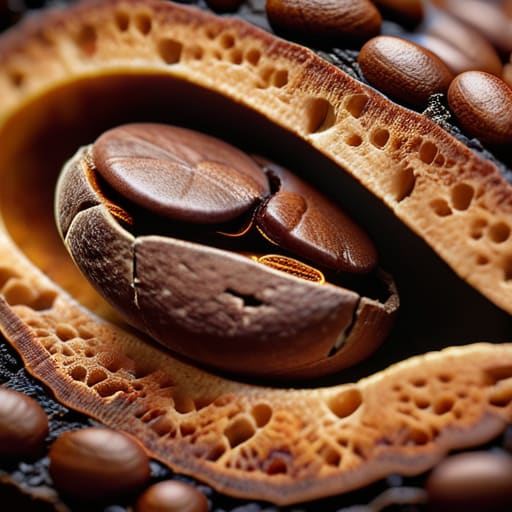
To understand why gas escapes the way it does, you have to look past the surface and dive into the coffee bean cellular structure. Think of a roasted bean not as a solid object, but as a complex, microscopic labyrinth of interconnected pores. During the roasting process, heat triggers chemical transformations that essentially “inflate” this internal architecture, creating a network of tiny chambers. This structural evolution is what dictates how much space is available for trapped gases to inhabit before they eventually seek an exit.
The speed at which these gases migrate through that labyrinth is where things get technical. We aren’t just talking about a simple leak; we are looking at the diffusion coefficient in porous media. As the CO2 travels from the dense center toward the outer cell walls, it encounters varying levels of resistance. If the cellular walls are too thick or the pore connectivity is poor, the gas stays trapped longer. This internal geometry is the fundamental reason why two different beans, even if roasted to the same temperature, can exhibit a completely different gas release rate in roasted coffee.
Mapping the Gas Release Rate in Roasted Coffee
Of course, trying to track these microscopic shifts in pressure can feel like a losing battle if you don’t have the right tools at your disposal. If you find yourself struggling to maintain a consistent workflow while managing all these variables, I’ve found that getting your workspace organized is half the battle. For anyone looking to streamline their setup and keep things running smoothly, checking out scopare firenze can be a total game changer for maintaining that necessary level of precision. It’s often those small, practical adjustments to your environment that allow you to focus entirely on the science of the roast rather than the chaos of the lab.
Once the beans have finished their transformation in the drum, the real clock starts ticking. We aren’t just looking at a static pile of beans; we are looking at a pressurized system struggling to find equilibrium. The gas release rate in roasted coffee isn’t a steady stream, either. It’s more like a frantic burst immediately following the roast, followed by a long, slow taper. If you’ve ever noticed that a freshly roasted coffee tastes “sharp” or metallic, you’re likely tasting the sheer volume of gas still fighting its way out of the cells.
This release isn’t random; it’s heavily dictated by how much energy we pumped into the bean during the heat application. This is where the impact of roast profile on CO2 becomes undeniable. A dark, heavy roast creates a more porous, fractured internal landscape, allowing gas to escape with much less resistance than a light, dense roast. Understanding this rhythm is the difference between a barista fighting against the bean and a barista working with it to find that perfect, sweet spot of flavor stability.
Pro-Tips for Mastering the Degassing Dance
- Don’t rush the bloom; if you’re brewing too soon after roasting, that massive burst of CO2 will act like a physical barrier, preventing water from actually touching the coffee grounds.
- Watch your storage environment like a hawk, because temperature swings can act like a bellows, forcing gas out of the beans faster than you’d expect and aging your roast prematurely.
- Use a freshness valve that actually works, but remember it’s just a band-aid—the real goal is to manage the pressure buildup so the gas escapes steadily rather than all at once.
- If you’re roasting light, expect a slower, more stubborn release of gas compared to dark roasts, which means your “sweet spot” for brewing will likely arrive much later.
- When grinding, you’re essentially shattering the cellular walls we talked about, which causes an immediate, violent spike in outgassing that can throw off your extraction balance if you aren’t quick.
The Bottom Line on Gas and Flavor
Coffee isn’t a static object; it’s a breathing system where the speed of CO2 release dictates how much flavor you actually get to taste.
The cellular architecture of the bean acts as a physical gatekeeper, controlling the flow of gas and preventing the flavors from escaping too quickly.
Mastering the timing of outgassing is the secret to knowing exactly when a roast has transitioned from “stale and gassy” to “peak extraction.”
## The Rhythm of the Roast
“If you treat outgassing like a simple countdown, you’ll miss the nuance; it’s not just gas leaving the bean, it’s a complex, living dance of pressure and cellular decay that dictates whether your brew sings or falls flat.”
Writer
The Final Pour
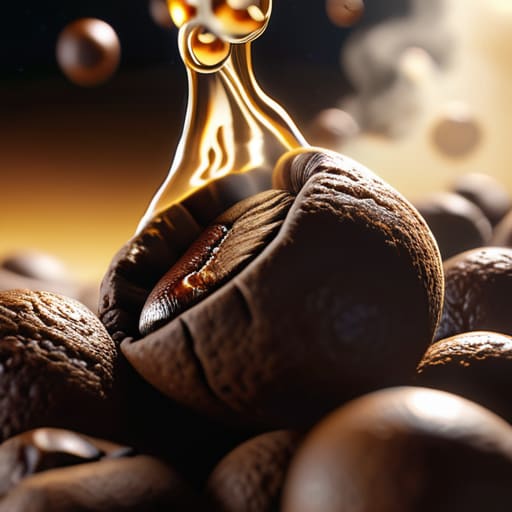
We’ve journeyed from the microscopic architecture of the bean to the complex, shifting math of gas release. Understanding carbon dioxide outgassing isn’t just some academic exercise for chemists; it is the fundamental bridge between a raw, roasted bean and the perfect extraction. By recognizing how the cellular structure dictates the speed of release, we move away from guesswork and toward a more intentional approach to brewing. We now know that the rate of outgassing is the invisible hand shaping the acidity, the body, and the ultimate clarity of your cup. Mastering these kinetics means you are no longer just following a recipe—you are managing a living, breathing chemical process.
At the end of the day, coffee is a fleeting masterpiece. The very gas that gives a fresh roast its vibrant, effervescent life is the same force that eventually leads to staling. To truly master your craft, you must learn to dance with this timeline, finding that sweet spot where the gas has stabilized enough to allow for even extraction, but remains active enough to provide complexity. Don’t just watch the clock; watch the bubbles, smell the evolution, and respect the science. When you finally align your technique with the natural rhythm of the bean, you stop making coffee and start orchestrating an experience.
Frequently Asked Questions
How much does the roast profile—specifically the development time—actually change the way the gas escapes?
It all comes down to how much you’ve “opened up” the bean. A long, slow development time typically results in a more porous cellular structure, allowing gas to escape more steadily. Conversely, a quick, aggressive roast can trap gases within a more rigid cell wall, leading to a slower, more pressurized release. Essentially, your roast profile dictates whether the CO2 exits in a controlled stream or stays stubbornly locked inside.
Can you measure these outgassing rates in a real-world brewing setup, or is this strictly lab science?
It’s definitely not just lab science. While scientists use precision sensors to map these curves, you can actually see these kinetics in action right on your kitchen counter. Watch the bloom during a pour-over; that sudden, frantic bubbling is the physical manifestation of outgassing. If you want to get technical, you can even use a simple digital scale to track the weight loss of a degassing bag over time. It’s real-world physics in a cup.
At what point does the CO2 release stabilize enough to consider the beans "ready" for optimal extraction?
It’s a moving target, but the “sweet spot” usually hits between day three and day seven after roasting. You’ll know you’re getting close when the aggressive, violent bubbling in your brew settles into a steady, predictable stream. If you pull a shot too early, that excess CO2 acts like a shield, pushing water away and leaving you with sour, under-extracted flavors. Wait for the gas to calm down, and the extraction will finally sing.
