
Did you know “politically correct” was hardly talked about before 1990? But by 1992, it was mentioned over 2,800 times. This shows how fast political correctness has grown, causing a lot of debate. I’m looking into how it affects free speech, social norms, and the opinions it brings up.
Political correctness started as a way to make conversations more inclusive. But people have different views on it. Some say it limits free speech, while others see it as a step towards better communication. Figures like U.S. Secretary of Housing and Urban Development Ben Carson think it’s harmful, while comedian Michael Ian Black sees it as key to a kinder society.
This debate is key to understanding how political correctness shapes our talks today. It’s also important as we see how attitudes have changed, like in the New York Times. Join me as we dive into the roots, effects, and ongoing debate of political correctness.
Key Takeaways
- Political correctness rapidly gained prominence in the early 1990s.
- Reactions to political correctness vary significantly between strong conservatives and liberals.
- Research shows that moderate individuals find politically incorrect speakers more authentic.
- Participants felt more convinced about their partners’ beliefs when using politically incorrect language.
- Mainstream publications have criticized the trend of political correctness over the years.
- The concept continues to incite both support and backlash in American society.
Understanding Political Correctness
Political correctness is about using respectful language and behavior. It has roots in history that show how it evolved. This evolution has led to different views on it.
Historical Context
The term “political correctness” started in Marxist-Leninist ideas after the Russian Revolution in 1917. By the late 1970s and early 1980s, it became a way for liberal politicians to criticize extreme left-wing views. In the early 1990s, conservatives used it to challenge liberal ideas in universities.
This history shows how political correctness has become a big part of our cultural and social talks over the years.
Early Reactions
When political correctness first came up, people saw it as a short-lived trend. The 1990s were filled with satire, like the comic strip “Politically Correct Man.” It made fun of being too sensitive.
In 1992, “The Official Politically Correct Dictionary and Handbook” was published. This sparked more debates about the role of politically correct language. People from both sides of the political spectrum had different views on language and its use.
The Impact of Political Correctness on Society
Political correctness has changed how we talk to each other. Over the years, we’ve learned to be more respectful and kind. Now, talking about who we are and our differences is more important than ever.
Companies are changing too. They’re hiring more women and people of color. This shows that being kind and fair can make a big difference.
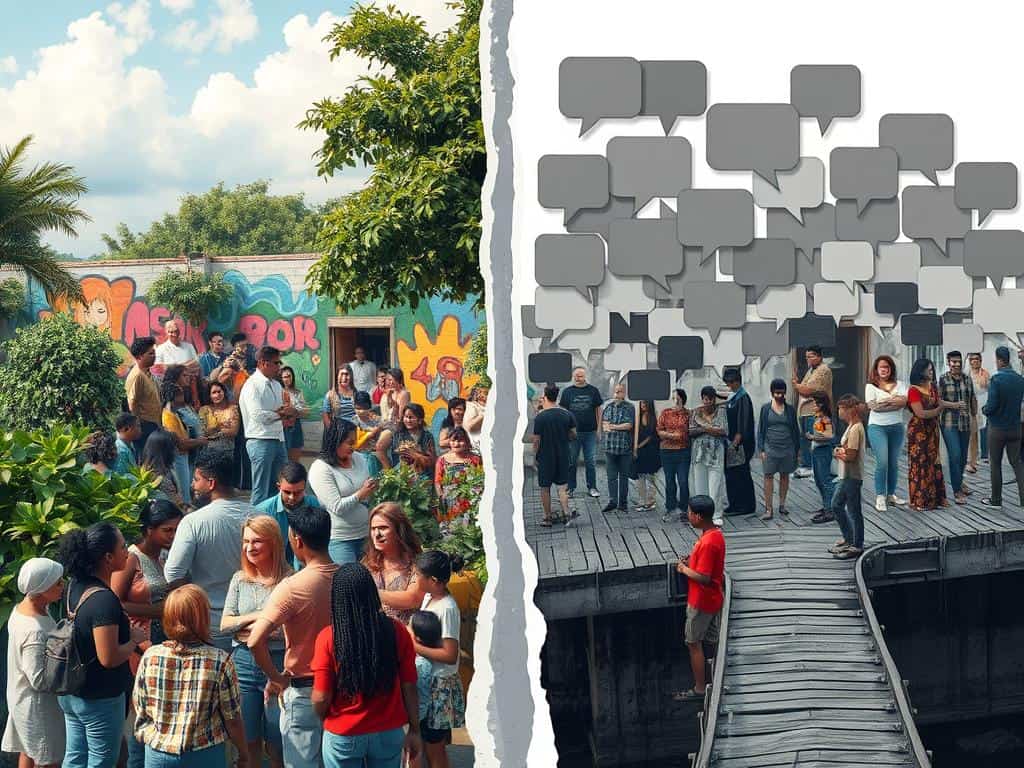
Societal Shift
But, being too careful with our words can also be a problem. For example, a woman might not want to lead because of what others think. A white boss might not speak up because they’re worried about being seen as racist.
Learning to talk openly about our differences can help. It makes it easier to work together and come up with new ideas.
Cultural Controversy
There’s a big debate about political correctness. Some people see it as caring, while others think it’s too strict. This disagreement makes talking about it very challenging.
It’s important to understand both sides. This way, we can have better conversations and connect with each other more deeply.
Cultural Controversy
This debate isn’t just about words. It affects how we talk to each other and how we see the world. Changing one word can change how we’re seen and heard.
Political correctness tries to be kind, but it can also make us seem fake. Finding the right balance is key. It’s a big challenge for our society.
Political Correctness: Necessary Change or Overreaction?
Looking back, we see big changes in how we talk and act together. Events like the 30th college reunion at Brown University show how far we’ve come. The early ’90s were all about being politically correct, as seen in “Thatch,” a comic strip that mixed humor with serious talks about society.
The push for inclusivity and respect has changed our conversations. At first, it was mostly in schools and universities. But then, “The Official Politically Correct Dictionary and Handbook” came out in 1992. It tried to set rules for being respectful, but got mixed reviews later on.
But, some people think it’s gone too far. They say being too careful with words can make it hard to talk openly. It’s a delicate balance between being kind and keeping conversations free.
Some see political correctness as a good way to avoid hurting others. Others think it’s too much and limits our freedom to speak. This debate makes us think deeply about what political correctness really means in our society today. It’s about finding a balance between respect and open discussion.
Conclusion
The debate on Political Correctness is complex. It shows how society’s norms and the need for respectful talk mix together. This article looked at how Political Correctness challenges old values and starts important talks about being inclusive and free to speak.
It also showed how Political Correctness affects us today. The examples of Julian Assange’s case and how some countries are criticized show its impact. By calling out opposing views as hate speech, real talks get cut off. This leads to a society where people are too scared to speak up.
It’s key to keep talking and listening to each other, even when Political Correctness is involved. Understanding the different feelings it brings helps us see its role in how we communicate. So, let’s keep thinking and changing as we work towards a place where everyone’s freedom and shared values are respected.
