
Did you know AI images, like those from DALL-E 2 and Midjourney, are changing what we think of original art? These tools, along with others, have opened new ways for people to express themselves. But they’ve also started big debates about whether AI can truly create.
In today’s world, the mix of AI Art and digital creativity is making us think hard about ethics and who owns a piece of art. Looking at how art has changed over time, we see how technology has made it easier for both humans and machines to push their creative limits. With some AI art selling for thousands at auctions, is this the end of traditional art or just the start of something new? Let’s dive into these big changes and what they mean for creativity.
Key Takeaways
- AI-generated art challenges traditional notions of originality.
- Technological advancements are transforming the animation industry.
- Industry professionals remain divided on AI’s role in art.
- Many artists are intrigued but cautious about AI’s creative capabilities.
- AI’s analysis and optimization capabilities differ from human creative processes.
- Philosophical discussions arise regarding AI’s emotional depth in art.
The Rise of AI Art in the Creative Landscape
Generative AI has changed the creative world. It lets artists try new things and express themselves in new ways. These AI tools make Digital Art that was once impossible to imagine.
Generative AI uses complex algorithms to create original art. It can make paintings and sculptures, and it’s getting better at it. This is changing what we think of as traditional art.
Understanding Generative AI and Its Applications in Art
Generative AI is a big deal in the art world. It lets artists create amazing visuals from scratch. Tools like DALL-E 2 and Midjourney make it easy for anyone to be creative, not just experts.
These AI tools help people make art that’s different and exciting. They let artists keep their own style while trying new things.
Historical Context: From Duchamp to AI
Looking back, Marcel Duchamp changed how we see art and creativity. His ideas were ahead of their time. They helped start the conversation about technology and art.
Duchamp showed that art could be anything. Today, artists are thinking about how AI changes who makes art and how. It’s a big deal for Digital Art.
Technological Advances and Accessibility
AI technology is getting better fast. This makes it easier for more people to be creative. Artists are using AI to make new things and try new ideas.
This trend is not just about change. It’s about making art better and more interesting. Some think AI could even create new jobs in art.
But there are challenges too. Like figuring out who owns the art and what’s original. We’re all learning how to deal with these new questions.
AI Art: Creativity or Controversy?
Exploring if AI can truly create or just copy creativity, we see many views. Scholars like Margaret Boden think AI art could be creative under certain rules. This shows how art is changing with Creativity Tech.
Defining Creativity in the Age of Machine Learning
AI artists can make images, music, and writing, changing our view of creativity. The old idea of creativity tied to human feelings and personal touch is questioned. But, some say AI art opens new possibilities, letting anyone create beautiful pieces.
Debates Surrounding Authorship and Originality
Who owns AI art is a big question. Should we credit the AI or the person who gave it prompts? The use of millions of photos without permission raises ethical issues. It makes us wonder what being an artist means today.
Case Studies: Ai-Da and Other AI Artists
AI artists like Ai-Da are sparking big talks about art. Ai-Da’s unique skills make her art stand out, making us rethink AI and creativity. The success of AI art, like at the Colorado State Fair, makes us think about traditional art and what creativity means.
The Impact of AI on Traditional Art Forms
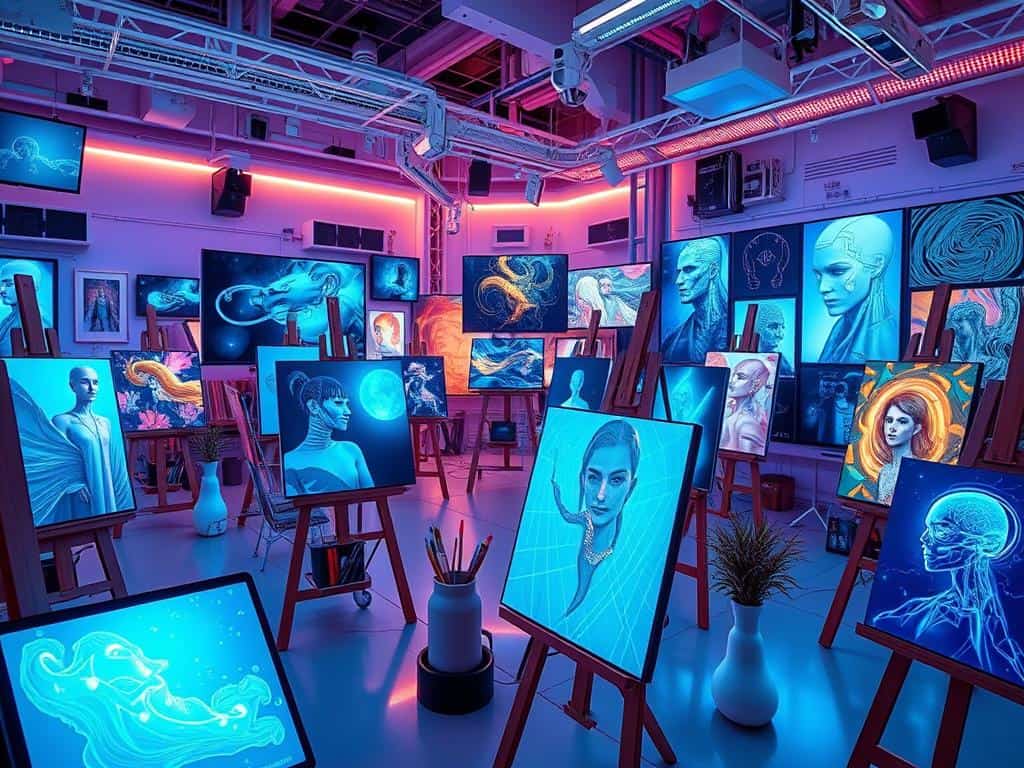
AI technologies are changing the art world fast. Artists are both excited and worried about these changes. Some see AI as a partner, while others fear being overshadowed by it.
How Artists are Responding to AI Technologies
In 2023, an AI-made artwork sold for $432,500 at Christie’s. This shows AI’s big role in the art market. Artists are now thinking about how to work with AI, not just compete with it.
They use AI to make their work better and reach more people. This way, they can keep their unique touch in their art.
Collaboration vs. Competition: Are Artists at Risk?
AI art has made people wonder about the future of human creativity. Some artists worry AI could take over their jobs. They fear AI might lack the emotional touch of human art.
But many see AI as a tool to help, not replace, human creativity. Artists are learning to use AI to enhance their work. They focus on their skills and stories to stand out in a world with AI art.
Conclusion
Looking back, we see a big change in how we view creativity and human experience. AI technologies like Generative Adversarial Networks (GANs) and tools like MidJourney and Stable Diffusion are changing art. They make creating art faster but also make us think about who owns the art.
The future of AI art is about working together, not just machines taking over. Artists can now use AI to make their work even better. This new way of creating art makes us rethink what art really is.
Some say AI art doesn’t have the same feeling as art made by humans. But, AI art brings new ideas and styles to the table. As we talk more about AI art, we should see the good in new ways of creating. Artists need to be open to change and keep their unique voices heard in a world full of technology.
