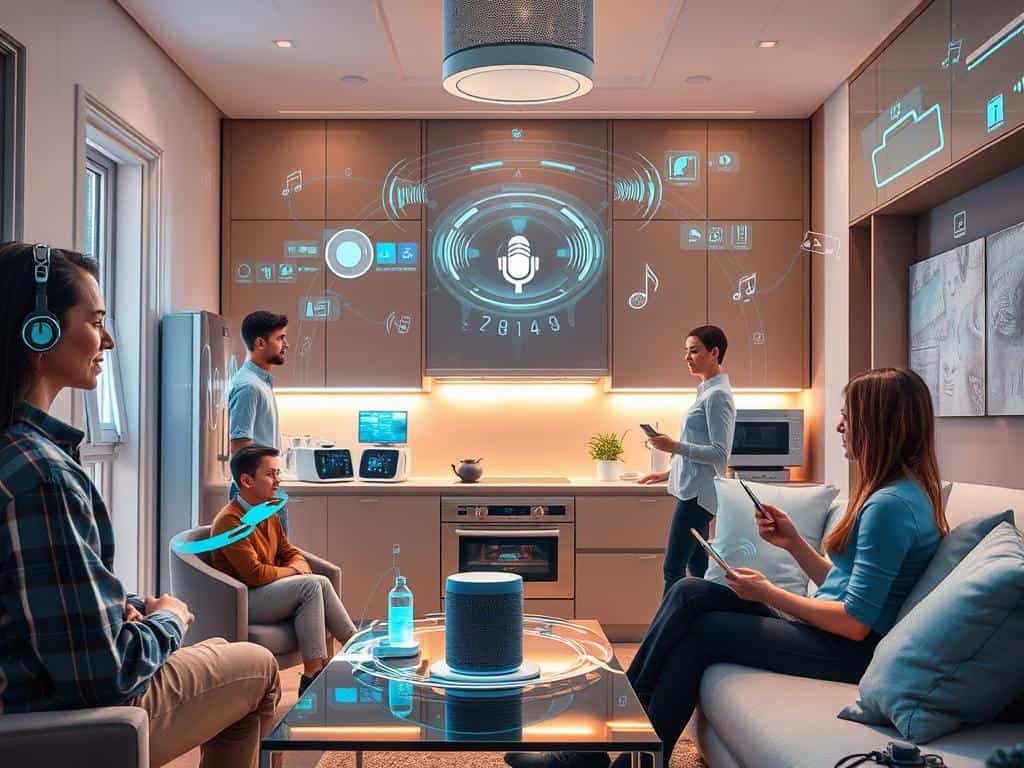
Did you know that by 2024, AI voice assistants will handle over 70% of customer interactions in many fields? This big change shows we’re relying more on voice tech than ever before. Voice assistants are becoming smarter, like Amazon’s Alexa and Apple’s Siri, and can now talk like humans.
Google and OpenAI are leading the way, adding new features to make our tech interactions better. They aim to change how we use technology in our daily lives.
Today’s tech advancements are making our smart homes more user-friendly. But, these fast changes also raise important questions about privacy and ethics. As we explore this new world, it’s clear that these updates will change how we use technology in the future.
Key Takeaways
- AI voice assistants are anticipated to facilitate over 70% of customer interactions by 2024.
- Google’s Gemini Live offers real-time conversation capabilities with low latency, enriching user engagement.
- OpenAI is pioneering a more human-like interaction model with its Advanced Voice Mode.
- Privacy and data ethics are becoming essential considerations as voice assistants evolve.
- Major tech players are heavily investing in generative AI to differentiate their offerings and improve user experience.
- The integration of voice technology is set to transform daily routines and interactions with smart home devices.
The Rise of Advanced Voice Assistants
The world of voice technology has changed a lot. Now, advanced voice assistants are more than just tools. They are becoming our daily partners.
Overview of Generative AI and Voice Technology
Generative AI makes voice assistants smarter. They can understand complex requests and guess what we need. This makes our interactions better and sets new standards.
These systems now get the context and nuance of our words. This shift shows how much we want easy, natural conversations with technology.
Google’s Gemini Live: A New Era in Voice Handling
Google’s Gemini Live is leading the way. It lets us use Gmail and Calendar with just our voice. This is a big step forward in voice technology.
It makes tasks easier and feels almost natural. This sets a new benchmark for how we manage our daily lives with voice assistants.
OpenAI’s Contributions to the Voice Assistant Market
OpenAI is making a big impact with its Advanced Voice Mode. It makes voice assistants sound more human. This is all about emotional connection and understanding our context.
OpenAI is pushing voice technology to be used in many areas. This includes education, healthcare, and customer service. Their work is making voice assistants more essential in our lives.
Voice Assistants: Empowering Smart Homes
Voice Assistants have changed the game in Home Automation. They let users control their homes like never before. Now, people can talk to their homes and get things done easily.
These smart devices are more than just gadgets. They are our new home companions. They make our lives easier and more fun.
Integration with Smart Home Devices
AI voices from Amazon’s Alexa and Google Assistant make our homes smarter. We can change lights, adjust the temperature, and secure our homes with just our voice. It’s like having a personal assistant at home.
These voices also make our homes more personal. They learn what we like and adapt to our needs. For those with mobility issues, controlling their homes is now easier than ever.
The Future of Home Automation
The future of Home Automation looks bright. Devices will talk to each other better, and we’ll get even more out of them. AI will keep getting smarter, making our homes more attuned to us.
But, there are challenges ahead. We need to make sure our homes are safe and private. Working on these issues will make our homes even better for everyone.
Conclusion
Voice assistants are changing how we use AI and smart homes fast. By 2024, they will go from simple tools to active friends. This change is seen with Google Assistant and Amazon Alexa, now in many devices and homes.
Voice assistants are making homes better for people with disabilities. They help with everyday tasks and could do more in the future. As they get smarter, we’ll trust them more and use them for complex tasks.
The future of voice assistants looks bright. They will make our lives easier and more connected. With new features and better privacy, they will be key in our smart homes, changing how we live and work.
