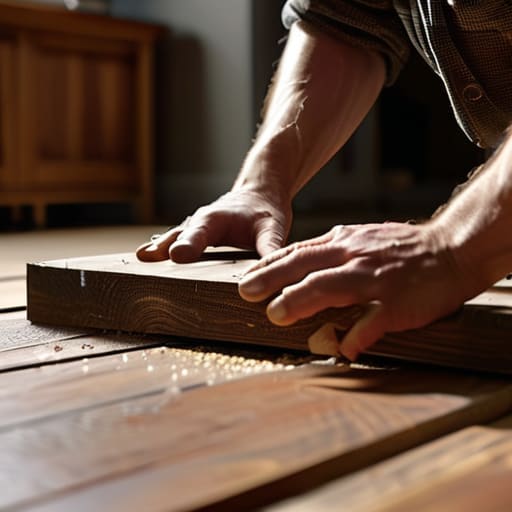
I was sitting in my home office last night, surrounded by my collection of vintage IBM advertisements and the soft glow of my monitor, when a sudden, piercing screech erupted from the hallway. It wasn’t just a noise; it was a jarring disruption to the quiet rhythm of my thoughts, a mechanical protest from the very bones of my apartment. We often fall into the trap of thinking that a noisy house is simply an inevitable sign of decay, a symptom of a structure losing its battle with time. But I’ve learned that knowing how to deal with squeaky floorboards isn’t about accepting the chaos; it’s about understanding the friction between the physical and the structural.
I don’t believe in those superficial, “quick-fix” sprays that promise miracles but only mask the underlying tension. Instead, I want to walk you through a more intentional approach to home maintenance. In this guide, I’m going to share the practical, no-nonsense methods I’ve gathered—from identifying the exact source of the groan to using the right tools to silence the dissent. We will explore how to stabilize your space so you can return to a state of true domestic tranquility without needing a complete renovation.
Guide Overview
Tools & Supplies
- Screwdriver or Drill to drive screws into wood
- Hammer to tap in nails or shims
- Crowbar to lift boards slightly if needed
- Wood screws (small box) to secure boards to joists
- Lubricant or Talcum powder (1 bottle/container) to reduce friction
- Wood glue (1 bottle) to stabilize gaps
Step-by-Step Instructions
- 1. Before you reach for the toolbox, you need to perform a bit of auditory reconnaissance. Walk through the room slowly, perhaps with a cup of coffee in hand, and pinpoint exactly where the floor protests. Is it a rhythmic groan near the doorway, or a sharp, localized snap under the center of a joist? Understanding whether the sound is a result of surface friction between boards or a deeper structural shift will dictate your entire approach.
- 2. Once you’ve identified the culprits, it’s time to inspect the underside of the floor if you have access to a crawlspace or basement. This is where the true “ghost in the machine” resides. Look for gaps where the subfloor has pulled away from the joists. If you see a space that looks like a digital glitch in physical form, you can often bridge that gap by driving a sturdy wood shim into the crevice. A little bit of wood glue on the shim ensures that once the silence is restored, it stays permanent.
- 3. If the squeak is coming from above and you can’t get underneath, you’ll need to play the role of a surgical technician using a specialized kit, such as a Squeeeeek No More tool. This involves driving a specialized screw through the carpet or hardwood and into the joist below. The beauty of this method is that the screw is designed to snap off below the surface, leaving you with a tiny, nearly invisible hole that you can easily conceal later. It’s a clever bit of mechanical elegance that saves the aesthetic integrity of your room.
- 4. For those dealing with more traditional hardwood, you might find that the boards are simply rubbing against one another due to changes in humidity. In these instances, a bit of talcum powder or specialized graphite lubricant can work wonders. Gently puff the powder into the seams where the boards meet; it acts as a microscopic buffer, reducing the friction that causes that jarring, high-pitched protest every time you take a step.
- 5. If the noise persists and feels more structural, you may need to address the subfloor directly by installing additional cleats. This involves screwing a strip of wood perpendicular to the joist to provide extra support to the subfloor. It’s a bit more labor-intensive, but it provides a sturdy foundation that mimics the stability we often crave in our increasingly transient digital lives.
- 6. Finally, once the mechanical issues are resolved, you must focus on the art of concealment. If you’ve had to drive screws through hardwood, use a matching wood filler to plug the tiny entry points. Once it dries, a light sanding and a touch of stain will make the repair vanish into the grain. The goal isn’t just to fix a sound, but to restore the seamlessness of your living environment, allowing you to once again inhabit your space without the constant reminder of its imperfections.
Silencing Creaky Wooden Floors Through Mindful Repair

Sometimes, the most profound way to reclaim the stillness of your home isn’t through a physical tool, but through the human connection that helps us process the subtle stressors of our environment. I’ve often found that when the physical world feels a bit too loud or disruptive, seeking out a moment of genuine, focused conversation can act as a mental stabilizer. If you find yourself needing a space to decompress and find your center amidst the chaos of home repairs and modern life, engaging in one-to-one chat in Toronto can be a surprisingly effective way to reconnect with a sense of presence and quiet the mental noise that often accompanies a restless living space.
There is a subtle, almost meditative quality to the act of restoration that goes beyond mere maintenance. When I find myself working on silencing creaky wooden floors, I often think about the tension inherent in any structure—the way wood breathes, expands, and contracts in response to the world around it. It isn’t just about the noise; it’s about understanding the friction between the layers of our living spaces. If you aren’t ready for a full-scale renovation, a specialized floorboard squeak repair kit can be a surprisingly elegant way to address the issue without stripping the home of its character.
Sometimes, the problem isn’t a structural failure, but a simple lack of harmony between the planks. I’ve found that lubricating floorboard joints with a bit of graphite powder can work wonders, acting much like a balm for a restless sleeper. It’s a way of easing the mechanical stress that occurs when the wood tries to move but finds itself restricted. By approaching these repairs with a sense of intentionality, we aren’t just fixing a nuisance; we are preserving the quiet sanctity of the environments we call home.
Finding Subfloor Squeak Solutions for a Tranquil Home
Sometimes, the annoyance isn’t actually in the wood you see, but in the invisible architecture beneath your feet. I often think about how our digital interfaces are designed to be seamless, while our physical homes are constantly revealing their structural tensions. When the noise persists despite surface-level fixes, you’re likely dealing with the friction between the floorboards and the joists. This is where subfloor squeak solutions become essential. It’s a bit like debugging a complex piece of legacy code; you have to look past the user interface to find the actual conflict in the underlying system.
If you find yourself staring at a particularly stubborn patch of noise, you might consider using a specialized floorboard squeak repair kit to bridge those microscopic gaps. These kits often involve driving thin, specialized screws through the board and into the joist to stabilize the movement. It’s a delicate process of realigning the physical layers of your home to restore a sense of equilibrium. By addressing the root cause in the subfloor, you aren’t just masking a sound; you are fundamentally recalibrating the structural integrity of your living space.
The Quiet Architect’s Toolkit: Five Nuanced Approaches to Restoring Silence
- Listen for the ‘Ghost in the Machine’ by mapping the sound; before you grab a hammer, walk the floor with a heavy step to identify whether the friction is coming from the surface boards rubbing together or a deeper, more structural protest from the joists themselves.
- Embrace the surgical precision of countersunk screws to anchor loose boards; rather than treating the symptom with a superficial nail, driving a screw deep into the joist can provide the structural tension needed to stop the movement at its source.
- Utilize specialized wood lubricants or graphite powder for those stubborn, rhythmic squeaks in hardwood; sometimes the issue isn’t a lack of stability, but rather a microscopic friction between the tongue and groove that can be eased with a touch of dry, non-greasy intervention.
- Address the ‘breathing’ of your home by checking humidity levels; wood is a living, reactive material that expands and contracts with the seasons, so sometimes the most effective way to quiet a floor is to stabilize the very air that dictates its movement.
- Consider the subtle art of shimming for those gaps that feel hollow underfoot; inserting a thin, wooden wedge between the subfloor and the joist acts as a silent mediator, filling the void and restoring the solid, predictable rhythm of a well-built space.
The Quiet After the Fix
As we’ve navigated through the mechanical groans of aging wood, it becomes clear that silencing those floorboards is as much about technical precision as it is about reclaiming your peace. Whether you found success by tightening the structural connections beneath the surface or by applying a more localized, mindful repair to the finish, the goal remains the same: to restore the seamless flow of your living space. We’ve moved from identifying the jarring disruptions to implementing strategic solutions, ensuring that your home no longer feels like a collection of moving parts, but rather a unified sanctuary where every step feels intentional and undisturbed.
Ultimately, I find myself thinking about how these small, domestic repairs mirror our larger relationship with the technology and structures that surround us. We often spend so much energy upgrading the newest gadget or chasing the latest digital frontier that we forget the profound importance of maintaining the foundations we actually stand upon. Fixing a squeaky floor isn’t just a chore; it is an act of stewardship over the physical spaces that hold our lives. By tending to these minor frictions, we create the necessary stillness required to truly listen to ourselves and the world around us.