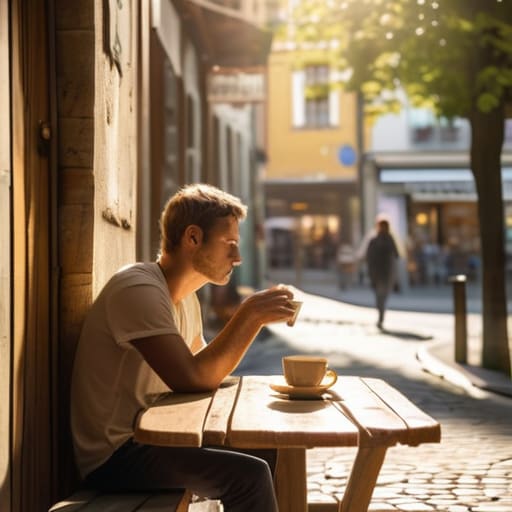
I remember sitting on a milk crate in a studio apartment in San Francisco, surrounded by half-unpacked boxes and the hum of a city that felt entirely indifferent to my existence. The air smelled of stale rain and overpriced espresso, and for the first time in my life, the digital connections I relied on felt painfully thin. We’re constantly sold this polished, Instagrammable lie that moving is a seamless transition of “curating your new lifestyle,” but let’s be honest: learning how to settle into a city where you know nobody is actually a messy, often lonely process of recalibrating your entire social identity.
I’m not here to give you a checklist of trendy coworking spaces or superficial networking hacks that leave you feeling more hollow than before. Instead, I want to share a more human roadmap—one built on the intersection of cultural observation and genuine, unpolished connection. I’ll be diving into the psychological shifts and practical rituals that actually help you weave yourself into the fabric of a new place, moving past the mere survival phase and into a life that feels truly lived.
Navigating the Silent Streets Overcoming Loneliness After Moving

There is a specific, heavy kind of silence that settles in when you walk through a bustling neighborhood where every face is a stranger. It’s a strange paradox: you are surrounded by millions of lives, yet you feel digitally and physically untethered. I remember sitting in a small cafe in San Francisco early in my career, watching the rhythmic flow of commuters and feeling like a ghost in the machine. Overcoming loneliness after moving isn’t just about finding a crowd; it’s about reconciling your internal sense of self with a landscape that hasn’t yet learned your name.
To combat this, I’ve found that we have to treat socializing as an adult in a new location much like we treat learning a new programming language—it requires iterative testing and a lot of patience. You can’t just “download” a community; you have to build the architecture of it piece by piece. Whether it’s joining a niche workshop or frequenting the same corner bookstore, the goal is to create micro-interactions that eventually coalesce into something sturdier. It’s about turning those silent streets into a map of familiar landmarks and, eventually, familiar faces.
The Art of Observation Finding Community in a New Environment
I’ve always found that the best way to understand a new ecosystem—whether it’s a digital network or a physical metropolis—is to stop trying to force an immediate connection and start practicing the art of being a spectator. There is a certain quiet power in sitting in a corner cafe, not with your headphones acting as a social shield, but with a notebook, watching the rhythmic ebb and flow of the locals. You begin to notice the micro-cultures: the way the Tuesday morning crowd gathers at the corner bodega, or the specific energy of the park at sunset. This phase of finding community in a new environment isn’t about rushing into a crowd; it’s about learning the unspoken syntax of your new home.
Once you’ve decoded these patterns, the transition from observer to participant becomes less daunting. I’ve realized that socializing as an adult in a new location is less about grand gestures and more about these small, repeated exposures. It’s the decision to frequent the same bookstore or join a niche workshop—much like the VR storytelling circles I frequent—that turns a strange street into a familiar neighborhood. You aren’t just looking for people; you are looking for shared resonance.
The Human Algorithm: Five Strategies for Rewiring Your Social Circuitry
- Curate your “Third Places” with intention. In the digital age, we often default to the isolation of our apartments, but finding a local coffee shop or a neighborhood bookstore—places that aren’t home and aren’t work—acts as a low-stakes social anchor. It’s about becoming a regular, a familiar face in a sea of strangers.
- Leverage the “Niche Interest” protocol. Whether it’s a vintage tech meetup or a local pottery class, joining groups centered around specific passions bypasses the awkwardness of small talk. When you share a common language—be it code, clay, or cinema—the social friction significantly decreases.
- Practice the art of the “Micro-Interaction.” Don’t underestimate the power of a brief exchange with a barista or a neighbor. These tiny, seemingly insignificant data points of human connection help remind you that you are part of a living, breathing ecosystem rather than just an observer behind a screen.
- Embrace the vulnerability of being a “Newbie.” There is a unique, albeit terrifying, freedom in being the person who knows nothing. Use your outsider status as a conversational tool; asking for recommendations or directions isn’t just practical, it’s a way to invite the city to teach you its rhythm.
- Audit your digital footprint for local resonance. Instead of scrolling through global feeds, dive into hyper-local digital communities—neighborhood forums or city-specific subreddits. It’s a way to map the cultural terrain of your new home before you even step out the front door, turning the digital void into a roadmap for real-world connection.
The Architecture of Belonging
Ultimately, settling into a new city isn’t about a sudden, cinematic moment of connection, but rather a series of small, intentional calibrations. We’ve talked about the necessity of facing that initial, heavy silence and the importance of becoming a student of your new surroundings—learning the rhythm of the streets and the unspoken social codes of your neighborhood. It’s a process of moving from being a mere observer to an active participant in the local ecosystem. Whether you are finding solace in a quiet corner of a library or attempting to bridge the gap through digital community tools, remember that you are essentially reprogramming your social operating system to accommodate a new set of variables.
As I look at the vintage tech ads on my desk—reminders of eras where connection felt much more analog and tactile—I’m reminded that even in our hyper-connected age, true belonging requires a certain philosophical courage. You have to be willing to be a stranger for a while. Don’t rush the discomfort; instead, view this period of isolation as a blank canvas for your own personal narrative. You aren’t just moving to a new location; you are participating in the profound human ritual of reinvention. Embrace the glitchy, unpolished early stages of this transition, because that is precisely where the most authentic versions of ourselves are often discovered.
Sometimes, the most effective way to bypass that initial layer of urban alienation is to seek out spaces that prioritize radical authenticity over the polished, curated interactions we usually see online. I’ve found that leaning into niche, high-energy subcultures can act as a sort of social catalyst, helping you feel less like a ghost in the machine and more like a participant in a living, breathing collective. For instance, if you find yourself craving a sense of belonging that feels uncomfortably real and vibrantly human, exploring this community can be a profound way to reclaim your sense of connection in a city that might otherwise feel indifferent to your presence.