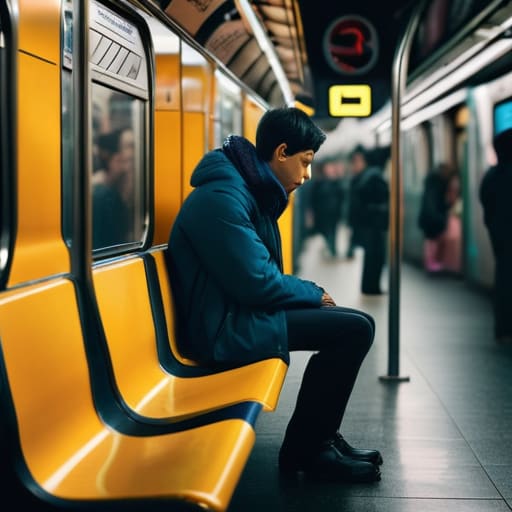
I was sitting in my home office last night, surrounded by a stack of faded 1980s tech ads—one particularly colorful one for a personal computer that promised “total connectivity”—when the irony hit me like a physical weight. We spent decades chasing the dream of being perpetually linked, yet here we are, staring at glowing rectangles while feeling more isolated than ever. It’s frustrating to see pundits treat this like some sudden, unexpected epidemic, but I’ve been tracing the threads of how loneliness became a public topic, and it wasn’t an accident. It was a slow-motion collision between our biological need for touch and the sterile, high-speed efficiency of the digital world we fought so hard to build.
I’m not here to give you some sanitized, clinical lecture or a list of “five ways to make friends” that feels like it was written by a HR bot. Instead, I want to dig into the messy, complicated intersection of our social structures and our silicon tools. I promise to offer a no-nonsense autopsy of our current social landscape, moving past the superficial headlines to explore how our tools actually reshaped our hearts. We’re going to look at the real cultural cost of our constant connection, without the hype.
Tracing the Loneliness Epidemic Explained Through Human Connection
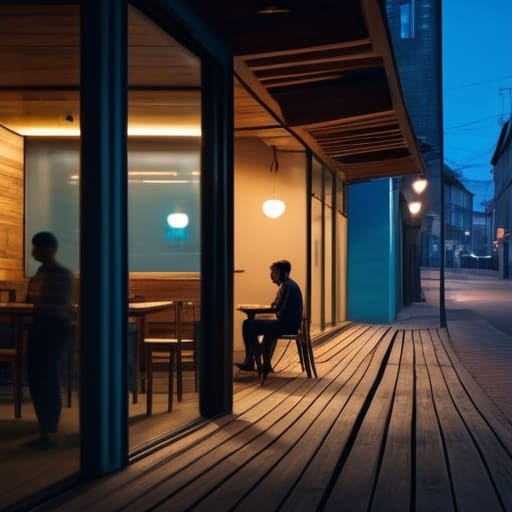
To understand where we are, we have to look at the fraying threads of our traditional social fabric. I often think back to my grandfather’s stories of community—neighborhoods that functioned like organic, breathing ecosystems. Today, those ecosystems feel more like disconnected nodes in a vast, silent network. When we look at the loneliness epidemic explained through a historical lens, it isn’t just about being alone; it’s about the erosion of the “third places”—the cafes, parks, and community halls—that once anchored us. We’ve traded physical presence for digital proximity, a shift that has fundamentally altered the way we experience belonging.
This transition has created a strange paradox: we are more “connected” than any generation in history, yet we are grappling with unprecedented levels of mental health and social fragmentation. We’ve mastered the art of the digital ping, but we’ve lost the nuance of the shared glance or the spontaneous, unscripted conversation. As we move further into this hyper-mediated existence, we have to ask if our tools are actually building bridges, or if they are merely constructing more sophisticated walls that keep us isolated in plain sight.
Mental Health and Social Fragmentation in Our Shared Spaces
It’s one thing to feel lonely in a crowded room, but it’s another thing entirely to feel it within the very architecture of our digital lives. I often look at the vintage IBM ads pinned to my wall—images of people huddled around massive, communal machines—and I can’t help but contrast that with our current state of mental health and social fragmentation. We’ve traded physical proximity for digital presence, creating a strange paradox where we are more “reachable” than ever, yet fundamentally more adrift. This fragmentation isn’t just a personal grievance; it’s a systemic glitch in how we inhabit shared spaces.
When our “third places”—those cafes, parks, and community halls—are replaced by algorithmic feeds, the quality of our interaction shifts from organic to performative. We aren’t just losing conversation; we are losing the unscripted friction that builds genuine empathy. This shift is a core component of the impact of digital connection on solitude, where the constant hum of notifications serves as a thin veil over a growing sense of emptiness. We are effectively building digital cities that look bustling from above, but feel hauntingly vacant from the street level.
Reclaiming the Signal: Five Ways to Navigate Our New Social Architecture
- Audit your digital intimacy. We often mistake the high-frequency ping of a notification for the deep, resonant hum of actual connection; start by distinguishing between being “seen” by an algorithm and being truly known by a person.
- Rebuild the “Third Place” in your own life. Since our physical community hubs are fracturing, we have to be intentional about creating new, non-digital spaces—whether it’s a local workshop or a recurring coffee meetup—where spontaneous, uncurated human interaction can actually breathe.
- Embrace the friction of vulnerability. The digital world is designed to smooth out all our rough edges, but real connection requires the awkward, unpolished moments that social media platforms are programmed to hide.
- Practice “analog presence” as a radical act. In an era where our attention is the most valuable commodity being mined, giving someone your undivided, device-free attention is perhaps the most profound way to combat the modern sense of isolation.
- Decode the narrative of your solitude. Instead of viewing loneliness as a personal failure or a medical symptom to be suppressed, try looking at it through a sociological lens—ask yourself what your loneliness is trying to tell you about the state of the world around you.
The Signal in the Noise
Looking back at how we’ve navigated this terrain, it’s clear that our conversation about loneliness isn’t just about a lack of people; it’s about the erosion of shared meaning. We’ve traced how our digital architectures, while promising infinite connection, often act as mirrors for our own fragmentation, turning what used to be private, quiet aches into a loud, public health crisis. By moving loneliness from the shadows of personal shame into the bright light of sociological study, we have finally begun to acknowledge that our struggle is not an individual failure, but a systemic byproduct of the very tools we built to bring us together.
So, where does this leave us as we continue to build the next iteration of our digital world? I like to think of this moment not as a eulogy for human connection, but as a necessary calibration. We are learning, perhaps painfully, that technology can provide the infrastructure for contact, but it cannot manufacture the warmth of true presence. As we push further into the frontier of AI and hyper-connectivity, let’s commit to building spaces that prioritize depth over reach. The goal shouldn’t be to simply stay connected, but to ensure that in our rush to bridge the digital divide, we don’t lose the essential human pulse that makes the connection worth having in the first place.
It’s easy to feel lost in the abstraction of these digital voids, but I’ve found that sometimes the only way to combat that sense of fragmentation is to seek out spaces where the human element remains unapologetically present. Whether it’s through niche online communities or finding more direct, unfiltered ways to engage with others—like exploring adult chat london ontario to find a sense of immediate connection—the goal is often just to break through the digital static. We have to be intentional about where we direct our energy, moving away from the passive scrolling that leaves us hollow and toward interactions that actually make us feel seen and heard in the messy, complicated way humans are meant to be.