
I remember sitting in a cramped, neon-lit coffee shop in San Francisco during my first year in Silicon Valley, clutching a lukewarm latte and feeling the sudden, sharp urge to swallow my own vowels. Every time I spoke, I felt the eyes of the “polished” crowd tracking the slight, rhythmic tilt of my upbringing—a ghost of the coast that didn’t quite fit the sterile, tech-bro cadence of the Bay Area. It’s a quiet, exhausting kind of erasure, isn’t it? We’re often told that assimilation is the price of progress, but I’ve always found that cynical notion that how a local accent survives in a big city is a matter of “professionalism” to be utterly hollow.
I’m not here to give you a linguistic makeover or a guide on how to mask your roots to climb a corporate ladder. Instead, I want to explore the cultural grit required to hold onto your identity when the environment demands you blend into the background. I’ll be sharing some honest, hard-won reflections on how we can navigate these sprawling metropolises without performing a character of someone we aren’t. We are going to look at the authentic ways to carry your history in your voice, ensuring your story remains intact even as your zip code changes.
Navigating Linguistic Assimilation in Urban Areas
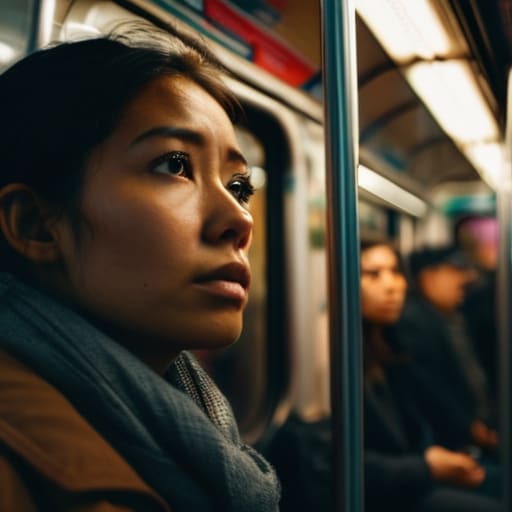
I’ve spent many afternoons in crowded subway cars, listening to the symphony of voices, and I can’t help but notice the subtle tension at play. There is a quiet, almost invisible tug-of-war happening between dialect preservation vs code-switching. On one hand, you have the instinct to hold onto the vowels that sound like home, and on the other, the social pressure to smooth them out. It’s a survival mechanism, really. We subconsciously adjust our pitch and cadence to fit the “standard” rhythm of the city, hoping to minimize friction in professional or social circles.
Yet, I often wonder if this constant calibration comes at a cost to our cultural identity through speech patterns. When we perform this linguistic dance, are we merely becoming more efficient communicators, or are we slowly erasing the maps of where we’ve been? The sociolinguistics of urban migration suggest that our speech is a living archive, and as we move through these concrete canyons, we are constantly deciding which parts of our history are worth keeping audible and which parts we’ll let fade into the background noise.
The Silent Struggle of Phonetic Shifts in Metropolitan Cities
There is a subtle, almost invisible tension that settles in the throat when you step off a train in a sprawling metropolis. It isn’t a sudden erasure of who you are, but rather a slow, rhythmic sanding down of your edges. I’ve spent countless hours observing this phonetic shift in metropolitan cities, noticing how the sharp, melodic vowels of a rural upbringing begin to flatten under the weight of a thousand different voices. It’s a quiet sort of attrition; you don’t notice you’re doing it until you realize you’ve subconsciously smoothed out the very sounds that once signaled “home.”
This isn’t just about changing how we speak; it’s a complex dance of dialect preservation vs code-switching. We often find ourselves performing a linguistic masquerade, tilting our syntax just enough to blend into the urban background while desperately trying to keep the core of our heritage intact. It’s exhausting to constantly calibrate your identity in real-time, negotiating between the comfort of your roots and the perceived necessity of sounding “professional” or “local” to the concrete jungle. We aren’t just losing sounds; we are navigating the delicate boundary of who we are allowed to be in a crowd.
Small Anchors in a Sea of Standardized Speech
- Seek out the “linguistic sanctuaries” of your new home—those specific coffee shops, community centers, or niche hobby groups where the cadence of your origin isn’t just understood, but celebrated.
- Curate a digital auditory diet; listening to podcasts or long-form interviews from your hometown can act as a sonic tether, keeping those familiar vowels from drifting too far into the metropolitan fog.
- Practice “code-switching” with intention rather than submission; treat your accent not as a barrier to professional assimilation, but as a versatile dialect that you choose to deploy depending on the social architecture of the room.
- Lean into the nostalgia of your roots by connecting with old friends via voice notes rather than text; the nuances of your natural inflection are far better preserved in the warmth of a spoken word than in a sterile, typed message.
- Reframe the internal narrative from one of “correction” to one of “identity”; when you feel the urge to flatten your speech to fit the urban mold, remind yourself that your accent is a living map of where you’ve been.
The Resonance of the Unpolished Voice
As we’ve navigated through the pressures of urban assimilation and the quiet, almost invisible erosion of our phonetic identities, it becomes clear that an accent is far more than just a set of vowel shifts or rhythmic quirks. It is a living map of where we have been and the communities that shaped our earliest understandings of the world. While the siren call of a polished, metropolitan standard offers a certain kind of social camouflage, it often comes at the cost of stripping away our most intimate histories. We have seen how the city demands a certain linguistic conformity, yet we must recognize that these shifts are not merely biological accidents; they are the complex negotiations between our heritage and our survival in a fast-paced, hyper-connected landscape.
Ultimately, I find myself wondering if our true strength lies not in how perfectly we can mimic the sterile cadence of the city, but in our courage to remain slightly, beautifully out of sync. In an era where digital algorithms strive to standardize every facet of our existence, holding onto the unique inflection of our hometowns becomes a radical act of self-preservation. Let us not view our accents as obstacles to be overcome, but as vibrant threads of continuity in a fraying cultural tapestry. After all, a world where everyone sounds exactly the same is a world that has lost its capacity for genuine connection.
Sometimes, when I feel my own vowels beginning to flatten under the weight of urban conformity, I find myself seeking out more intimate, unscripted ways to reconnect with the raw, unpolished edges of human connection. It’s in those private, digital spaces where the social masks slip and we can truly hear the authentic cadence of another person’s voice or text. I’ve found that exploring more spontaneous forms of communication, like sexting with Americans, can actually serve as a strange sort of linguistic anchor; it allows you to engage with the vibrant, unfiltered slang and rhythmic patterns of people across the country, reminding you that identity is far too fluid to be contained by the sterile standards of a metropolitan dialect.