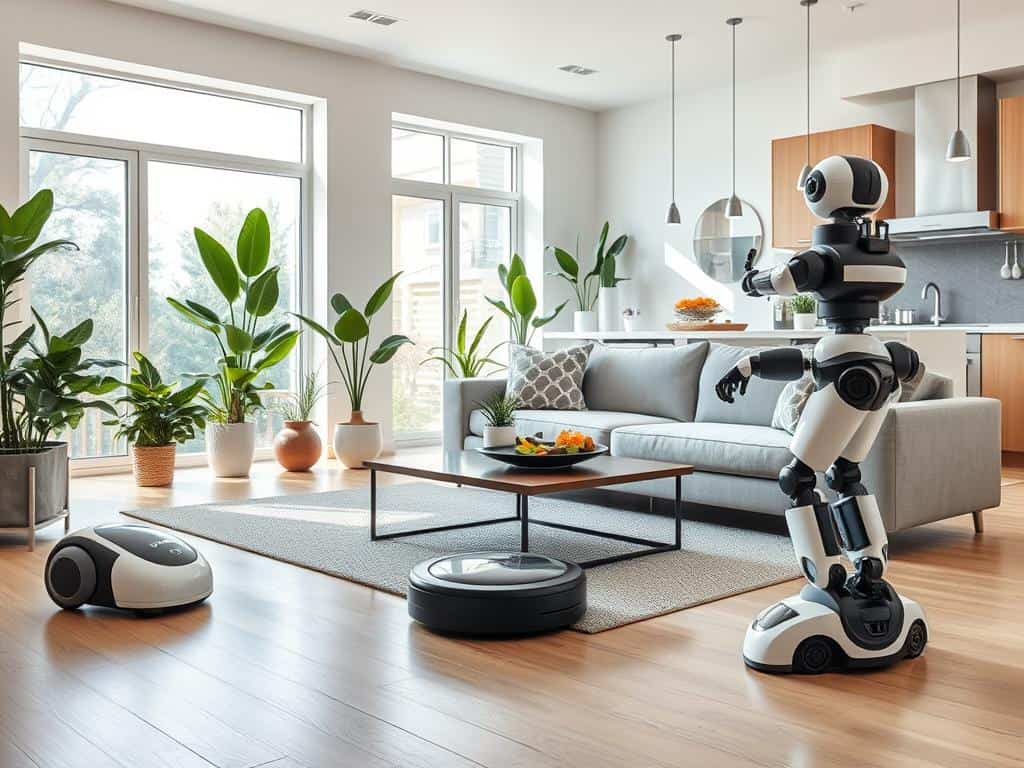
Did you know the personal robotics industry has grown a lot? It started with the Roomba in 2002. Now, robots like NEO Beta from 1X Technologies can understand emotions and talk back. They’re not just machines; they’re like helpful friends.
As more robots join our homes, they help us with everyday tasks. They also make our homes smarter and help with learning. With more older people by 2050, robots could really improve our lives.
Exploring personal robots in home automation is exciting. They could make our lives easier. Robots are becoming a big part of our daily lives. It’s time to think about how they can help us at home.
Key Takeaways
- Personal robots have evolved rapidly, starting with the Roomba in 2002.
- Advanced robots, like NEO Beta, enhance interactions through emotional recognition.
- By 2050, the need for robotic assistants will grow due to the aging population.
- Robots can assist with daily chores, scheduling, and education.
- Modern robots are becoming increasingly affordable and sophisticated.
- AI helpers hold the promise to greatly enhance our quality of life.
The Rise of Personal Robots in Home Automation
Personal robots are changing how we use technology at home. The first Roomba came out in 2002, starting a new era. Now, companies like iRobot and Mayfield Robotics make robots that learn and help us.
The market for these robots is growing fast. It was worth USD 6.81 billion in 2020 and is expected to grow even more. This shows how much people want personal robots in their homes.
Evolution of Robotic Assistants
Robots have become smarter and more useful in our homes. They help with cleaning and keep us company. They can even understand what we say.
By 2025, we’ll see even more robots in homes. This shows how quickly they’re becoming a part of our lives.
Impact on Daily Life
Robots make our daily lives easier by doing the boring stuff. They let us do things we enjoy more. Robots like Gita and NEO Beta make us more active and social.
They also make our homes more comfortable. As smart home technology grows, robots will make our lives even better.
Advanced Features of Modern Robotic Helpers
Personal robots are getting smarter and more useful in our daily lives. They use smart home tech and AI learning to change how we do things. This makes our routines easier and more efficient.
Integration with Smart Home Technology
Today’s personal robots work well with smart home tech. They connect everything in your home, making life simpler. For example, NEO Beta can control lights, heat, and security.
This connection makes things more efficient and enjoyable. Smart home robots are key in making our homes automated. They help us with daily tasks, making life easier.
Adaptive AI Learning
Robots now learn and adapt thanks to AI. They get better at understanding what we need over time. Robots like Nadine and Pepper can even offer personalized help and reminders.
This technology makes robots more than just helpers. They become friends, improving our emotional connections. As AI gets better, robots will play a bigger role in our lives, connecting us with tech in new ways.
Personal Robots: Addressing Safety and Ethical Concerns
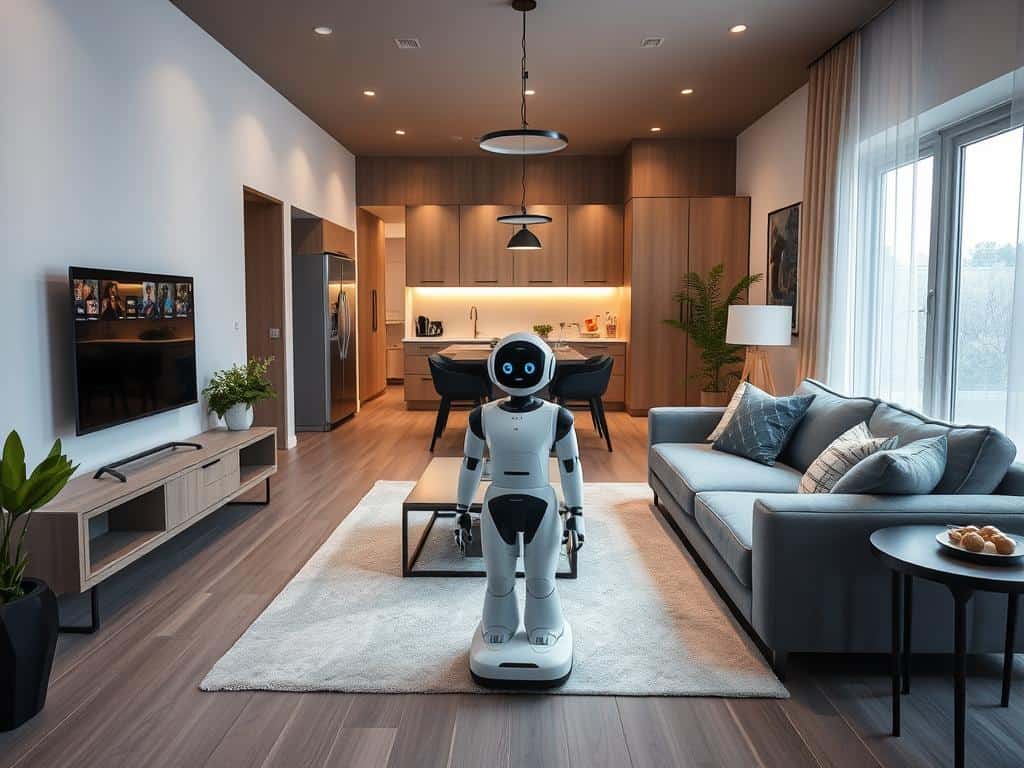
Personal robots are becoming more common in our daily lives. This raises important questions about privacy and surveillance. For example, devices like Gita use cameras to move around. Even though makers say they don’t keep images, there’s a worry about user safety.
Creating clear rules and laws is key to keeping our privacy safe. This way, we can enjoy the benefits of having robotic helpers without risks.
Privacy and Surveillance Issues
One big worry with service robots is how they handle our personal info. Studies show many people are concerned about privacy and data protection. They give it a high score, 5.09 out of 7.
With the GDPR in the European Union, getting people’s consent for data use is more important than ever. This rule helps build trust in technology by being open about data collection.
Safety Features
Designing personal robots with user safety in mind is essential. Companies like 1X Technologies have added safety features to their NEO Beta model. These include systems to avoid crashes and alerts in emergencies.
These features help prevent accidents and make a safe space for users to interact with robots. With the risk of serious problems, it’s vital to have strong safety measures. This builds trust and acceptance of these new technologies.
Conclusion
The future of personal robots is exciting. They are becoming key parts of our daily lives, making our homes smarter and changing how we interact with them. Thanks to advancements in AI and safety, these robots are getting better at helping us.
I see a future where robots are our home helpers. They will assist with cleaning and even help with learning. Schools are already using robots like SoftBank Robotics’ Pepper to change education. This is preparing a generation ready for AI and robotics.
But, there are big questions about ethics, like privacy. Are we ready for robots in our homes? It’s not just about technology; it’s about changing our lives and how we connect with each other. I’m excited to see how robots will make our homes better and more connected.
