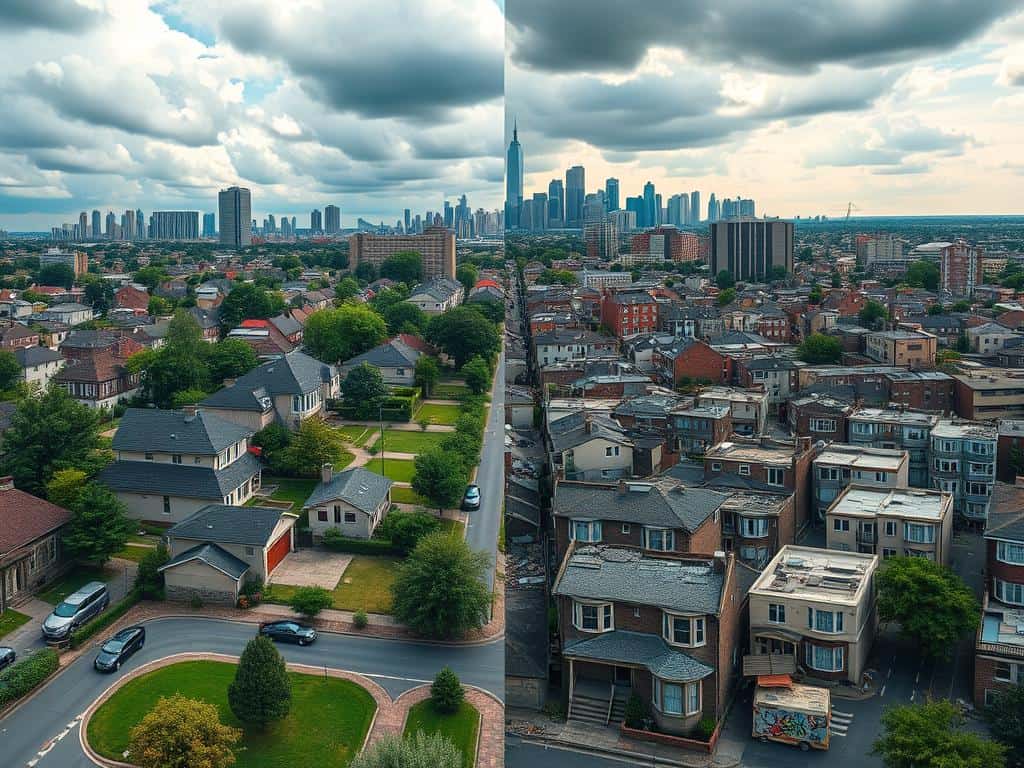
Did you know that the top 10% of U.S. families now hold 79% of the country’s wealth? This is a huge jump from 60% in 1983. The gap between the rich and the poor is getting bigger, and it’s a big problem in 2024. The rich are getting richer, while the middle and lower classes are barely keeping up.
Looking at household incomes, we see a big change over the years. From 1970 to 2018, the median income went up by 49%. But the rich saw even bigger gains. This shows how uneven the economic playing field has become.
The issue of income inequality affects real people and communities. It’s not just numbers. Without big changes in policies and the economy, we’re looking at a future with even more inequality.
Key Takeaways
- The share of wealth held by upper-income families has increased substantially.
- Median household income has grown, but the rate of growth has slowed significantly.
- Economic policies and technological advances are key drivers of rising inequality.
- The middle-class share of income has declined over the decades.
- Income distribution is increasingly skewed towards the wealthy.
The Current State of Income Inequality in the U.S.
The income inequality in the United States is complex. Despite many jobs being created, household income hasn’t grown as expected. The top households are earning more, while the middle class is barely holding on. This imbalance worries experts about the future of economic growth and fairness in wealth sharing.
Overview of Economic Indicators
The Gini index shows a slight drop in income inequality, down 1.2% in 2022. This is the first decrease in 15 years. Yet, post-tax income inequality went up by 3.2%. These numbers highlight the ongoing wealth gap, calling for new policies to fix it.
Growth Trends of Household Income
Household income growth is not even, affected by economic downturns and policy changes. The richest 1% are earning more, leaving the rest behind. This growing wealth gap shows deep-seated problems that need fixing. Factors like changes in work and recession impacts are key to understanding this issue.
Drivers of the Growing Income Inequality
The U.S. labor market has seen a rise in income inequality. This is due to several economic factors. These factors change how jobs are created and paid, leading to big differences in earnings.
Economic Factors Contributing to Inequality
Automation has been a key player in increasing income inequality over the last 40 years. It’s responsible for more than half of the rise. Those with college degrees have seen their earnings grow, but those without high school diplomas have seen their wages drop by 15%.
Impact of Recessions and Economic Policies
Recessions make economic gaps worse. They hit middle- and lower-income families hard, making it tough for them to get back on their feet. Tax policies and social safety nets haven’t done enough to stop wealth from concentrating at the top.
As income gaps grow, so do the differences between city and country areas. It’s important to understand these factors to make economic policies fairer.
Income Inequality: Social Implications
Growing income inequality has deep social effects that go beyond just numbers. The American middle class is shrinking, with household incomes not keeping up with the rich. This middle-class decline has cut the middle class’s share of income from 62% in 1970 to 43% in 2018. This shows how a once key part of the economy is now smaller.
Effects on the American Middle Class
The decline of the middle class hurts not just the economy but also social bonds. As more people miss out on income growth, the gap between rich and poor grows. The bottom 90% saw wages rise by 32.9% from 1979 to 2022. But the top 1% saw a huge jump of 171.7%. This gap makes many feel left out and unhappy.
Racial Wealth Gap Exacerbating Inequality
The racial wealth gap also plays a big role in income inequality. The gap in net worth between Black and white families has grown a lot. It went from $841,900 to $1.15 million between 2019 and 2022. This shows how long-standing discrimination and unequal access to resources keep wealth mainly in white families. This makes it hard to fix economic fairness and mobility.
Conclusion
In 2024, income inequality is a big problem. It comes from lasting economic issues and bad policies. The income gap shows how hard the middle class is doing and makes the racial wealth gap worse. We need real changes to fix this.
We must look at our current policies and find new ways to share resources fairly. This is key to making society more equal.
The future looks bleak if we don’t change things. Without action, income gaps will keep growing. This could hurt our social and economic health.
We need to work on digital equity, fair taxes, and good jobs for everyone. If we don’t act now, future generations will face even more inequality.
Fixing income inequality is more than just policy. It’s about making our society fairer and more welcoming. Our actions now will shape the future of economic equality. It’s time to work towards a better future for everyone.
