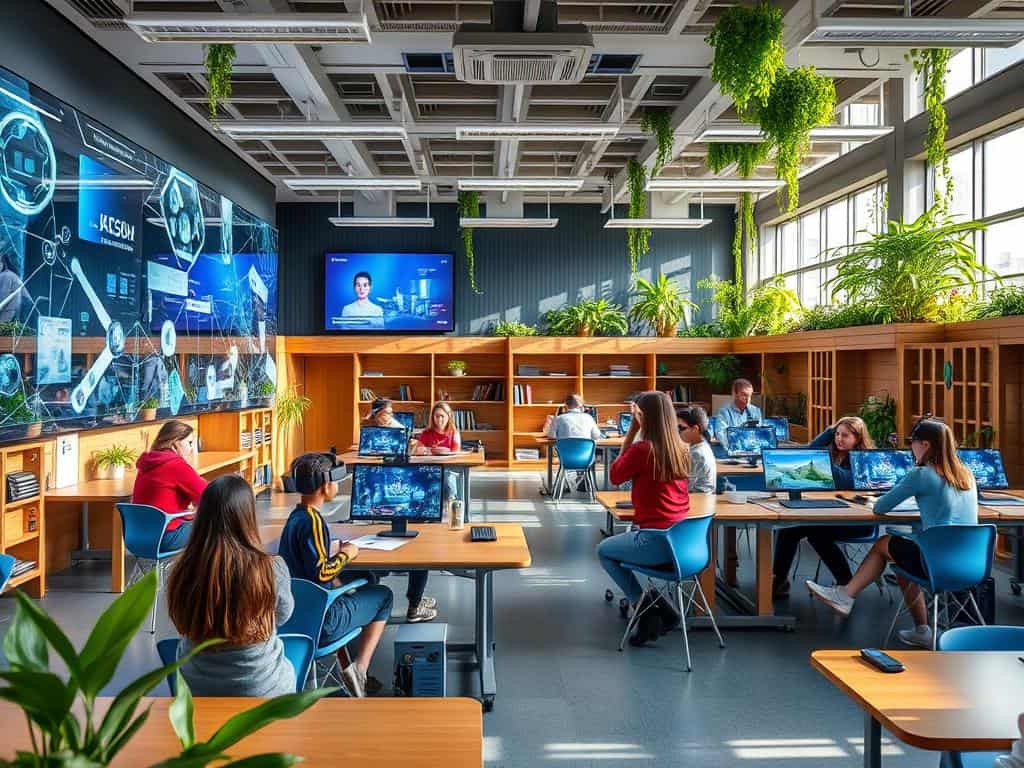
In 2023, generative AI technology changed education with tools like ChatGPT. This tool can write like a human. It shows how schools are changing fast to meet new needs. They’re using digital tools, focusing on STEM, and teaching soft skills.
Exploring these changes, I see how they make learning better. They also get students ready for a future full of chances.
Key Takeaways
- Generative AI technology is revolutionizing learning with tools that engage students and enhance educational content.
- Schools are increasingly utilizing immersive technologies such as virtual reality, providing students with hands-on experiences.
- The need for personalized learning approaches is growing, tailoring education to individual student needs and preferences.
- STEM education is becoming critical to prepare students for the emerging tech job market.
- Data privacy concerns are rising as technology integration in education expands, underscoring the importance of security measures.
- Soft skills and emotional intelligence are emphasized as vital components for future success in students.
Integration of Technology in Education Systems
Technology is changing how we learn. It’s making classrooms more interactive and engaging. Digital tools are at the heart of this transformation.
Digital Tools Transforming Classrooms
Digital tools are now key in classrooms. Interactive whiteboards and tablets make learning fun and interactive. They help students get involved in their studies.
Online grading systems also play a big role. They help teachers, students, and parents stay connected. This makes learning more efficient and tailored to each student’s needs.
Personalized Learning Through Technology
Technology makes learning personal. Classroom tablets offer customized learning experiences. This is great for all students, no matter their age.
Younger students enjoy interactive games that teach important skills. Middle school students use technology to improve their research and life skills. High school students learn essential skills for college and careers.
Immersive Learning Experiences
Immersive technologies like augmented and virtual reality are changing learning. They offer interactive simulations, like virtual field trips. These experiences make learning fun and effective.
It’s important to use technology wisely in classrooms. This ensures it enhances learning without causing distractions. Strong leadership and clear standards are key to successful technology use in schools.
Emphasis on STEM Education
As our world moves forward, STEM education gets more attention. It’s key for getting ready for the future. Schools are changing their lessons to meet the need for tech skills in many fields.
Curriculum Changes Reflecting Global Needs
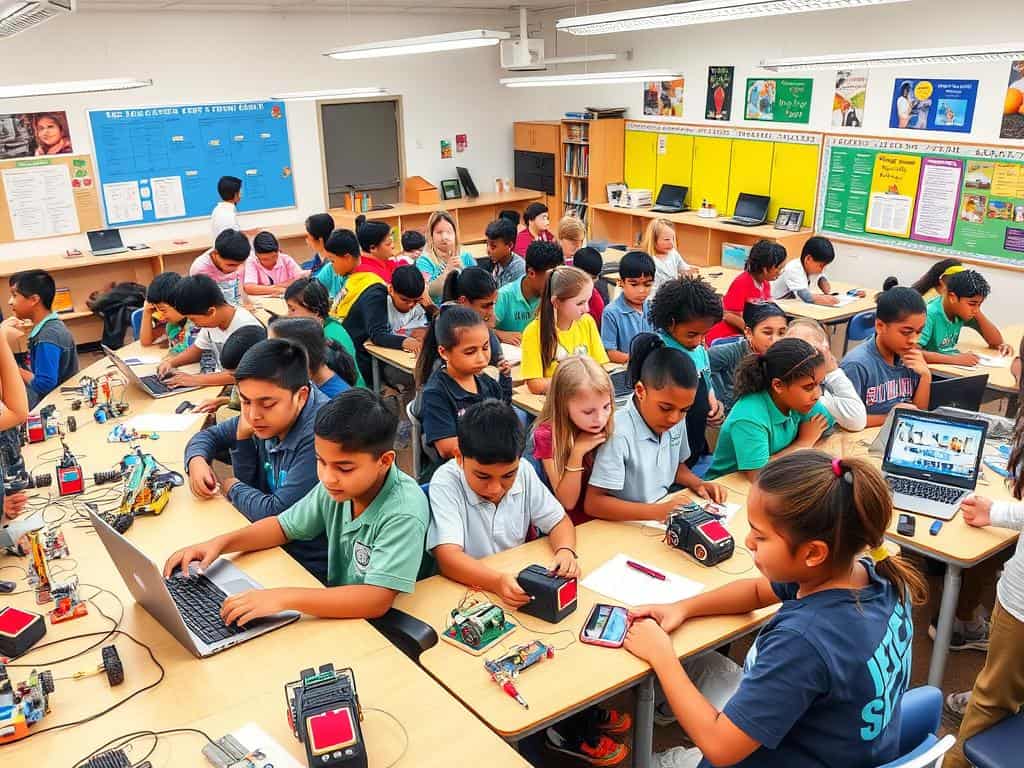
Now, schools focus more on STEM subjects like coding and robotics. This helps students get the skills they need for success. By adding these subjects, schools make learning more interesting and relevant.
This change also encourages more students to choose STEM careers. It’s a big step towards preparing them for the future.
Hands-On Learning Opportunities
Hands-on learning is essential for STEM education. Activities like robotics clubs and science fairs let students use what they learn. These experiences help students work better together and think creatively.
By focusing on real-world experiences, schools aim to give students a solid foundation. With the right support, educators can make learning even more impactful.
Development of Soft Skills for Future Success
As I watch education change, I see how important soft skills are. Skills like teamwork, talking clearly, and understanding emotions are key. They help students succeed in school and later in their careers.
Importance of Emotional Intelligence
Emotional intelligence helps with personal and work relationships. It lets students handle their feelings better. This makes them better at working with others and getting feedback.
Students with good emotional intelligence grow and adapt well. This is important in today’s fast-changing job world. Employers want people who can work well in teams.
Project-Based Learning Approaches
Project-Based Learning (PBL) is a great way to teach soft skills. Students work on real projects together. This helps them think critically, communicate well, and work as a team.
This hands-on learning makes students feel responsible and accountable. These qualities are key for their future success.
Conclusion
The way we learn is always changing, thanks to our fast-paced society. Schools must use technology, teach STEM subjects, and focus on soft skills. These steps are key to keeping students interested and ready for the future.
Students who feel important and supported do better in school. But, many leave early because they don’t feel valued. Schools must change to make sure every student feels seen and heard. This way, we can have a fairer education system and a stronger economy.
By creating welcoming and creative learning spaces, we help students think critically and challenge the status quo. It’s vital to tackle the big problems in schools so every student can succeed. This way, education will prepare students not just for jobs, but for active participation in society.
