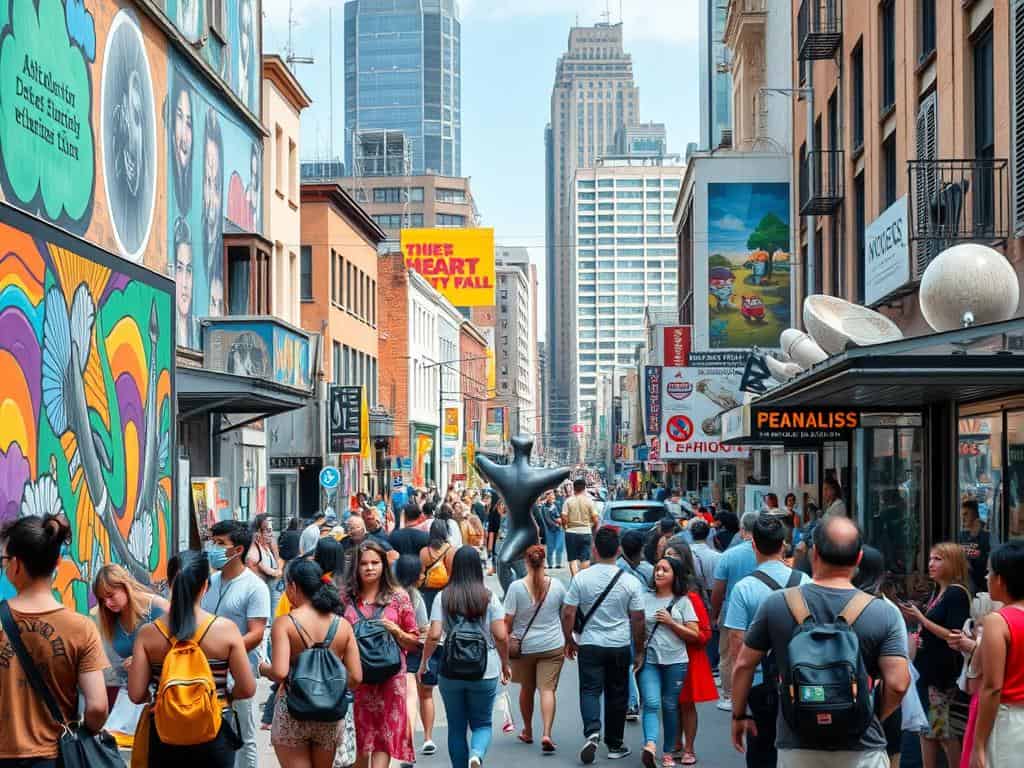
Did you know that young people who get involved in the arts are four times more likely to be recognized for their academic achievements later? In 2024, the connection between art and society is as strong as ever. It shows how art deeply influences cultural changes and societal shifts.
Art goes beyond borders, touching different parts of our lives. When we dive into the world of Art & Society, we see that being creative is not just about making art. It’s about developing important skills like creativity and critical thinking. It also helps grow emotional intelligence.
Interestingly, high school students who are involved in the arts are more likely to volunteer and vote as adults. Art is not just a static form of expression. It’s a dynamic mirror that reflects our society’s values. It also helps future generations learn from today’s art.
Key Takeaways
- Art significantly increases academic recognition among young participants.
- Engaging in art contributes to higher volunteerism and civic participation.
- Art fosters community bonds and can boost local economic growth.
- Art serves as a vital medium for cultural preservation and transmission.
- Art influences and reflects societal values, shaping public dialogue.
The Influence of Art on Social Movements
Art has played a big role in shaping social movements throughout history. It helps raise awareness and start important discussions. Through different art forms, messages can cross language barriers, unite people, and spark conversations.
Historical Context of Art as a Catalyst for Change
Art has been key in promoting justice and equality, from the Harlem Renaissance to feminist movements. Artists have used their work to challenge norms and engage the public. Protest art, for example, directly tackles societal issues, aiming to bring about change.
This legacy shows art’s important role in social movements and cultural impact.
Modern Artistic Expressions and Activism
Today, artists tackle issues like climate change, racial injustice, and gender inequality. Art activism uses social media to reach global audiences. This has opened new ways to mobilize, but also brings challenges like misinformation.
The mix of art and politics today is powerful. It allows for a quick response to societal issues, deepening art’s cultural impact.
Case Studies of Recent Movements Inspired by Art
Recent movements, like Black Lives Matter and environmental protests, show art’s direct impact. Visual and performance art are key, sparking dialogue and action. These stories touch hearts, creating connections and empowering people to act on what matters to them.
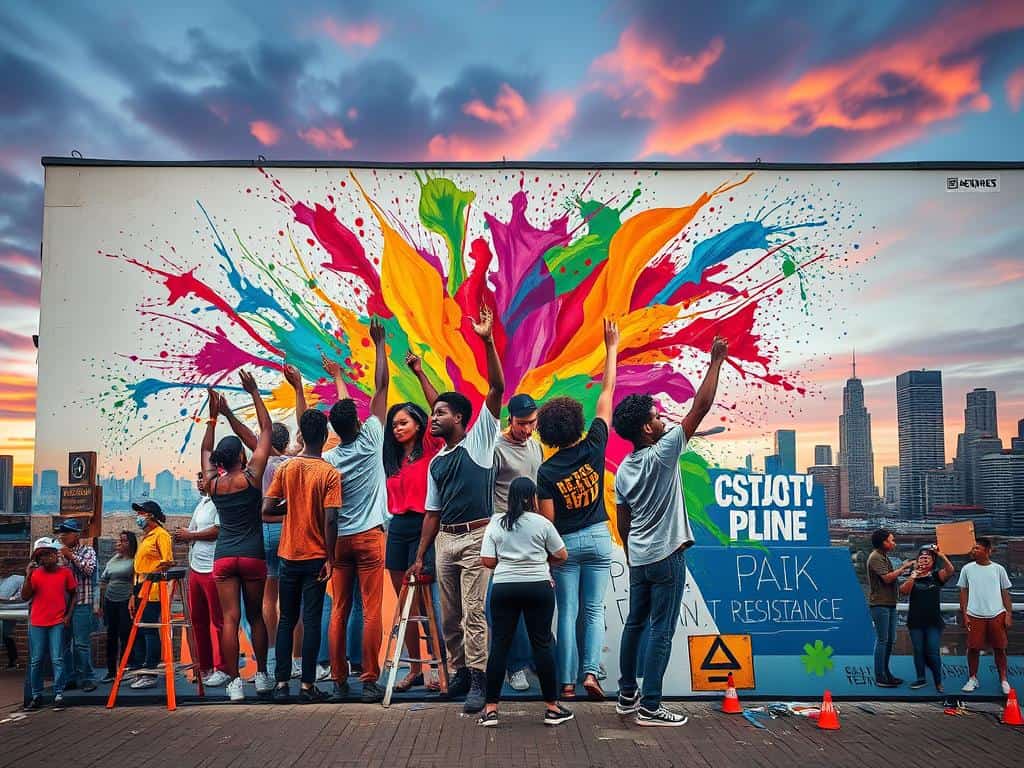
Art & Society: Fostering Creativity and Cultural Identity
Art and society are closely linked, supporting creativity and cultural identity. Art in education boosts critical thinking and motor skills. It also helps with emotional growth in young people.
When students take part in arts education, they learn more than just art. They experience community engagement, building social bonds and connections. Creative expression lets people share their thoughts and feelings, helping them discover new parts of themselves.
The Role of Art in Education and Community Engagement
Engaging in creative activities helps people connect with themselves and others. It encourages dialogue and teamwork. Art reflects our diverse cultural heritage, celebrating our roots and growth as a society.
This collective expression can change lives, strengthening a sense of belonging. Art empowers creators to be true to themselves. It also fosters empathy and understanding among different cultures.
Art as a Reflection of Cultural Heritage
Art preserves and shares our cultural stories, creating a rich human experience. Artists have always challenged and sparked conversations about identity and community. This reflection is vital, reminding us of our heritage and who we are.
As we explore art and society, I believe art will always be key for personal growth and celebrating our shared identities.
