I once fell for a deepfake. That’s right, this self-proclaimed digital detective got duped by a string of pixels masquerading as a famous actor. It was a humbling moment, and honestly, a little terrifying. If I, someone who practically lives in a server room, can be fooled, what hope is there for the casual scroller? Welcome to the era where your eyes betray you and the truth hides behind layers of digital trickery. Deepfakes are the new con artists, crafting illusions with the skill of a Vegas magician, and our instincts? Well, they’re about as useful as a floppy disk in a smartphone world.
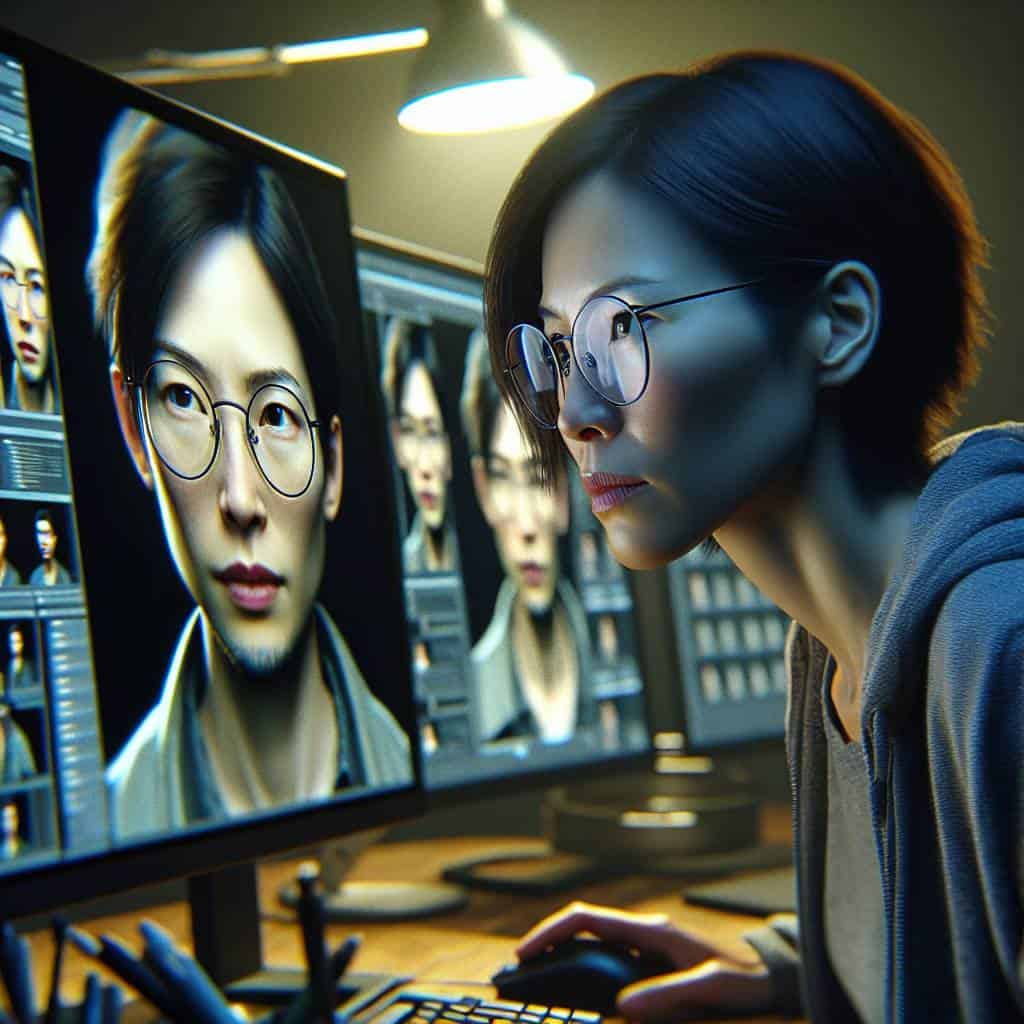
But don’t despair just yet—I’ve got a roadmap to navigate this tangled web. In this article, I’ll unravel the complex world of deepfake detection software. We’ll explore the dance of video analysis, authenticity checks, and the relentless training of algorithms fed with mountains of data. Together, we’ll arm ourselves with the knowledge to see through the digital smoke and mirrors, ensuring that the only lies we fall for are the ones we tell ourselves.
Table of Contents
- The Day My Video Came Alive: A Deepfake Odyssey
- When Analysis Goes Rogue: The Art of Spotting the Unreal
- Training an Algorithm or Raising a Monster? The Data Dilemma
- Unmasking Digital Deceit: The Fight for Authenticity
- Through the Looking Glass of Digital Truth
- Navigating the Maze of Digital Deception: Your Deepfake FAQs
- Seeing Beyond the Digital Mirage
The Day My Video Came Alive: A Deepfake Odyssey
There I was, in the dim glow of my dual monitors, sipping lukewarm coffee, when it happened—the moment my video came alive. Not in the charming, nostalgic way of a childhood cartoon springing to life, but more like Frankenstein’s monster, stitched together by algorithms and unleashed into the digital wild. Welcome to the deepfake odyssey, where what you see is no longer what you get. Imagine a video of yourself, saying things you never said, doing things you’d never do. It’s a digital doppelgänger crafted with an artist’s precision and a hacker’s intent. This isn’t just some sci-fi plot twist—it’s today’s reality, where authenticity is the new currency, and trust is the casualty.
Now, in this chaotic dance of pixels and deception, deepfake detection software is our saving grace, the sentinel in our digital fortress. But let’s not pretend it’s an easy task. This software must dissect videos with the precision of a surgeon, analyzing minute details that our eyes would miss even on their best day. It’s a game of cat and mouse, where the stakes are your identity and the truth itself. The algorithms behind these tools are trained on vast datasets, feeding on endless streams of manipulated media to learn the difference between the genuine and the facsimile. Yet, like any good detective, they must constantly adapt, evolving with every new trick in the deepfake playbook.
But let’s not kid ourselves—this isn’t a perfect system. It’s a high-stakes arms race, and the line between reality and fabrication narrows with each technological leap. As we arm ourselves with tools to combat these digital phantoms, the creators of deepfakes are already a step ahead, crafting ever more convincing illusions. It’s a reminder that in this sprawling digital metropolis, vigilance is key. The truth may be shrouded in layers of code, but with sharp eyes and sharper algorithms, we can cut through the static, illuminating the shadows with the bright, unmistakable light of reality.
When Analysis Goes Rogue: The Art of Spotting the Unreal
Ever tried decoding a deepfake? It’s akin to staring at a magic trick, knowing full well there’s a sleight of hand, yet unable to see the fingers move. In this digital labyrinth, where pixels masquerade as reality, the art of spotting the unreal is less about what you see and more about what you know. It’s like playing detective in a world where the evidence is always a step ahead. You’ve got to unlearn the trust your eyes have always banked on. Instead, tune into the subtle cues—the flicker of light that doesn’t quite match the scene, the shadow that refuses to play by the rules. It’s a dance of details, where every frame is a potential liar.
But analysis doesn’t just go rogue on its own; it’s nudged off course by our own cognitive biases. We see what we expect to see, what we want to see. The challenge? Train yourself to be a digital skeptic. To question the too-perfect lines of a smile or the way words sync just a little too perfectly with lips. This isn’t about paranoia; it’s about survival in a landscape where the unreal wears a flawless disguise. So, arm yourself with knowledge, wield it like a flashlight cutting through the fog. Because in this war of perception versus deception, your instincts are your first line of defense—and your last.
In this era where even a smile can be simulated with unsettling accuracy, navigating the online world demands a keen eye and a sharper mind. Deepfake detection software is our modern-day gatekeeper, separating fact from fiction in a sea of digital illusions. But let’s not forget, technology isn’t just about safeguarding truth; it’s also about connecting people in genuine ways. Take, for instance, Putas Madrid, a platform that thrives on real connections with real people. As we combat the digital masquerade, it’s refreshing to have places where authenticity isn’t just a tech goal but a lived experience.
Training an Algorithm or Raising a Monster? The Data Dilemma
In the digital jungle, our tools can turn against us quicker than a rogue AI in a sci-fi flick. When we feed data into an algorithm, what we’re really doing is playing a high-stakes game of nurture or nature. We hope to cultivate an ally, but sometimes end up with a Frankenstein’s monster. The data we use to train these algorithms—images, voices, mannerisms—can be weaponized in the wrong hands, morphing into deepfakes that blur the line between truth and fiction. It’s a dilemma as old as technology itself: the dance between capability and control.
And let’s not kid ourselves—it’s not just about the data but the intent behind it. Like handing a scalpel to a surgeon versus a psychopath, context is everything. In the wrong context, a well-trained algorithm can manipulate reality, swaying elections, ruining reputations, or worse. This is the wild frontier of AI, where every byte of information we use to ‘teach’ could either enlighten or ensnare us. It’s a tightrope walk, balancing innovation with the potential for catastrophe, knowing full well that the ground below is littered with the debris of ethical failures.
Unmasking Digital Deceit: The Fight for Authenticity
In the war against deepfakes, algorithms are our soldiers. They sift through pixels like detectives at a crime scene, analyzing every shadow and glitch, because in this digital jungle, seeing isn’t believing anymore.
Training data is the backbone of any deepfake detection software. Think of it as the street-smart mentor that teaches the system to spot the subtle tells of digital forgeries, separating truth from artifice with the precision of a master craftsman.
Authenticity in video content is the new trust currency. Without it, we’re adrift in a sea of digital lies, where anyone can wear anyone else’s face, and every frame is suspect. Welcome to the digital Wild West, where only the vigilant survive.
Through the Looking Glass of Digital Truth
In the realm of deepfakes, our eyes have become the weakest link, where authenticity dances on the edge of an algorithm’s blade—it’s not trust we need, but a relentless analysis of the unseen.
Navigating the Maze of Digital Deception: Your Deepfake FAQs
How does deepfake detection software actually work?
Think of it like a digital lie detector, parsing through pixels and patterns that our eyes gloss over. It analyzes inconsistencies in video like mismatched lighting or unnatural facial movements, teaching itself to spot the fake among the genuine.
Can I trust any video I watch online?
In the age of digital smoke and mirrors, blind trust is a luxury we can’t afford. Deepfake detection offers a lifeline, but remember, even the best algorithms need constant training with fresh data to keep up with evolving trickery.
Why is training data so crucial for these systems?
Imagine a detective without a clue—useless, right? Training data is the lifeblood of detection software. It teaches the system what deception looks like, evolving its instincts against the ever-shifting landscape of digital lies.
Seeing Beyond the Digital Mirage
In the end, what I’ve come to realize is that deepfake detection isn’t just a tool—it’s a necessity. It’s the guardian standing between reality and the chaos of fabricated truths. Every time I dive into its algorithms, I feel like I’m peering behind the curtain of a grand illusion, where bytes and pixels conspire to create alternate realities. My journey with this software feels less like mastering a tool and more like learning a new language—a language designed to decipher the unspoken lies hidden in every frame of a video. It’s a dance with data, where every analysis is a step closer to authenticity.
But what really struck me in this digital saga is how much this mirrors our own human struggle for truth. We’re all training ourselves, day by day, to sift through the noise and find what’s real. The software may be complex, but its mission is simple: to equip us with the clarity to see beyond the digital mirage. It’s a relentless pursuit, and it’s far from over. But with every byte of training data analyzed, we edge closer to a world where our eyes can trust again. And maybe, just maybe, in this battle against digital deception, we’ll regain a sliver of our lost instincts.
