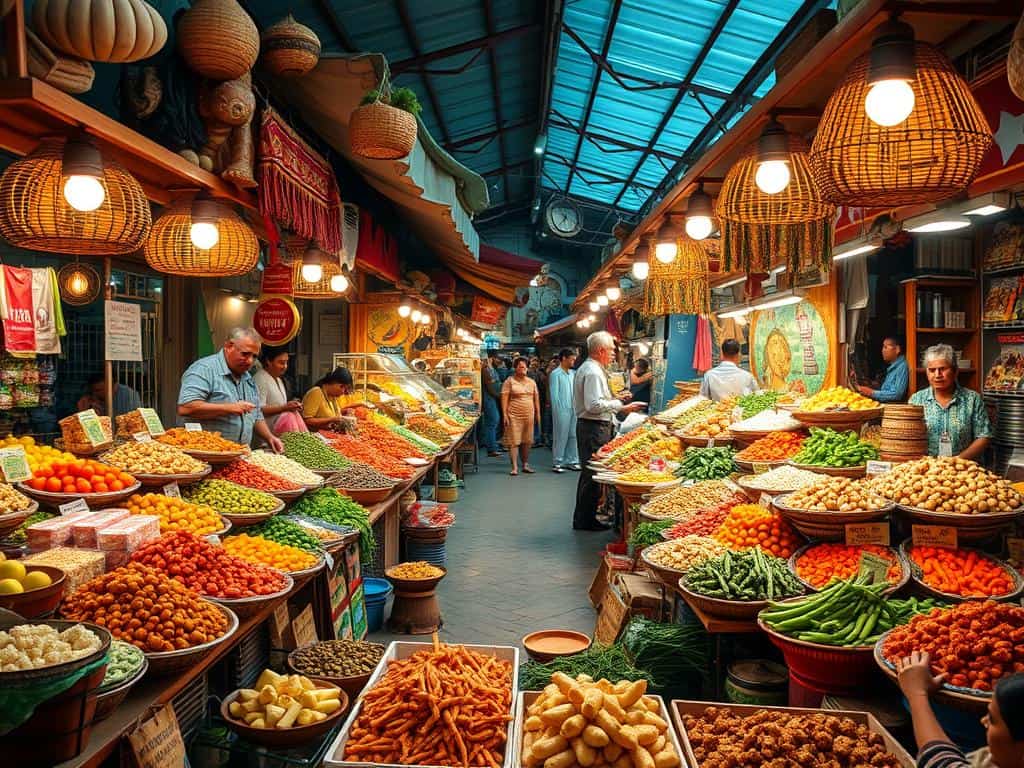
Did you know we eat over 35 tons of food in our lifetime? This shows how important food is in our lives and culture. Food culture goes beyond just eating; it shows our values, identity, and history. Professor Ty Matejowsky says food is a powerful way to express culture.
In American cuisine, different cultures blend to create a unique mix. Each food choice tells a story about us, our backgrounds, and our changing communities.
Looking into food culture, we see our eating habits do more than fill our bellies. They let us see our world in a new way. From new flavors brought by immigrants to the rise of processed foods among international students, our food choices deeply connect with who we are and our communities.
Key Takeaways
- Food culture represents societal values and cultural identity.
- Eating habits evolve due to historical and social factors.
- Food serves as a medium for cultural exchange and social interaction.
- Immigrants have historically adapted local cuisines to create new dishes.
- Dietary choices can reveal insights into an individual’s background and experiences.
- Educational initiatives about food can promote understanding and respect for diverse culinary traditions.
Understanding Food as a Reflection of Society
Food is more than just something we eat. It shows who we are and where we come from. For immigrants, food is a way to keep their heritage alive. They use local ingredients to make traditional dishes, showing how food changes and stays the same.
The Role of Food in Cultural Identity
Cooking traditions tell us a lot about a culture. They show the history and values of a community. In cities, different cultures mix, creating new foods. This shows how food helps people keep their roots while exploring new ones.
Food as a Marker of Historical Contexts
Food tells us a lot about the past. It shows what people ate and how they lived. Some foods are common in one place but rare in another. This shows how food can tell us about different places and times.
How Diet Influences Social Interactions
Sharing meals brings people together. It’s a way to build community. But today, eating alone is more common. This can make us feel disconnected. Yet, there’s a growing interest in eating together again, to strengthen our bonds.
Food Culture in the Context of Traditions and Trends
Food traditions are key to cultural identity, showing what makes a community unique. They offer a peek into the past. In different cultures, cooking is a way to connect and share heritage.
Traditional meals are important for bonding with family and friends. They are celebrated during special times. For example, the Jewish Passover seder and iftar meals during Ramadan unite people.
These meals reflect a society’s values and beliefs. They remind us of our roots through shared food experiences.
The Significance of Food Traditions in Various Cultures
Food traditions keep cultures rich and vibrant. Recipes are often shared across generations, linking people to their heritage. Each dish tells a story of history and values.
Seasonal fasting and daily meals in many religions show how food shapes our lives. Certain foods mark important life events, creating emotional bonds with food.
Emergence of Food Trends and Their Societal Impact
New food trends show what society values today, like health and sustainability. The rise of plant-based diets shows a growing awareness of diet’s impact on health.
Changing lifestyles mean more people eat alone, as seen in a study from Oxford University. This could harm social bonds, affecting mental health. Food tourism also brings people together, allowing them to explore new flavors and cultures.
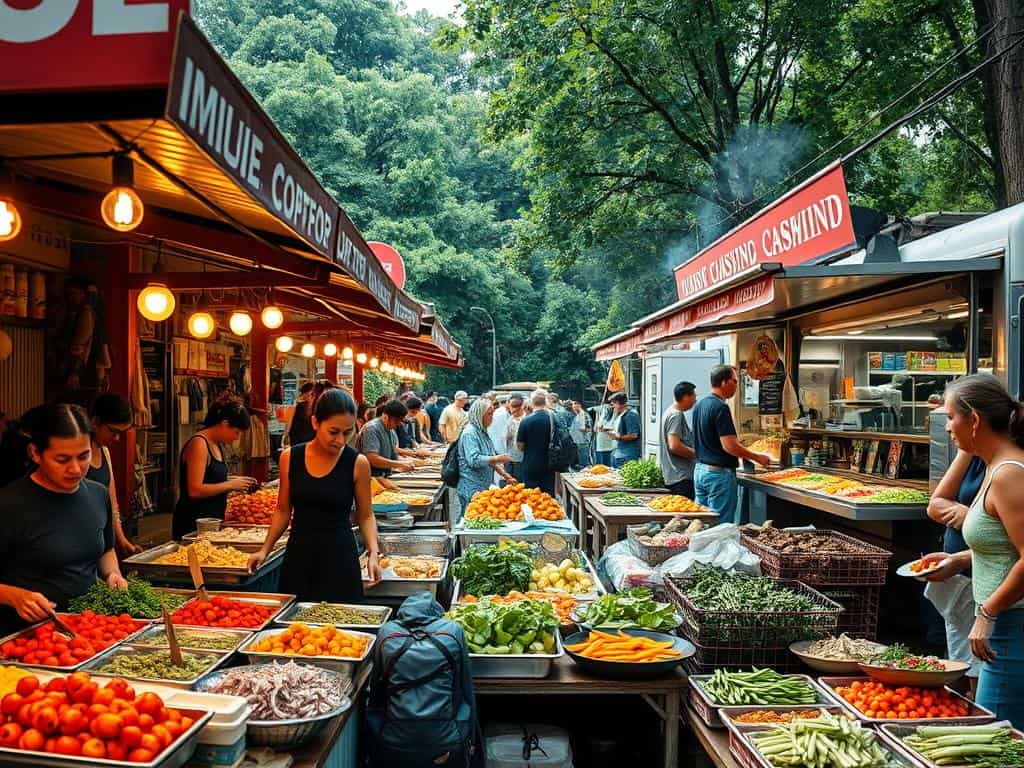
Food Culture: Globalization and Its Effects on Dietary Choices
Globalization has changed how we eat, blending local foods with new ones. It shapes our meals, mixing old traditions with global tastes. This mix shows how food brings cultures together.
The Influence of Globalization on Local Cuisines
Globalization has mixed flavors and cooking styles, making food more varied. We can now eat foods from around the world all year. But, this change also worries about losing biodiversity and harming the environment.
Small farmers face tough competition from imported foods. This can hurt their businesses and threaten their way of life.
Fusion Foods and Cultural Exchange
Fusion cuisine is a great example of cultures coming together through food. It shows how we can enjoy different tastes and learn from each other. For example, sushi rolls with local ingredients show how new foods can enrich our culture.
Fast Food Phenomena and the Loss of Traditional Practices
Fast food chains like McDonald’s have changed how we eat. They offer quick, affordable meals that often replace traditional cooking. This shift worries about losing old food ways and farming methods.
While globalization brings new foods, we must keep our local dishes alive. It’s a challenge to balance new tastes with preserving our culinary heritage.
Conclusion
Looking at food culture, we see it’s more than just eating. It reflects our identities and traditions. Shared meals and cooking tell stories that connect us to our past and community. The variety of global cuisines shows how food is a key part of our culture.
Joining in on GoUNESCO’s Food Heritage campaign has opened my eyes. It shows how food shapes our society. By looking at common foods like tea, rice, and pork, we learn about migration, tradition, and innovation. The change in Indian cuisine in Britain shows how food changes with culture and immigration.
Thinking about food culture makes me realize how important our choices are. By celebrating different foods, we honor our heritage and help keep it alive. Food does more than just fill our bellies; it brings us together, builds connections, and shapes our society.
