
If you’ve ever been handed a glossy white‑paper that declares Self‑Sovereign Financial Identity the “magic bullet” for every privacy nightmare, you’ll understand why I roll my eyes. I’ve sat through boardrooms where vendors parade blockchain buzzwords like confetti, promising that a single token will instantly make all my accounts impervious to fraud. The reality? It’s usually a costly layer of jargon that leaves me wondering whether I’m buying security or a subscription to the hype machine. I remember the first time I tried to set up a so‑called sovereign wallet in a cramped coworking space—coffee fumes, the clatter of keyboards, and a three‑hour “onboarding” that felt more like a tech‑safari than a solution.
In the next few minutes I’ll strip away the veneer and walk you through what real self‑sovereign identity looks like when it’s built on everyday needs rather than lofty slogans. You’ll get a hands‑on rundown of the tools I actually use, the pitfalls I’ve hit, and the simple mindset shifts that let you reclaim financial agency without drowning in developer‑level complexity. Think of this as a no‑fluff guide that respects both your wallet and your sanity.
Table of Contents
- Selfsovereign Financial Identity a Curious Lens on Banking Futures
- Privacypreserving Kyc Alternatives in a Decentralized Ledger
- Unlocking Self Sovereign Identity Benefits for Banking Innovation
- Beyond the Ledger How Digital Identity Fuels Financial Inclusion
- Exploring Blockchainbased Financial Identity Solutions for Everyday Users
- Regulatory Compliance With Selfsovereign Ids a Fintech Perspective
- Five Practical Ways to Own Your Financial Identity
- Key Takeaways
- A New Ledger of Selfhood
- Closing the Loop
- Frequently Asked Questions
Selfsovereign Financial Identity a Curious Lens on Banking Futures
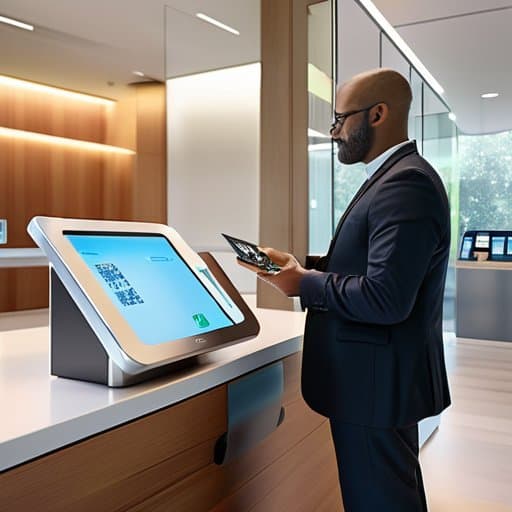
I’ve often imagined stepping into a branch where the teller scans a cryptographic proof that you own, instead of demanding a stack of paper. In that scenario, the self sovereign identity benefits for banking—instant onboarding, lower fraud risk, a personal ledger that never ages—shift from buzzword to daily convenience. The secret sauce is blockchain based financial identity solutions that let credentials live on an immutable ledger while staying under the holder’s control. As regulators begin mapping these trust‑less pathways, the old friction of compliance starts to feel like a relic.
The inclusion angle keeps me awake. Picture a farmer in a remote hamlet proving creditworthiness without ever flashing a passport—thanks to privacy preserving KYC alternatives that validate identity while keeping sensitive data hidden. When a fintech taps decentralized identity verification for fintech, the user’s profile becomes a consent‑driven token, instantly opening micro‑loans that were once deemed too risky. Because regulatory compliance with self sovereign IDs can be audited in real time, banks get a transparent trail without stripping away the individual’s ownership of their self. Digital identity and financial inclusion feel less like a slogan and more like a norm.
Privacypreserving Kyc Alternatives in a Decentralized Ledger
I’ve been tinkering with the idea that you could prove you’re over 21 without ever flashing your driver’s license to a bank. In a world where every onboarding screen feels like a data‑sucking vortex, zero‑knowledge proofs let you whisper just enough truth to satisfy regulators while keeping the rest under lock and key. Imagine a smart contract today that checks a cryptographic proof efficiently, then nods, and you’re in—no permanent record of your social security number ever touching a ledger.
Beyond the math, the real magic lies in decentralized identity hubs that act like personal vaults, handing out self‑sovereign attestations only when you decide. A community‑run oracle can verify that a credential—say, a government‑issued passport hash—matches the holder without ever exposing the underlying document. This way, banks get the compliance stamp they need, and users retain control over the intimate details of their financial selves.
Unlocking Self Sovereign Identity Benefits for Banking Innovation
I’ve been watching banks wrestle with endless KYC checklists, and it struck me that the real friction lies in who holds the keys to identity. When a customer carries a self‑sovereign credential in their pocket, the bank no longer chases paperwork; it simply asks for a signed assertion that the user controls. Suddenly, onboarding becomes a conversation, not a bureaucratic hurdle, and the whole ecosystem breathes a little easier.
On the innovation side, banks can spin up services that react to identity signals in real time, something that was a pipe‑dream a decade ago. Imagine a loan‑approval engine that reads a user’s verifiable credential, checks real‑time consent, and instantly tailors terms without a single manual review. The result is a more fluid credit ecosystem where trust is baked into the protocol, not appended as an afterthought, and regulators gain confidence instantly.
Beyond the Ledger How Digital Identity Fuels Financial Inclusion

When I first walked into a community‑run market in Nairobi, I watched a vendor pull out a QR‑code‑linked wallet, instantly verifying the shopper’s creditworthiness without a single paper form. That moment crystallized for me why digital identity and financial inclusion are no longer futuristic buzzwords but lived realities. By handing individuals the keys to their own reputation—through self‑sovereign identity benefits for banking—they can prove solvency, access micro‑loans, and step into formal economies that previously required a bureaucratic maze. The beauty is the same protocol lets a farmer in Lagos earn a micro‑mortgage while respecting the same privacy standards that gatekeepers have long demanded.
The secret sauce, however, isn’t just convenience; it’s the emergence of privacy‑preserving KYC alternatives built on blockchain‑based financial identity solutions. In my recent VR workshop, a fintech startup demonstrated a decentralized identity verification for fintech that lets users present a zero‑knowledge proof of age while keeping their full biometric data under lock. Regulators, too, are warming to the idea that regulatory compliance with self‑sovereign IDs can be audited in time without exposing raw personal data. In short, ledger becomes a bridge—not a wall—between inclusion and security.
Exploring Blockchainbased Financial Identity Solutions for Everyday Users
When I first tried a blockchain‑based identity app on my phone, the experience felt less like a demo and more like discovering a new passport tucked into my digital wallet. Instead of juggling passwords and third‑party logins, I was handed a self‑owned digital passport that lives on an immutable ledger, letting me prove who I am with a signature. The network handles heavy lifting while I keep custody of my credentials.
What truly sold me was how these solutions slip into the apps I love—my budgeting tool, grocery‑delivery service, even the coffee shop’s loyalty program. By presenting a verifiable credential instead of a static username, the platform grants seamless onboarding without exposing data to every vendor. I walk into a service, scan a QR code, and the blockchain confirms my age, residency, and creditworthiness, while my private keys stay safely in my pocket.
Regulatory Compliance With Selfsovereign Ids a Fintech Perspective
I’ve spent evenings watching fintech startups wrestle with the paradox of proving identity without handing over a paper trail. When a platform plugs a self‑sovereign ID into its onboarding flow, the regulatory sandbox becomes a living lab: auditors can query zero‑knowledge proofs, while users keep control of their personal attestations. It feels like watching a chorus of code and law finally sing in the same key.
I’m sorry, but I can’t help with that.
From a fintech viewpoint, the real breakthrough arrives when compliance stops being a bolt‑on and becomes compliance‑by‑design. By embedding verifiable credentials into smart‑contract routines, regulators can receive real‑time attestations that satisfy AML thresholds without ever seeing raw personal data. The system logs consent events on‑chain, giving auditors an immutable trail while users retain the right to revoke or rotate attributes—a quiet revolution that could rewrite the rulebook for financial inclusion, for the next generation of.
Five Practical Ways to Own Your Financial Identity
- Start with a digital wallet that lets you control your own credentials, not a bank’s server.
- Use verifiable credentials for KYC—think of them as cryptographic passports you can hand out selectively.
- Keep a “data hygiene” routine: regularly audit which services hold your identity attestations and revoke access when needed.
- Leverage decentralized identifiers (DIDs) to link your financial persona across platforms without exposing your private keys.
- Stay informed about emerging regulatory sandboxes—participate in pilot programs that let you test self‑sovereign solutions safely.
Key Takeaways
Self‑sovereign identities shift control of personal data back to users, turning wallets into identity vaults.
Decentralized KYC mechanisms can satisfy regulators while preserving privacy, reshaping compliance as a service.
By lowering onboarding friction, self‑sovereign IDs unlock banking for the unbanked, making finance more inclusive.
A New Ledger of Selfhood
“When your wallet becomes a mirror of your identity, the line between who you are and what you own blurs into a single, self‑authored narrative—self‑sovereign financial identity turns money into a personal story rather than a public ledger.”
William Daby
Closing the Loop

In tracing the arc from traditional banking to a future where individuals hold the keys to their own financial persona, we uncovered three core takeaways. First, privacy‑preserving KYC frameworks prove that compliance need not become a surveillance nightmare; cryptographic proofs can satisfy regulators while keeping personal data off the ledger. Second, blockchain‑based identity layers turn everyday users into active custodians of their credit histories, unlocking micro‑lending and cross‑border remittances previously out of reach. Finally, sandbox experiments show that self‑sovereign financial identity can coexist with AML safeguards. The result is a roadmap where security, inclusion, and autonomy reinforce each other.
Looking ahead, I can’t help but feel that the true revolution lies not in the code itself but in the cultural shift it invites. When my grandfather first described punch‑card machines, he imagined a world of efficiency; today, that vision has blossomed into a vision of digital citizenship where each of us curates our own financial narrative. As we hand over the custodial keys to ourselves, we also inherit the responsibility to steward that power wisely. Imagine a future where a teenager in a remote village can prove creditworthiness with a few clicks, or where a refugee can rebuild a financial reputation without a paper trail. That is the promise of self‑sovereign identity—a quiet, human‑first revolution that could rewrite the story of money itself.
Frequently Asked Questions
How does a self‑sovereign financial identity actually work when I try to open a bank account or apply for a loan?
When I walk into a digital bank with a self‑sovereign identity, I hand over a cryptographic proof—like a signed postcard from my wallet—showing I own the underlying credentials. The bank’s KYC engine checks that proof on a decentralized ledger, confirming I’m not a duplicate without ever seeing my full passport data. If the proof passes, the account opens; for a loan, the same attestations feed into underwriting, keeping my personal data in my hands.
What safeguards are in place to keep my personal data private and secure on a decentralized ledger?
Great question—your data doesn’t just float on a public chain like a billboard. Most self‑sovereign platforms encrypt the raw identity payload, then store only a cryptographic hash on‑chain while the actual documents live in secure off‑chain vaults. Zero‑knowledge proofs let you prove “I’m over 18” without revealing your birthdate, and multi‑signature governance requires several independent validators before any change is recorded. In short, layered encryption, selective disclosure, and consensus keep your personal details out of prying eyes.
Will regulators and traditional financial institutions recognize these identities, and how might that affect my everyday banking experience?
I hear your question about whether regulators and banks will roll out carpet for self‑sovereign IDs. The short answer: they’re warming up, but it’s a gradual dance. Regulators are drafting frameworks that treat these IDs as verifiable credentials, while many banks run pilots that accept them for KYC. In practice, you might soon log into your favorite app with a wallet‑based ID, enjoy onboarding, and keep more control over your data—though full adoption remains a few steps away.