
Did you know that about 50 million tons of e-waste are thrown away every year? This number is growing fast, thanks to more people using technology, mainly in new markets. Most of this waste comes from small gadgets and big appliances, harming our environment and health because of toxic materials.
Luckily, big names in tech are working hard to solve this problem. Companies like Apple and Microsoft are leading the way with their recycling programs and green practices. They want to cut down on e-waste and help make our future cleaner. By looking at how e-waste is made and how tech companies are trying to fix it, we can see a hopeful path ahead.
Key Takeaways
- E-waste generation reaches around 50 million tons annually, with a significant contribution from smartphones.
- Improper disposal of toxic electronic components poses serious environmental and health risks.
- Tech companies are actively promoting sustainability through trade-in and recycling initiatives.
- Entrepreneurs can play a role by repairing and recycling devices instead of throwing them away.
- Global cooperation and government policies are key to solving the e-waste crisis.
- Innovation in technology requires responsible use and effective waste management strategies.
The Growing E-Waste Problem
E-waste generation is growing fast, posing a big challenge worldwide. In 2019, the world produced 59 million U.S. tons of electronic waste, a 21% jump from five years before. As more people buy electronics, the problem is getting worse, with projections showing a huge increase by 2030.
Understanding E-Waste Generation
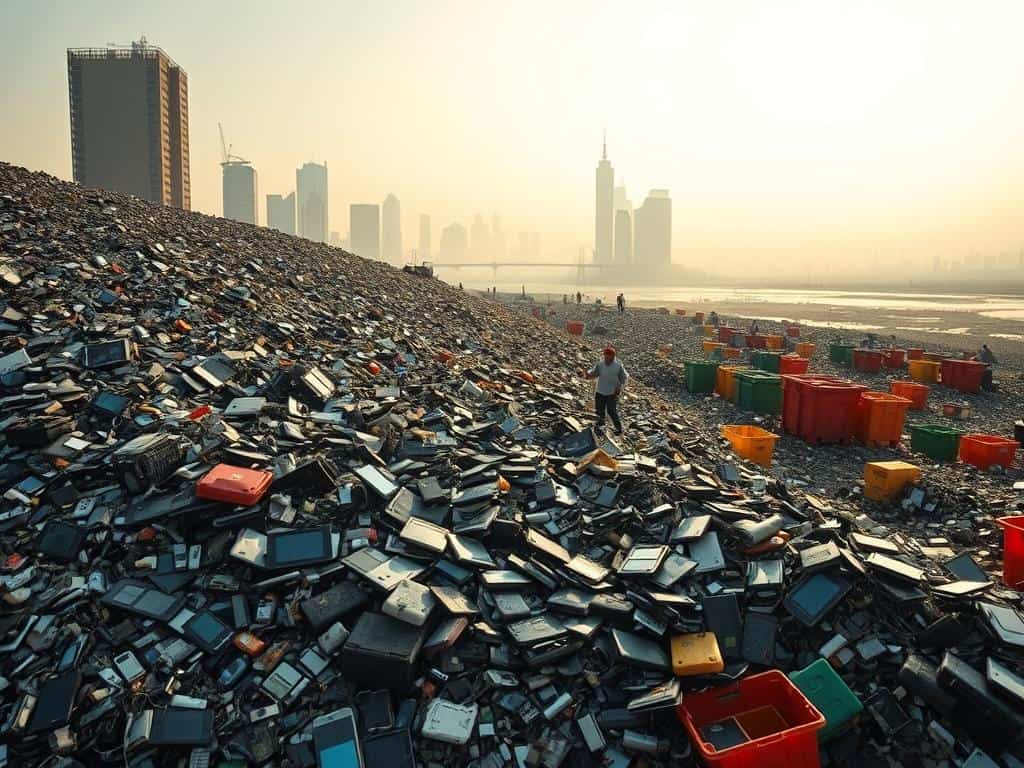
The need for new technology is driving e-waste up. Over 1.5 billion smartphones are sold each year, adding to the waste. Small electronics make up about 31% of this waste, while big appliances account for 28%. Sadly, over 82% of e-waste is not disposed of properly.
Environmental and Health Risks
Improper disposal of e-waste harms the environment. Toxic materials like mercury and cadmium can pollute soil and water. This can damage ecosystems and harm human health.
People, kids, and pregnant women are at higher risk. Exposure to these toxins can lead to serious health problems. It’s important to recycle and dispose of e-waste responsibly to protect our health and the planet.
Tech Companies and Their Sustainable Initiatives
Major tech companies like Apple and Microsoft are fighting the e-waste crisis. They use sustainable tech practices. These efforts not only tackle e-waste but also encourage people to care for the environment.
Apple’s Trade-In and Recycling Programs
Apple’s Recycling Programs are a great example of tech industry sustainability. They offer trade-ins for old devices like iPhones and MacBooks. This helps reduce e-waste and promotes recycling.
Apple also uses advanced robots like Daisy to recycle devices. This shows how they aim to reuse materials. Their work helps extend the life of electronic products, reducing environmental harm.
Microsoft’s Global Partnerships
Microsoft’s E-Waste Initiatives show the power of teamwork. They work with recycling groups and launch global partnerships. This ensures electronic waste is disposed of properly.
Microsoft also runs educational campaigns. These campaigns teach people to adopt green behaviors. Their efforts help manage the expected rise in e-waste by 2030. Together, Apple and Microsoft are leading the way to a greener electronics industry.
