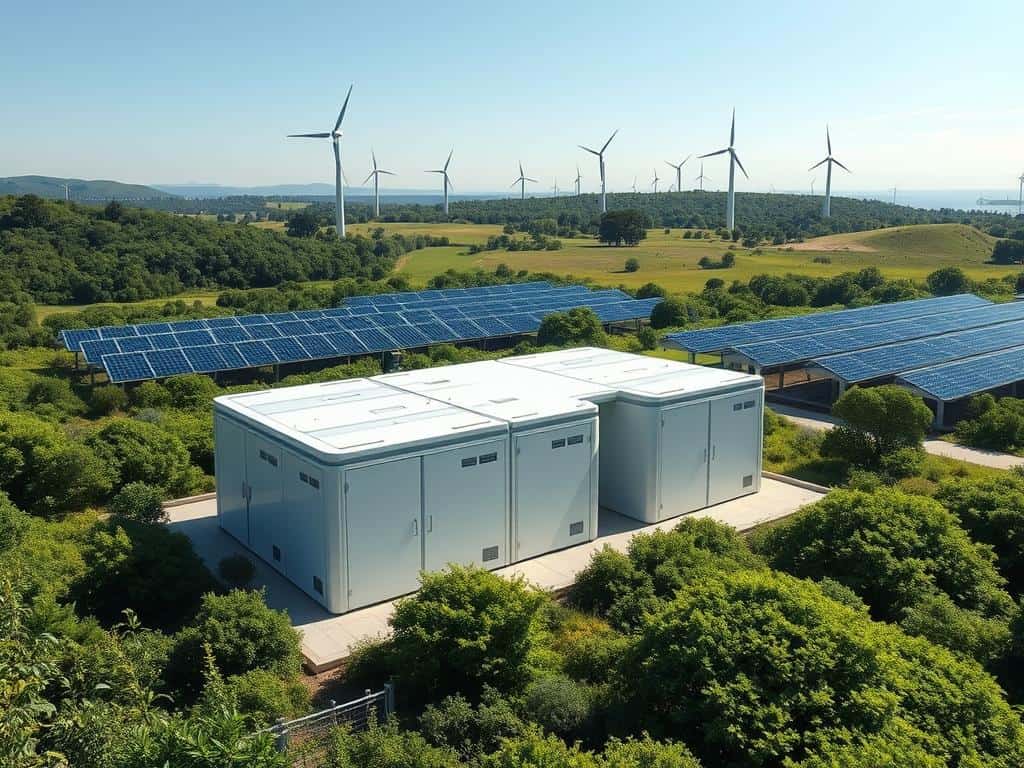
In January 2021, the world saw the biggest battery energy storage system in California. The Moss Landing Energy Storage Facility has 300 megawatts of lithium-ion battery capacity. It has 4,500 stacked battery racks. This shows how important energy storage is for a sustainable power grid.
The world is moving towards renewable energy like solar and wind. But, these sources have a problem: they don’t always produce power. To solve this, we need strong energy storage systems. These systems can store extra energy made during peak times.
There are many ways to store energy, from batteries to pumped hydropower and hydrogen storage. These methods help make our energy use more reliable and secure. They also help us use cleaner energy, which is good for our planet and future.
As we keep improving energy storage, we’ll be able to use more renewable energy. This is the future we’re working towards.
Key Takeaways
- The Moss Landing Energy Storage Facility highlights the scale of modern energy storage capabilities.
- Energy storage technology is vital for addressing the intermittency of renewable energy sources.
- Various energy storage solutions play critical roles in enriching power grid reliability.
- Investment in battery energy storage systems has surged, tripling from 2021 to 2022.
- Pumped hydropower remains a key player in sustainable energy storage methodologies.
- Research and development are driving innovations like thermal sand batteries and hydrogen electrolysis.
The Importance of Energy Storage for a Sustainable Future
Energy storage systems are key to a sustainable power grid. They help deal with the ups and downs of renewable energy, like solar and wind. By storing extra energy when it’s made, we can use it when it’s needed most.
This not only makes the energy supply smoother but also helps cut down on harmful emissions. It’s a big step towards a greener future.
The Need for Energy Storage in Renewable Energy Generation
Renewable energy depends on the weather, leading to uneven production. To fix this, we need strong energy storage solutions. For example, solar power can make too much energy on sunny days.
Energy storage keeps this extra power for later use. This way, we avoid wasting renewable energy. The market for energy storage is growing fast, showing its importance and future benefits.
Benefits of Energy Storage in Preventing Wastage
Energy storage helps prevent wasting renewable energy. It stores extra energy when it’s made, keeping the grid running smoothly. This makes our energy use more efficient.
Using energy storage wisely leads to a cleaner power grid. It also helps us use less fossil fuels, moving us closer to zero emissions.
Regulatory Support for Energy Storage Adoption
Rules and laws help energy storage grow. The Inflation Reduction Act gives tax breaks for renewable energy projects. This shows the government’s support for energy storage.
Orders from the Federal Energy Regulatory Commission (FERC) also push for energy storage. These steps show a strong commitment to making energy storage work better for us.
Key Energy Storage Technologies Revolutionizing the Power Grid
The power grid has seen a big change thanks to new energy storage tech. These innovations help use more renewable energy. I’ve found key techs that are essential for a greener energy system.
Overview of Leading Energy Storage Solutions
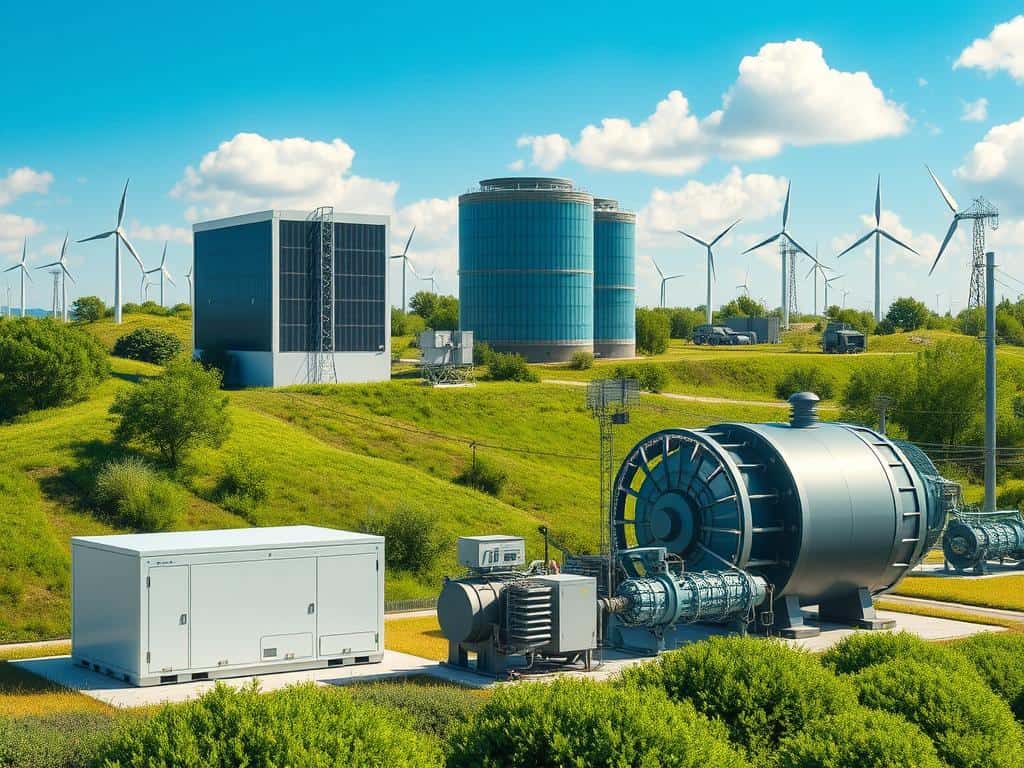
Six main energy storage solutions are leading the way. These include batteries, pumped hydropower, hydrogen storage, flywheels, compressed air, and pumped heat. Each one helps keep the energy grid stable and balances energy needs.
Grid-scale batteries mostly use lithium-ion tech. They’re known for being efficient and cost-effective. This makes them perfect for both homes and big utility projects.
Batteries: The Backbone of Modern Energy Storage
Batteries are key for storing energy today. They use chemical reactions to store and release energy. Lithium-ion batteries are the most popular because they’re affordable and can be used in many ways.
New tech like sodium-ion and solid-state batteries are also coming up. They promise to make batteries even better, with more energy and longer life.
Pumped Hydropower and Hydrogen Storage Systems
Pumped hydropower is an old but reliable tech. It uses gravity to store energy. It’s great for storing water in high places to use when needed.
Hydrogen storage is another big player. It turns extra energy into hydrogen, which can be stored. This method is versatile and could play a big part in a green energy future.
Conclusion
Energy storage technologies are not just a trend; they are essential for a sustainable power grid. By 2023, the global electricity storage capacity is expected to reach 2 terawatt hours. This shows the growing need for energy storage to manage energy flow and prevent waste.
Adopting various storage solutions is key to a greener future. The push for net zero emissions makes deploying these technologies urgent. Each type of energy storage, from advanced batteries to thermal systems, has its own benefits.
The addition of 387 gigawatts of energy storage by 2030 is a big step towards a sustainable energy system. Innovations like smart charging and second-life batteries will improve efficiency and lower costs. These advancements are vital for a greener future.
Investing in energy storage is critical for a better tomorrow. The Inflation Reduction Act offers tax credits and funding, boosting the sector’s growth. Recognizing energy storage’s importance will drive us towards sustainable practices and meet our energy demands.
In conclusion, energy storage will shape the future of energy and transport sectors. It will help them work together with the environment, reducing our carbon footprint.
