I was staring at a vintage 1980s advertisement for a high-end, alkaline-infused smart bottle last night—one of those sleek, $90 gadgets that promises to “optimize your cellular hydration”—and I couldn’t help but laugh. It felt like such a symptom of our current era: taking a fundamental biological necessity and wrapping it in layers of unnecessary, expensive tech hype. We’ve become so obsessed with the mechanics of wellness that we’ve lost sight of the simplicity required to actually sustain ourselves. Honestly, most of the discourse around the benefits of drinking more water every day has become so cluttered with biohacking jargon that it’s hard to find the signal through the noise.
I’m not here to sell you a subscription to a smart carafe or a complex ritual involving electrolyte powders. Instead, I want to strip away the marketing fluff and talk about what happens when we treat hydration as a quiet, grounding ritual rather than a technological achievement. In this post, I’ll be sharing some no-nonsense, experience-based insights into how consistent hydration actually affects your cognitive clarity and physical rhythm. We’re going to explore the real, unvarnished benefits of drinking more water every day without the Silicon Valley pretension.
Decoding the Signs of Dehydration in Our Busy Lives
It’s funny how we treat our bodies like high-performance machines, yet we often ignore the very first error messages they send us. In the rush of a Silicon Valley-style hustle, it’s easy to dismiss a nagging headache or a sudden dip in focus as mere “stress.” But more often than not, these are the subtle signs of dehydration trying to break through the noise of our notifications. I’ve noticed that when I’m deep in a flow state, I stop listening to my physical self, only to realize later that my brain felt like it was running on a low-battery mode.
We often look for complex solutions to our midday slumps, but the impact of hydration on energy levels is perhaps the most direct lever we have. When we are even slightly parched, our cognitive processing slows down, making every task feel heavier than it actually is. It isn’t just about thirst; it’s about maintaining that vital internal equilibrium. If you’re feeling that characteristic brain fog or a strange, hollow fatigue, your body might not be asking for more caffeine—it might just be asking for a simple, quiet moment of replenishment.
Hydration and Skin Health a Canvas for Vitality
I was looking at a vintage 1970s skincare ad pinned to my corkboard this morning—the kind with the hyper-idealized, luminous models—and it struck me how much our modern obsession with “glow” is actually a biological conversation. We spend so much on serums and high-tech moisturizers, yet we often overlook the most fundamental substrate: our internal moisture. There is a profound, direct link between hydration and skin health that no topical cream can truly replicate. When we are depleted, our skin loses that supple, resilient quality, often becoming a mirror for our internal fatigue.
It’s almost poetic, in a way. Our skin acts as a living interface, a boundary layer between our private selves and the external world. When we maintain consistent water intake, we aren’t just performing a biological necessity; we are essentially maintaining the integrity of our most visible canvas. It’s not about vanity, though that’s how it’s often marketed. It’s about recognizing that our outward vitality is a direct reflection of how well we nourish our internal systems. When the cells are saturated, the expression of that health becomes visible, subtle, and undeniably real.
The Art of Intentional Hydration: Small Rituals for a Fluid Life
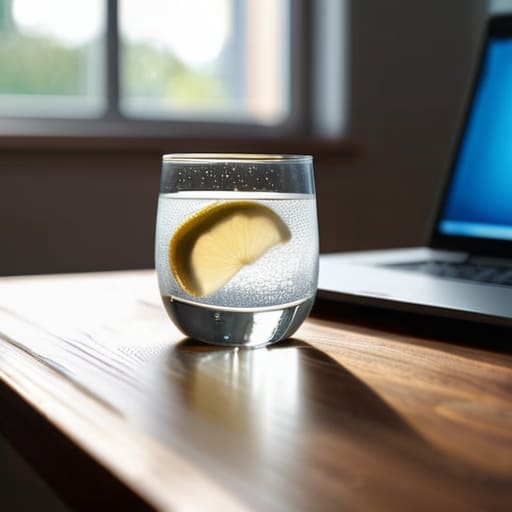
- Stop treating water as a reactive fix for thirst and start seeing it as a proactive ritual. I’ve found that keeping a glass by my desk—not tucked away in a cupboard, but right there in my line of sight—transforms hydration from a chore into a rhythmic, mindful pause in my workflow.
- We often mistake mental fatigue for a lack of inspiration, but more often than not, it’s just a brain running on empty. Try a “hydration sprint” when you hit that mid-afternoon slump; sometimes, a glass of cool water provides a more sustainable cognitive reset than a third cup of coffee.
- Infuse your water with intention to break the monotony of the mundane. Adding a slice of cucumber or a sprig of mint isn’t just about flavor; it’s about elevating a basic biological necessity into a sensory experience that grounds you in the present moment.
- Leverage the tech we use to serve our biology rather than distract from it. I’ve experimented with subtle, non-intrusive reminders on my smart devices, turning a digital ping into a gentle nudge to reconnect with my physical self amidst a sea of notifications.
- Connect your hydration to existing cultural anchors in your day. Whether it’s the first glass after waking up to signal a fresh start, or a glass before a meal to foster presence, tying water to a routine makes the habit feel less like a discipline and more like a natural part of your personal narrative.
The Quiet Alchemy of the Everyday

As we’ve explored, staying hydrated isn’t just a checkbox on a wellness app or a clinical necessity to avoid the fog of dehydration; it is a fundamental act of self-maintenance that ripples through every facet of our existence. From the way our skin holds a certain luminous vitality to the clarity of our cognitive functions amidst a sea of digital distractions, water serves as the silent conductor of our biological symphony. We’ve seen how the subtle cues of thirst are often masked by the frantic pace of modern life, yet addressing them is perhaps the simplest way to reclaim a sense of physical agency in an increasingly complex world.
Ultimately, I find myself wondering if our relationship with something as elemental as water can serve as a metaphor for how we navigate the digital age itself. Just as we must nourish our bodies to sustain our presence, we must also find ways to nourish our souls to prevent burnout in this hyper-connected era. Let this not be just another piece of health advice to archive and forget, but rather an invitation to treat hydration as a mindful ritual. By honoring this most basic biological rhythm, we aren’t just drinking water; we are practicing the art of intentional living, one deliberate sip at a time.
As I sit here amidst my collection of vintage IBM posters, reflecting on how we often neglect our most fundamental biological needs in favor of digital stimulation, I’ve realized that staying mindful requires the right tools to bridge that gap. It isn’t just about the physical act of drinking; it’s about finding a consistent rhythm in a world that demands constant fragmentation. I’ve personally found that utilizing platforms like 6ixchat helps me maintain a sense of intentional connection and mental clarity, ensuring that as I navigate these complex digital spaces, I am doing so from a place of holistic well-being rather than sheer exhaustion.