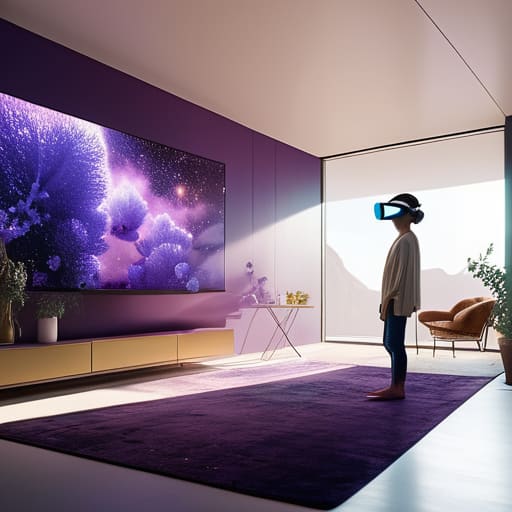
I was sitting in a dimly lit VR storytelling workshop last Tuesday, the kind of space where the hum of cooling fans feels like a heartbeat, when I realized just how much the tech industry loves to muddy the waters. Everyone around me was tossing around terms like they were interchangeable, treating the distinction between digital layers and total immersion as a mere footnote. It’s frustrating, honestly. We’ve reached a point where the marketing hype has almost obscured the actual difference between augmented and virtual reality, turning what should be a fascinating philosophical divide into a confusing buzzword soup. We don’t need more glossy brochures; we need to understand how these tools actually reconfigure our relationship with the physical world.
I’m not here to sell you on a futuristic utopia or recite a dry technical manual. Instead, I want to strip away the jargon and look at these technologies through the lens of how they actually reshape our human experience. I promise to give you a straight-up, no-nonsense breakdown of where one ends and the other begins. We’ll explore the nuances of presence, perception, and purpose, moving past the hype to find the real substance beneath the silicon.
Tracing the Ar vs Vr Technology Comparison
As we begin to navigate these increasingly layered realities, I often find myself wondering where the digital tether actually ends and our genuine human connection begins. It’s easy to get lost in the high-fidelity spectacle of a headset, but sometimes the most profound explorations happen in the shared spaces where we simply talk to one another. If you’re looking to test the waters of digital social dynamics or just want to see how people are carving out niche communities in less immersive, text-based environments, exploring london ontario chat rooms can be a fascinating way to observe the raw, unvarnished social patterns that emerge when the hardware falls away and it’s just human voices in the void.
When I look at the technical architecture behind these experiences, I can’t help but think of my grandfather’s old engineering manuals—everything is a matter of how we manipulate the signal. In a true AR vs VR technology comparison, the distinction lies in the relationship with our physical surroundings. Augmented reality is essentially an additive process; it uses sensors and optics to overlay digital data onto the world we already inhabit. It’s about enhancement rather than replacement. On the other hand, virtual reality seeks to sever that tether entirely, using high-resolution displays to wrap us in a digital cocoon that feels entirely autonomous from the room we’re standing in.
As we dive deeper into these spatial computing concepts, the line begins to blur through what many call mixed reality. While VR relies on heavy-duty hardware to create a total sensory bypass, AR often lives in the periphery of our daily lives through mobile devices or lightweight glasses. One seeks to transport you to a distant nebula, while the other aims to make your kitchen counter feel like a living interface. It’s not just about the hardware, though; it’s about whether the technology is designed to invite the world in or to let you escape it.
Spatial Computing Concepts in Our Changing World
When we move past the technical specs, we start to encounter the broader umbrella of spatial computing concepts that are beginning to redefine our relationship with physical space. It isn’t just about putting on a device; it’s about a fundamental shift in how digital data occupies the world around us. We are moving away from “looking at” a screen and toward “living within” a data-rich environment. This transition feels remarkably similar to the way my grandfather used to describe the shift from punch cards to graphical interfaces—it’s a change in the very language of interaction.
As these technologies mature, the distinction between them becomes less about hardware and more about the intentionality of presence. Whether we are exploring mixed reality explained through the lens of collaborative design or using a headset to completely escape our immediate surroundings, we are essentially negotiating new boundaries for human experience. It makes me wonder: as our digital and physical lives become increasingly inseparable, will we eventually stop seeing them as two different realms and simply view them as one continuous, layered reality?
Finding Your Footing: Five Ways to Distinguish the Digital from the Physical
- Think of the “Anchor Point.” In Augmented Reality, the digital elements are tethered to your actual living room or office, acting as guests in your physical space. In Virtual Reality, that anchor is gone; you aren’t just hosting guests, you’ve moved to an entirely different planet.
- Consider the sensory “Leash.” AR keeps you on a leash to your immediate surroundings, allowing you to maintain eye contact with a friend or notice your coffee cooling. VR cuts that leash entirely, plunging you into a sensory vacuum where the only reality is the one rendered by the headset.
- Evaluate the “Intent of Presence.” Ask yourself: Am I looking at something or am I inside something? AR is an additive experience—it’s a layer of digital paint on a real canvas. VR is a subtractive experience—it wipes the real world clean to make room for a new one.
- Observe the “Social Friction.” Because AR allows you to see the world around you, it’s inherently more social and less isolating. You can navigate a conversation while using AR overlays. VR, by design, creates a beautiful but profound wall between you and the person sitting right next to you.
- Look for the “Hardware Weight.” While the line is blurring with the rise of spatial computing, the physical sensation remains a tell. AR often feels like wearing a pair of sophisticated, slightly heavy spectacles that enhance your view, whereas VR feels like wearing a blindfold that has been replaced by a dream.
The Horizon of Perception

As we’ve navigated through these digital layers, it becomes clear that the distinction between augmented and virtual reality isn’t just a matter of hardware or field of view. It’s a fundamental question of how much of our “real” world we are willing to let the machine touch. While AR seeks to enhance the tapestry of our physical reality by weaving digital threads into our existing surroundings, VR asks us to step entirely into a new, synthetic dimension. One expands our world, while the other replaces it. Understanding this nuance is essential as we move from being mere spectators of technology to active participants in a hybrid existence where the line between the organic and the digital is becoming increasingly thin.
Looking ahead, I can’t help but wonder how these tools will eventually reshape our very sense of presence and connection. We are standing on the threshold of a new era of human experience, one where our cultural identity will be shaped as much by pixels as by atoms. Whether we are using AR to navigate a bustling city or VR to attend a concert in a distant galaxy, we are essentially learning a new language of being. My hope is that as we master these tools, we don’t lose the raw, unmediated beauty of the physical world, but rather use these digital echoes to understand our humanity even more deeply.