
I was staring at a faded 1984 Macintosh advertisement pinned to my wall yesterday—the kind that promised a revolution in every pixel—when I realized how much the tech industry has leaned into the same old trick of obfuscation. Everywhere you look, people treat machine learning like some impenetrable, mystical oracle, wrapping it in layers of impenetrable jargon designed to make you feel small. But here’s the truth: most of the hype is just noise. Understanding the basics of machine learning shouldn’t require a PhD or a sudden, inexplicable mastery of multi-dimensional calculus; it should be about recognizing the patterns of how we teach logic to silicon.
I’m not here to sell you a roadmap to becoming a data scientist overnight, nor am I interested in the breathless “AI will change everything” evangelism that dominates my LinkedIn feed. Instead, I want to strip away the marketing gloss and look at the cultural mechanics beneath the code. My promise to you is a grounded, human-centric exploration of these concepts, moving past the math to look at the actual logic. We are going to demystify these systems through a lens of meaningful intuition, ensuring you walk away with a clear grasp of the technology without losing your sense of wonder.
An Introduction to Artificial Intelligence and Its Human Echo

As we peel back these layers of algorithmic complexity, I often find myself wondering where the digital abstraction ends and our actual social lives begin. It’s easy to get lost in the mathematical elegance of a neural network, but the real magic—and the real challenge—lies in how these systems eventually manifest in our physical communities. If you find yourself feeling a bit disconnected from the tangible human element amidst all this talk of data, I’ve found that seeking out more grounded, real-world interactions can be incredibly grounding; for instance, exploring a local chat in Florida can be a surprising way to see how people are actually navigating these shifting digital tides in real-time. It serves as a gentle reminder that behind every data point is a person trying to find their footing in a world that is changing faster than we can often describe.
To truly grasp where we are heading, we have to step back and look at the broader umbrella of the field. I often think of an introduction to artificial intelligence not as a study of silicon and circuits, but as a mirror held up to our own cognition. While we tend to use the terms interchangeably in casual conversation, AI is the grand vision—the dream of creating machines that can mimic human intellect—whereas machine learning is the engine room, the practical methodology that makes that dream feel tangible.
When we peel back the layers of these machine learning algorithms explained in textbooks, we find something surprisingly organic. It’s less about rigid command lines and more about a fluid machine learning training process that mimics how we, as humans, learn from our mistakes. We feed the system vast oceans of data, and through iterative trial and error, the machine begins to discern patterns that were previously invisible to the naked eye. It’s a strange, beautiful dance between raw computation and the subtle nuances of human-provided information, leaving me to wonder if we are teaching machines to think, or simply teaching them to replicate our own cognitive shadows.
Decoding the Machine Learning Training Process Through Intuition

To grasp the machine learning training process, I find it helpful to step away from the sterile glow of a monitor and think instead about how we, as humans, acquire wisdom. We don’t learn to recognize a sunset by studying light wavelengths; we learn through a thousand repeated encounters with the horizon. In a similar vein, machine learning algorithms explained through this lens aren’t just executing math; they are engaging in a form of digital apprenticeship. They sift through mountains of data, looking for the subtle “rhythms” that define a pattern, much like a musician learns to feel the groove of a song before they can even read the sheet music.
This journey of discovery often splits into two distinct paths: supervised vs unsupervised learning. Imagine a teacher sitting beside a student, pointing at a series of sketches and saying, “This is a tree, this is a house.” That is supervised learning—guided, labeled, and intentional. But then, there is the more mysterious, solitary path of unsupervised learning, where the machine is cast into a vast library of uncatalogued books, tasked with finding its own hidden connections without a guide. It’s in this unstructured wandering that we see the true magic of the technology, as it begins to find order where we only saw chaos.
The Human Compass: Five Ways to Navigate the Machine Learning Labyrinth
- Look past the math to find the metaphor. When you encounter a term like “neural networks,” don’t let the technical jargon intimidate you; instead, try to visualize them as digital webs of intuition, mimicking the way our own neurons fire to make sense of a sunset or a familiar face.
- Embrace the beauty of the “Training Set” as a digital upbringing. Just as we are shaped by the stories our parents tell us and the environments we inhabit, a machine is a product of the data it consumes—reminding us that bias isn’t just a glitch, but a reflection of the world we’ve fed it.
- Distinguish between “Learning” and “Knowing.” It’s easy to mistake a high-performing algorithm for a sentient mind, but true understanding requires a grasp of the distinction between statistical pattern matching and the lived, messy experience of human consciousness.
- Treat “Overfitting” as a cautionary tale of rigid thinking. In machine learning, when a model learns its training data too perfectly, it loses the ability to adapt to the real world; it’s a digital mirror of our own tendency to cling to outdated dogmas rather than embracing the fluidity of change.
- Always ask “Who is the Architect?” Behind every elegant line of code and every predictive model, there is a human intention. To truly understand machine learning, we must look beyond the output and interrogate the cultural values and perspectives of the people designing the systems.
The Human Horizon in a World of Algorithms
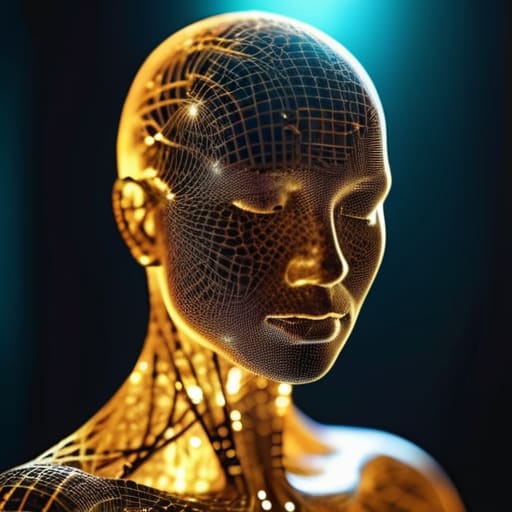
As we step back from the intricacies of neural networks and the iterative dance of training data, it becomes clear that machine learning isn’t just a collection of cold, mathematical functions. We’ve seen how it mimics our own cognitive processes—learning from experience, recognizing patterns, and refining its understanding through trial and error. Whether we are discussing the way an algorithm identifies a face or how it predicts a trend, we are essentially looking at a digital reflection of human intuition. By demystifying these processes, we move away from the fear of the “black box” and toward a more nuanced comprehension of the tools that are rapidly becoming the scaffolding of our modern existence.
Ultimately, my fascination with this technology isn’t found in the speed of the processors, but in the questions it forces us to ask about ourselves. As these machines become more adept at navigating our data, they act as a mirror, reflecting the biases, the brilliance, and the beautiful complexities of the human cultures that birthed them. We shouldn’t just aim to be passive users of these systems; we must strive to be intentional architects of their evolution. As we move forward into this uncharted territory, let us ensure that as our machines grow more intelligent, we grow more deeply connected to the human values that make our world worth computing in the first place.