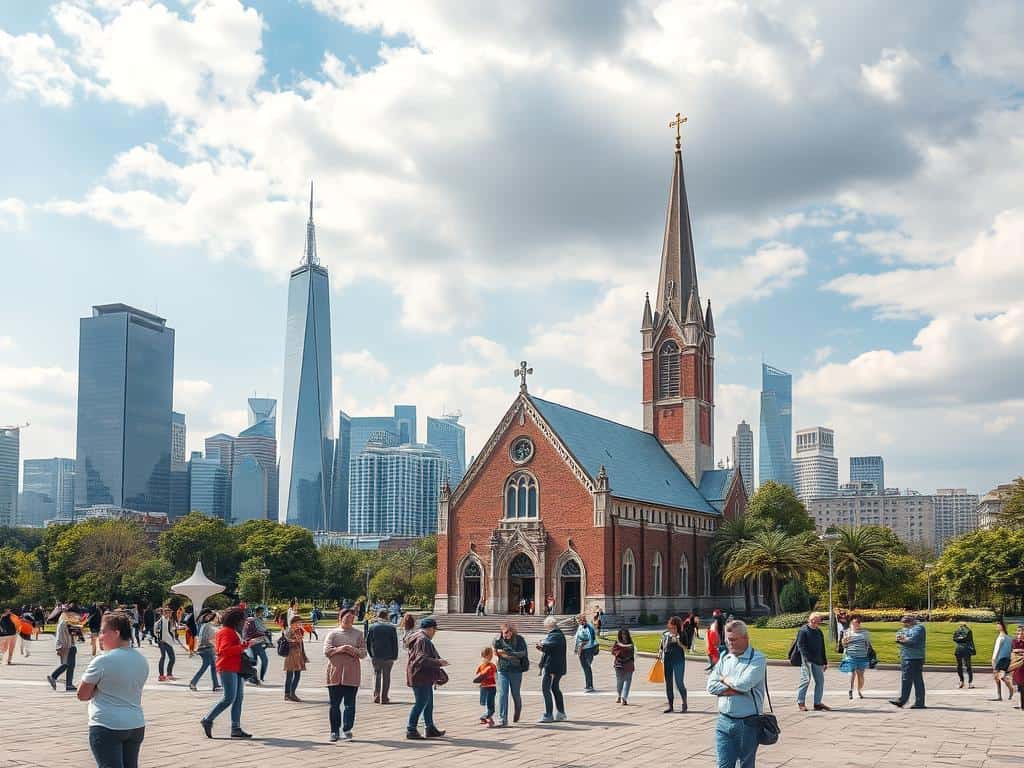
The Pew Research Center found that fewer Americans call themselves Christian. In 2000, about 70% did, but by 2020, that number dropped to 47%. This big change makes us think about how religion fits into our lives today. With more people saying they don’t belong to any religion, our communities and beliefs are changing.
Looking at the data from the Pew Research Center helps us understand this shift. It shows how technology, society, and people’s numbers are affecting religion. This article will dive into how faith and spirituality are evolving in our fast-changing world.
Key Takeaways
- The decline of Christian affiliation reflects a broader trend of secularism impacting American beliefs.
- Religious observance continues to decrease among U.S. adults, leading to significant changes in community structures.
- Demographic shifts reveal that younger generations are increasingly identifying as religiously unaffiliated.
- Global trends show varying degrees of religiosity, particular between Western nations and regions like Africa and the Middle East.
- Technological advancements further influence beliefs and potentially reduce religious affiliation over time.
The Decline of Religious Affiliation in the United States
The United States is seeing a big change in how people view religion. More people are saying they don’t belong to any religion. This is because of changes in society, like age and the COVID-19 pandemic.
Shifting Demographics
In 2020, 64% of Americans called themselves Christian. But 30% said they had no religion. Experts think this will keep changing, with Christians possibly dropping to 35% by 2070.
Younger people are leading this change. About 31% of those aged 15 to 29 have stopped being Christian at some point.
Impact of the Pandemic
The pandemic has also changed how people go to church. In 2009, 37% of people went to church every week. By 2019, that number dropped to 31%.
During the pandemic, many found new ways to connect spiritually. Or they just stopped going to church. This shows a big shift in how Americans see faith.
Religion & Society: Global Trends and Observations
Looking at global religious trends shows big changes in beliefs worldwide. Many countries are seeing more people without religious beliefs. This change shows why we need to compare these trends to understand them better.
Comparative Global Analysis
In many places, fewer people are involved in religion. For example, in the United States, less than half of adults say religion is very important. Only 47% of U.S. adults call themselves religious. This is a key point when we talk about global religious trends.
Also, fewer people believe in basic religious ideas like God. A global study shows different levels of religious belief and practice. Some areas are becoming less religious, while others are becoming more.
Rising Non-religious Populations
More people are moving away from traditional religions. In the United States, for example, more people say they are spiritual but not religious. About 18% of Americans say they are neither religious nor spiritual.
The World Values Survey shows big increases in non-religious beliefs in places like Singapore and South Korea. Over 10% of people in these countries have become less religious in the last decade. This change shows how faith is evolving in different societies. It affects both individual lives and the broader society, setting the stage for future discussions on religion and society.
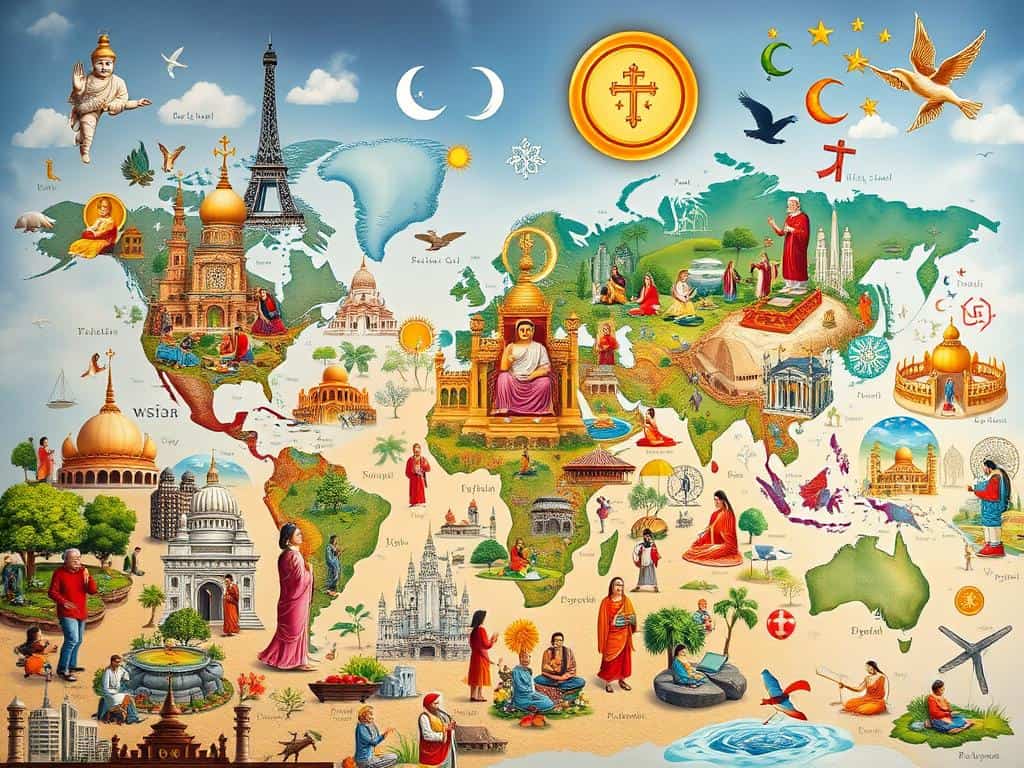
The Influence of Technology on Religious Beliefs
Technology has a big impact on religion today. It changes how people connect with their beliefs and communities. *Automation* and *Robotics* play a key role in this, making it easier to share and receive spiritual messages.
These tools help make religious practices more efficient. They also connect people from all over the world.
Automation and Robotics’ Role
Social media sites like Facebook and Twitter let people share their beliefs with others everywhere. Websites like Bible Gateway and Quran.com make it easy to access sacred texts. This helps people from different traditions connect.
Thanks to *Automation*, giving to religious groups online is now easier. Online sermons and podcasts are also popular, letting people learn about their faith from home. This digital world helps people find community, even in a world that’s becoming more secular.
Historical Context of Technological Impacts
It’s important to understand the *Historical Context* of technology’s role in religion. Communication has changed a lot over time. It went from oral to writing, then to printing, and now to electronic.
Oral communication was limited because it was short-lived. Writing allowed for more complex beliefs. The printing press made texts more accessible, breaking down barriers.
This shows how technology has made religion more open to everyone. But, it also brings challenges, like the spread of false information. How people choose to use technology varies a lot, depending on their beliefs.
Conclusion
The relationship between religion and society is changing fast. Christianity is inspiring many to help others, through charity work. But, the number of people who believe in religion is going down, mainly in rich countries.
This change is big and makes us think about the future of beliefs and who we are. As society changes, with more people not believing in religion and technology’s rise, we need to think about old values. In the past, churches stood up for freedom and morals, but now, the younger generation might not connect with these values.
This could lead to a world focused more on money and less on caring for others. It’s important to keep talking about how religion fits into today’s world. Looking at how people have dealt with spiritual beliefs in the past can help us understand today’s problems.
By understanding these changes, we can work towards a better future. One where everyone is treated fairly and with kindness.
