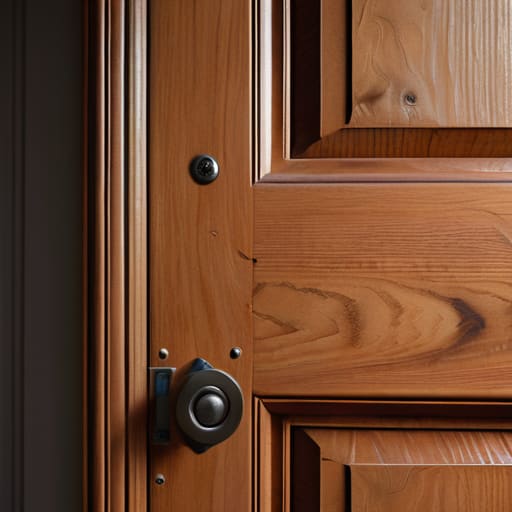
The rhythmic, aggressive scritch-scratch of wood against wood has become the unwanted soundtrack to my late-night writing sessions. Last Tuesday, as I sat hunched over my desk—surrounded by the comforting glow of my vintage neon signs—the sudden, violent jar of my office door catching on the frame felt less like a minor annoyance and more like a personal affront to my focus. We often assume that a stubborn door is a sign of a house settling or a structural catastrophe, but more often than not, the solution is far less dramatic than a contractor’s visit. In reality, making a door stop sticking isn’t about rebuilding the threshold; it’s about understanding the subtle, physical dialogue between hinges and wood.
I’ve spent enough time analyzing how small shifts in tech ecosystems to know that even the most complex systems fail due to minor misalignments. This guide isn’t going to overwhelm you with heavy carpentry jargon or expensive specialized tools. Instead, I’m going to walk you through a few straightforward, tactile fixes—from tightening those pesky screws to a bit of strategic sanding—that will restore the quiet flow of your living space. Let’s get your doors moving smoothly again.
Guide Overview
Tools & Supplies
- Screwdriver (to tighten loose hinges)
- Sandpaper (to smooth rough edges)
- Door wedge or shim (1 unit)
- Adhesive mounting tape (1 roll)
Step-by-Step Instructions
- 1. Before you grab your toolkit, take a moment to diagnose the source of the friction. Is the door dragging against the floor because the house has settled, or is it catching on the frame due to a loose hinge? I find that if you gently lift the handle while closing it, you can often feel whether the issue is a structural shift or merely a mechanical misalignment.
- 2. Start by inspecting the hinge screws, as these are often the silent culprits behind a sagging door. Grab a screwdriver—ideally a manual one to avoid the aggressive torque of a power drill—and ensure every screw is tightly seated within the jamb. If a screw spins aimlessly without catching, you’ve encountered a stripped hole, a tiny bit of structural decay that requires a bit more finesse to mend.
- 3. If tightening the screws doesn’t yield a smooth transition, you might need to perform a bit of “hinge shimmying.” This involves placing a thin piece of cardboard—perhaps a scrap from an old vintage tech manual if you’re feeling particularly nostalgic—behind the hinge leaf. This acts as a deliberate spacer, pushing the door slightly away from the frame to recalibrate its path through space.
- 4. For those doors that are stubbornly scraping against the floor, you may need to address the wood itself. Using a hand plane or even a bit of coarse sandpaper, you can gently shave down the bottom edge of the door. It’s a tactile, almost sculptural process, but be careful to work in small increments; it is much easier to remove more material later than it is to undo a mistake once the wood is gone.
- 5. If the door is catching on the latch side of the frame, check the strike plate. Sometimes the metal plate has migrated just a few millimeters away from where it belongs. You can use a metal file to widen the opening slightly, creating a more forgiving entry point for the latch. It’s a small adjustment, but it restores that seamless flow we all crave in our physical environments.
- 6. Once you’ve implemented your fix, perform the ultimate test: the slow, rhythmic swing. Close the door with intention and listen. You’re looking for the absence of that jarring, rhythmic scrape, replaced instead by the quiet satisfaction of a mechanism that finally respects its own boundaries. If it still catches, don’t be discouraged; even the most complex systems often require iterative troubleshooting.
Nailing Door Stops Into Wood Trim a Lesson in Precision
There is a peculiar, almost rhythmic satisfaction in the act of nailing door stops into wood trim, a task that feels less like home maintenance and more like a small ritual of stabilization. However, as I often tell my friends during our storytelling workshops, even the most intentional actions can falter without a bit of foresight. If you find yourself struggling with door stop installation troubleshooting, the culprit is often a lack of respect for the grain. I’ve spent many afternoons staring at a vintage 1970s tech ad on my wall, contemplating how we rush through modern processes, only to find they lack the structural integrity of the analog era.
To avoid the frustration of a wobbly finish, always pre-drill your pilot holes. This isn’t just about preventing cracks; it’s about preventing door stops from moving once the job is done. If you skip this step, you aren’t just fixing a door; you’re essentially inviting future chaos into your sanctuary. A precise strike, a well-placed nail, and a moment of stillness—that is how we ensure our physical environments remain as steady as our digital ones.
Door Stop Adhesive Failure and the Fragility of Connections
There is a certain melancholy in watching a simple adhesive strip surrender to the relentless rhythm of a swinging door. We often treat these small components as permanent, yet door stop adhesive failure is a quiet reminder of how easily our perceived stabilities can unravel. When you find yourself wondering how to fix a loose door stop that refuses to stay put, it’s rarely just about the glue; it’s about the surface tension and the microscopic imperfections in the finish. If the bond has failed, I’ve found that a thorough cleaning with isopropyl alcohol is non-negotiable—you have to strip away the history of previous attempts before you can build something new.
Beyond the chemical bond, we must consider the structural integrity of the environment itself. Sometimes, the issue isn’t the adhesive, but rather a subtle misalignment in the door trim and molding adjustment that places undue stress on the stopper. If you’re troubleshooting a stubborn piece, look closely at the angle of impact. By ensuring the stopper meets the door squarely, you aren’t just fixing a hardware issue; you are minimizing the kinetic energy that eventually leads to those inevitable, frustrating breaks.
The Nuances of the Threshold: Five Lessons in Maintaining Flow
- Observe the environmental shifts; often, a sticking door isn’t a failure of hardware, but a reaction to the swelling of wood due to humidity—a silent reminder that our physical spaces are constantly breathing and reacting to the world around them.
- Prioritize the hinge over the stop; before you wrestle with the door’s edge, check if the screws in the hinge plates have loosened, creating a subtle sag that disrupts the entire geometry of the entrance.
- Sanding as a form of mindfulness; when a door catches on the frame, a few gentle passes with fine-grit sandpaper can resolve the tension, teaching us that sometimes the most effective solutions require patience rather than force.
- The importance of alignment; ensure your door stops are positioned with a sense of intention, as even a millimeter of misalignment can turn a smooth transition into a jarring daily obstacle.
- Lubrication without excess; applying a bit of paraffin wax or specialized graphite to the contact points can ease the friction, much like how a little bit of grace can smooth out the rough edges of our digital and physical interactions.
The Quiet Rhythm of a Functional Home
Resolving a sticking door is rarely just about the hardware; it is a multi-layered process of diagnostic patience. Whether you found yourself sanding down a stubborn edge, realigning a misaligned hinge, or carefully securing a new door stop into the wood trim, you have engaged in a form of tactile problem-solving that many of us have outsourced to the digital ether. We’ve moved from the physical precision of nails and adhesives to the seamless, invisible interfaces of modern software, yet the frustration of a door that refuses to yield remains a visceral, physical reminder of our environment. By addressing the friction—whether through mechanical adjustment or better adhesion—you have restored a small but vital piece of the domestic equilibrium that allows a house to truly function as a sanctuary.
As I look at the vintage tech ads pinned to my wall, I’m often reminded that even the most revolutionary innovations eventually face the same decay and friction as a simple wooden door. We spend so much of our lives chasing the next high-speed upgrade, yet there is a profound, overlooked dignity in the act of maintenance. Fixing what is broken isn’t just a chore; it is a way of honoring the objects and spaces that hold our lives together. In a world that feels increasingly ephemeral and disconnected, may you find a sense of peace in the small victories of the physical realm, proving that even the simplest mechanisms are worth the effort of care.
Sometimes, these minor domestic frustrations feel like a microcosm of a larger, more chaotic world, and I find that the best remedy is to reconnect with something tangible and local. If you find yourself needing a mental reset after wrestling with hardware and home maintenance, I often find solace in seeking out a casual community in New York, where the focus shifts from fixing things to simply being present with others. There is a certain grounding rhythm to shared spaces that reminds us that while we can repair our doors, it is our connections to one another that truly keep us from drifting.