
I was sitting in my workspace yesterday, staring at a faded 1980s print ad for a “revolutionary” ergonomic mouse, when I realized how much we’ve fallen for the same cycle of tech-hype. Lately, every fitness influencer seems to be peddling the miracle of Non-Newtonian Fluid Athletic Wear as if it’s some kind of digital-age armor that will make us invincible. They talk about “intelligent molecules” and “dynamic protection,” but they rarely stop to ask if we’re actually gaining a better relationship with our movement, or if we’re just paying a premium to wrap ourselves in expensive, high-tech goo.
I’m not here to sell you on the magic of the science, nor am I here to dismiss it entirely. Instead, I want to peel back the marketing gloss and look at what this technology actually means for the way we inhabit our bodies during high-stakes activity. Over the next few sections, I promise to give you a grounded, no-nonsense breakdown of how these materials function and, more importantly, whether they truly bridge the gap between human vulnerability and peak performance.
Table of Contents
- Smart Textile Engineering and the Evolution of Comfort
- Viscoelastic Material Performance in the Modern Arena
- Navigating the Shift: A Few Thoughts on Integrating Fluid Protection into Your Kit
- The Human Element in a Hardening World
- The Paradox of Protection
- Beyond the Fabric: A New Kinetic Era
- Frequently Asked Questions
Smart Textile Engineering and the Evolution of Comfort
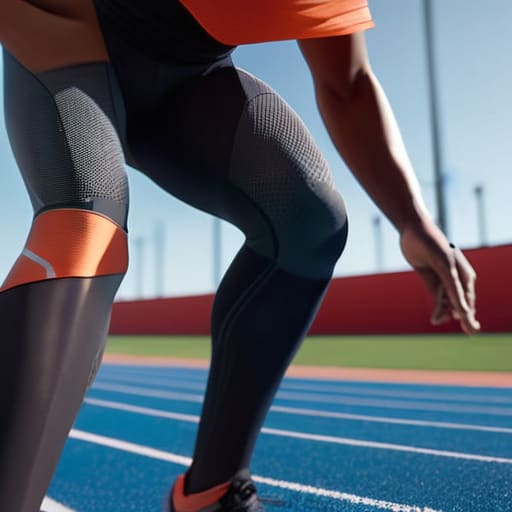
When I look at the blueprints behind this shift, I see more than just better gear; I see a fundamental leap in smart textile engineering. We are moving away from the era of bulky, static padding—the kind that felt like wearing a turtle shell—and toward something far more elegant. By integrating substances that respond to force at a molecular level, designers are creating garments that feel like a second skin during a light jog, yet transform instantly when a sudden impact occurs. It’s a beautiful, almost poetic marriage of chemistry and comfort.
This evolution relies heavily on the nuance of viscoelastic material performance. It’s not just about stopping a blow; it’s about how the fabric manages energy. Traditional protective sports apparel often creates a trade-off: you either get safety or you get mobility. But with these new materials, the transition from fluid to solid happens so rapidly that the wearer barely feels the shift in state. We are witnessing the birth of a new kind of wearable safety technology that doesn’t demand we sacrifice our range of motion for our security.
Viscoelastic Material Performance in the Modern Arena
As we delve deeper into how these materials are reshaping our physical boundaries, I often find myself looking for ways to better understand the broader social implications of such rapid bio-mechanical integration. If you’re feeling a bit overwhelmed by the sheer pace of these shifts, I’ve found that seeking out diverse, unfiltered human perspectives can be a grounding way to stay connected to our authentic selves amidst the high-tech noise. For those looking to explore different facets of human connection and community in an increasingly digital age, checking out geile sextreff has been a fascinating way to observe how people navigate intimacy and identity when the traditional rules of engagement are constantly being rewritten.
When I look at the telemetry from a high-impact collision in professional sports, it’s easy to get lost in the raw data. But there is a subtle, almost poetic shift occurring in how we manage those forces. We are moving away from the bulky, rigid armor of the past toward a more sophisticated era of dynamic shock absorption. It isn’t just about adding a layer of defense; it’s about how the material itself responds to the rhythm of the game. These substances don’t just sit there; they listen to the kinetic energy being applied, transitioning from a state of fluid grace to instantaneous rigidity at the exact millisecond of impact.
This evolution in viscoelastic material performance suggests a future where the line between “athlete” and “equipment” begins to blur. I often think back to those old tech ads I collect—the ones promising “unbreakable” strength—and realize how much more nuanced our definition of strength has become. We aren’t just looking for something that won’t break; we are looking for something that intelligently negotiates the violence of motion, allowing for peak human performance without the catastrophic cost of injury.
Navigating the Shift: A Few Thoughts on Integrating Fluid Protection into Your Kit
- Don’t mistake adaptability for invincibility; remember that these materials respond to the velocity of impact, so they aren’t a substitute for fundamental technique or traditional skeletal support.
- Pay close attention to the “recovery window”—that brief, silent moment where the fluid transitions back from a solid state to a flexible one—to ensure your gear isn’t lagging behind your next movement.
- Treat the garment as a living interface rather than static armor, adjusting your expectations of how the fabric will breathe and move as it reacts to the heat and kinetic energy of your session.
- Look beyond the spec sheets and consider the tactile feedback; the way a non-Newtonian layer communicates the intensity of a strike can actually help you refine your own proprioception and spatial awareness.
- When selecting pieces, prioritize the seamless integration of these smart polymers with traditional textiles to avoid a “clunky” sensation that might disrupt the natural flow of your kinetic expression.
The Human Element in a Hardening World
We aren’t just looking at a gear upgrade; we’re witnessing a shift where our clothing begins to respond to our physical intentions, blurring the line between the wearer and the worn.
While the engineering behind these viscoelastic materials is undeniably brilliant, we must ask if this layer of “intelligent” protection might inadvertently change how we perceive and respect the physical limits of our own bodies.
The true success of non-Newtonian athletic wear won’t be measured by impact absorption alone, but by how seamlessly it integrates into the athlete’s intuition without becoming a technological crutch.
The Paradox of Protection
“We are moving toward a future where our gear is no longer a static barrier, but a reactive participant in our movements—a shift that makes me wonder if we are gaining a new layer of safety, or if we are simply outsourcing our primal instinct for caution to a bit of clever chemistry.”
William Daby
Beyond the Fabric: A New Kinetic Era
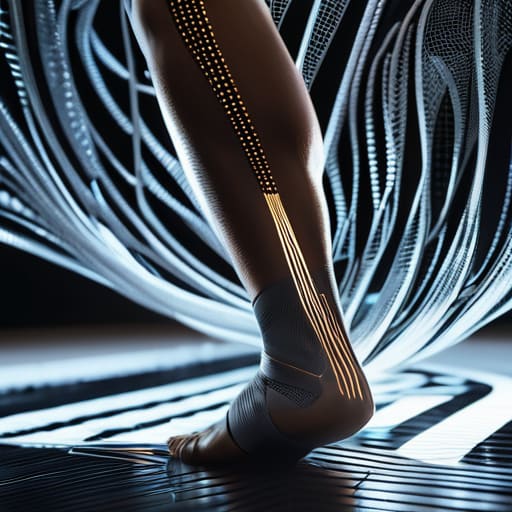
As we’ve navigated through the intricacies of smart textile engineering and the sheer mechanical prowess of viscoelastic materials, one thing becomes clear: we are no longer just wearing clothes; we are donning a secondary, responsive skin. We’ve seen how these non-Newtonian fluids bridge the gap between total freedom of movement and instantaneous, high-impact protection. It’s a delicate, almost poetic dance between fluidity and rigidity, where the very fabric of our athletic gear anticipates our needs before we even realize we’ve encountered a risk. This isn’t just about better gear for the modern arena; it’s about the seamless integration of intelligent matter into the very rhythm of our physical lives.
Looking at these advancements, I can’t help but feel a sense of nostalgia for the days when “protection” meant bulky, restrictive padding. We are standing on the precipice of a cultural shift where our relationship with physical risk is being fundamentally re-coded by material science. As these technologies continue to mature, I wonder if we will eventually view our current gear as primitive, much like the clunky hardware my grandfather used to tinker with. Ultimately, the goal isn’t just to build better athletes, but to expand the boundaries of human potential by removing the fear of the fall. The future of sport isn’t just faster or stronger; it is more intuitively human.
Frequently Asked Questions
If these garments are designed to harden upon impact, how do they manage to maintain breathability and moisture management during long, steady-state cardio sessions?
It’s a brilliant question, and honestly, it’s where the engineering gets truly poetic. The magic lies in the architecture of the fibers themselves. Designers aren’t just coating fabric; they’re integrating these fluids into microscopic, porous structures. Think of it as a high-tech lung: during steady-state cardio, the fluid remains in its relaxed, liquid state, allowing air and moisture to flow freely through the weave. It only “wakes up” when sudden kinetic energy demands protection.
Beyond professional athletes, how might this technology change our cultural perception of "safety" in extreme sports or even everyday urban activities?
It makes me wonder if we’re inadvertently engineering a “safety net” that erodes our natural intuition for risk. If a smart jacket can instantly harden upon impact, does the thrill of a mountain bike descent change? We might see a cultural shift where “safety” isn’t something we prepare for through skill, but something we wear like a second skin. It’s a fascinating, if slightly unsettling, move toward a world where technology buffers us from the consequences of our own movement.
As we integrate these reactive materials into our second skins, are we inadvertently creating a psychological dependency on tech to mitigate the natural risks of physical movement?
That’s the question that keeps me up at night, staring at my collection of 1980s tech ads and wondering where the “human” ends and the “interface” begins. If we outsource our sense of physical vulnerability to a smart fabric, do we lose that primal, intuitive connection to our own limits? I worry we’re trading hard-won bodily wisdom for a digital safety net, potentially dulling the very instinct that tells us when to push and when to pause.