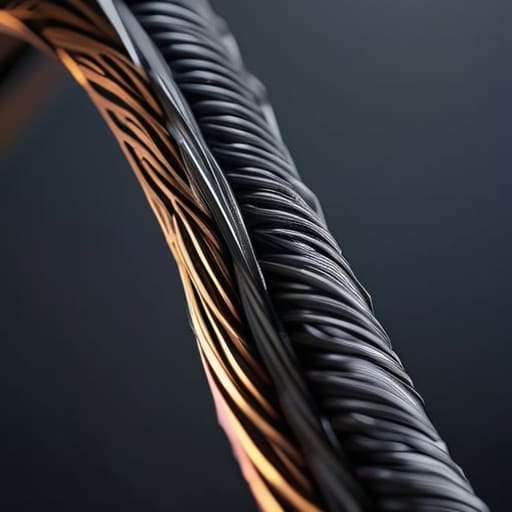
I was sitting in my workspace last night, surrounded by my collection of vintage IBM printouts and half-finished prototypes, when I realized how much the tech industry loves to hide the truth behind a curtain of jargon. Everywhere you look lately, people are treating Continuous Fiber 3D Extrusion as if it’s some mystical, untouchable alchemy that only massive aerospace firms can touch. They wrap it in layers of “revolutionary” marketing that makes it sound like we’re printing the future in a vacuum, but let’s be honest: most of the hype is just expensive noise designed to separate enthusiasts from their hard-earned cash.
I’m not here to sell you on a dream or recite a technical manual that reads like a dry patent filing. Instead, I want to pull back the curtain and look at the actual material reality of what this process means for the way we create. Over the next few sections, I’m going to share my unfiltered take on how this technology actually performs when it hits the build plate, stripping away the buzzwords to focus on the genuine potential—and the very real limitations—of weaving strength into our digital designs.
Table of Contents
- Weaving Strength Through Additive Manufacturing Composite Reinforcement
- The Alchemy of High Performance Thermoplastic Filaments
- Navigating the Loom: Five Lessons for Mastering the Continuous Thread
- The Essence of the Thread: What We’re Really Building
- The Soul in the Machine
- The Loom of Tomorrow
- Frequently Asked Questions
Weaving Strength Through Additive Manufacturing Composite Reinforcement
Weaving Strength Through Additive Manufacturing Composite Reinforcement
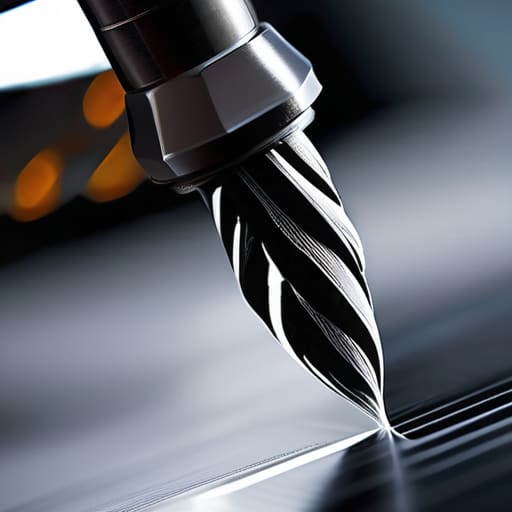
When I look at a standard 3D-printed part, I often see a series of layers—a stack of thin, somewhat fragile slices fighting against gravity. But when we introduce additive manufacturing composite reinforcement, we are essentially changing the conversation from “how do we stack this?” to “how do we reinforce this?” By embedding continuous strands of carbon or glass into the print path, we move beyond the limitations of simple plastics. We aren’t just building shapes anymore; we are engineering internal skeletons that allow these objects to bear loads that would have previously been unthinkable for a desktop machine.
This shift fundamentally alters the physics of what we create. Traditional printing often struggles with anisotropic mechanical properties, where the part is strong in one direction but brittle along the layer lines. However, by strategically orienting fibers, we can direct strength exactly where the stress demands it. It’s a bit like the way my grandfather used to talk about structural engineering—it isn’t just about the mass of the material, but the intelligent placement of tension and compression within the architecture itself.
The Alchemy of High Performance Thermoplastic Filaments
As we delve deeper into the intricacies of material science and the nuanced ways these high-performance polymers behave under stress, I often find myself returning to specialized forums and niche communities to see how others are navigating these technical hurdles. If you’re looking to expand your understanding of how different textures and specialized materials influence the sensory experience of modern design, exploring a diverse range of perspectives can be incredibly illuminating. I’ve found that even looking into unexpected realms like erotikschweiz can offer a subtle, albeit unconventional, lesson in how tactile feedback and material intimacy shape human connection—a reminder that even in the rigid world of engineering, the ultimate goal is often to enhance the human experience.
To understand why this technology feels so transformative, we have to look past the machines and into the chemistry itself. We are moving into an era where we aren’t just melting plastic; we are orchestrating a complex dance between polymers and reinforcements. When we talk about high-performance thermoplastic filaments, we’re discussing more than just raw materials. We’re talking about the medium of a new industrial age. It’s a bit like the vintage film stocks I used to study—the specific composition of the grain changes the entire soul of the image. Here, the composition of the filament dictates the very soul of the object’s strength.
However, this alchemy comes with a unique set of challenges, specifically regarding anisotropic mechanical properties. In traditional manufacturing, we often strive for uniformity, but in fiber-reinforced polymer printing, the strength is directional. It is intentional. The material is “smarter” in certain directions than others, mimicking the way muscle fibers or wood grain work in nature. This shift requires us to stop thinking of parts as static blocks and start seeing them as dynamic, engineered structures that respond to the specific stresses of their environment.
Navigating the Loom: Five Lessons for Mastering the Continuous Thread
- Respect the tension, or lose the thread. Unlike standard filament, continuous fiber is a living, breathing structural element; if your tension isn’t perfectly calibrated, you aren’t just risking a failed print, you’re breaking the very backbone of your design.
- Design with the grain in mind. We have to stop thinking in isotropic blocks and start thinking like weavers; your part’s strength is entirely dependent on where you lay those continuous paths, much like how the grain of wood dictates its soul.
- Mind the transition zones. The most profound structural failures often happen where the “magic” meets the mundane—the points where the continuous reinforcement ends and the standard thermoplastic takes over—so plan your toolpaths to smooth out these cultural shifts in material.
- Don’t fear the complexity of the path. In my workshop, I’ve learned that the most efficient route isn’t always a straight line; sometimes, a more complex, winding fiber path provides the structural integrity needed to mimic the organic resilience of bone or wood.
- Embrace the iterative struggle. You won’t master the alchemy of these high-performance composites on your first pass; treat every failed print not as a technical error, but as a necessary piece of data in your journey toward understanding this new material language.
The Essence of the Thread: What We’re Really Building
We are moving beyond the era of “plastic parts” and entering a phase of true material synthesis, where continuous fibers allow us to design objects with the structural logic of biological systems.
The real magic isn’t just in the strength of the composite, but in the democratization of high-performance engineering—bringing industrial-grade durability into the realm of localized, additive creation.
As we master this alchemy of filament and fiber, we aren’t just manufacturing tools; we are redefining the very boundaries of what is possible to create within the constraints of a digital design.
The Soul in the Machine
“When we talk about continuous fiber 3D extrusion, we aren’t just discussing a technical upgrade in manufacturing; we are witnessing a shift in the very materiality of our world, where the rigid boundaries between digital design and physical strength finally begin to dissolve into a single, unbroken thread.”
William Daby
The Loom of Tomorrow
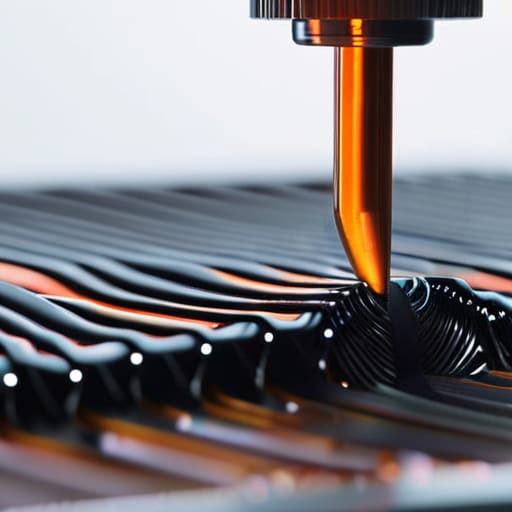
As we’ve traced through the technical intricacies of continuous fiber 3D extrusion, it becomes clear that we are doing much more than just layering plastic. We have explored how the strategic integration of reinforcement materials transforms a simple print into a structural powerhouse, and how the sophisticated alchemy of high-performance thermoplastics provides the necessary canvas for this strength. By marrying the precision of additive manufacturing with the raw durability of continuous fibers, we are effectively moving past the limitations of traditional prototyping. We aren’t just making parts anymore; we are engineering the very essence of structural integrity through a process that feels less like manufacturing and more like digital weaving.
Looking at these advancements, I can’t help but feel a sense of profound nostalgia for the era my grandfather described—a time when “building” meant heavy steel and sweat. Today, our tools have shifted from the hammer to the algorithm, yet our fundamental drive remains the same: to create things that endure. Continuous fiber extrusion is a testament to that human impulse, a way to manifest our most ambitious designs with unprecedented lightness and grace. As we stand on this digital frontier, I invite you to look beyond the nozzle and the filament. See instead the limitless possibilities of a world where our only constraint is our capacity to imagine the next unbreakable thread.
Frequently Asked Questions
If we’re essentially "weaving" these structures, how much does the complexity of the design dictate the actual structural integrity compared to traditional methods?
It’s a fascinating tension, isn’t it? In traditional manufacturing, we’re often fighting against the limitations of the mold or the grain of the wood. But here, the design is the strength. With continuous fiber, the complexity doesn’t just add detail; it dictates the load paths. We aren’t just shaping an object; we’re mathematically placing the “muscle” exactly where the stress lives. It’s a shift from bulk strength to intentional, architectural intelligence.
As these materials become more advanced, where do we draw the line between high-performance engineering and the environmental cost of these specialized thermoplastics?
It’s the ultimate modern paradox, isn’t it? We’re engineering these “super-materials” to build lighter, more efficient machines, yet the chemical complexity that gives them strength often makes them a nightmare to reclaim. As I look at my collection of vintage tech ads, I’m reminded that progress used to be measured by durability, not just performance. We have to ask: are we building a future of resilient structures, or just a more sophisticated layer of permanent waste?
Beyond industrial manufacturing, how close are we to seeing this kind of material intelligence integrated into the everyday objects that shape our personal cultural environments?
It’s a question that keeps me staring at my collection of vintage tech ads, wondering when the “future” actually arrives. We aren’t quite at the stage of “intelligent” furniture, but we’re hovering on the threshold. As these high-performance composites become more accessible, we’ll likely see them move from heavy industrial components into the bespoke design of our personal spaces—think lightweight, incredibly durable, custom-printed ergonomic tools or sculptural home decor that carries a structural soul.