
I was sitting in a dimly lit corner of a VR storytelling workshop last week, watching a participant’s avatar—a simple, glowing geometric shape—deliver a monologue so raw and vulnerable it made my chest ache. There wasn’t a face to judge, no social status to uphold, just pure, unadulterated expression. It struck me how much we obsess over the “toxicity” of the internet, yet we often miss the profound psychological shift occurring beneath the surface. We talk about the chaos, but we rarely pause to dissect why anonymity changes how people talk in ways that are both terrifying and deeply liberating.
I’m not here to give you a sanitized, academic lecture on digital sociology or feed you the usual tech-pessimist tropes. Instead, I want to pull back the curtain on the messy, human reality of the digital veil. I promise to explore this through the lens of someone who has lived in the trenches of Silicon Valley and the quiet halls of cultural study, offering you a no-nonsense autopsy of our digital personas. We’re going to look past the trolls and the usernames to understand how the mask actually reshapes our very soul.
Unveiling the Online Disinhibition Effect in Virtual Spaces
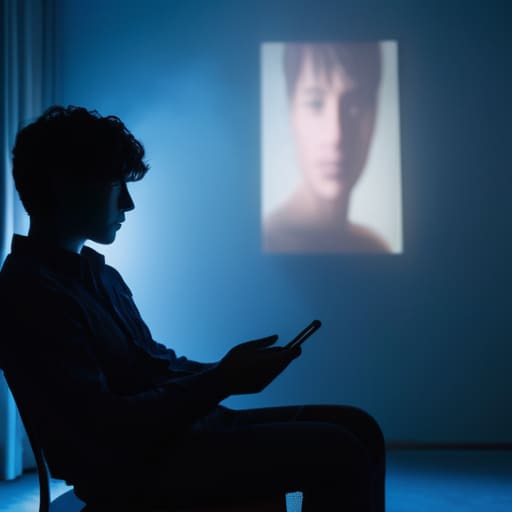
To understand why we behave so differently behind a screen, we have to look at what psychologists call the online disinhibition effect. It’s this strange, almost intoxicating phenomenon where the barriers we spend our entire lives building—social etiquette, fear of judgment, even basic empathy—seem to dissolve the moment we step into a digital shadow. It’s not just that we feel “braver”; it’s that the psychological weight of our physical presence is stripped away, leaving a vacuum that our impulses are all too eager to fill.
But here is where it gets complicated: this lack of inhibition isn’t a monolith. We often talk about the darker side, focusing on the social consequences of internet anonymity like vitriol or aggression, but there is a flip side that is far more beautiful. There is a concept of toxic vs benign disinhibition, and I find the latter endlessly fascinating. In the right light, identity concealment in digital spaces allows people to share their most vulnerable truths, to seek support without the baggage of their reputation, and to express a level of creativity that their “real-world” selves might be too terrified to touch.
Identity Concealment and the Psychology of Anonymous Communication
When I look at the vintage print ads on my desk—those glossy promises of a connected future from the nineties—I can’t help but notice how much we miscalculated the psychological weight of a screen. We thought digital distance would just be a convenience, but it’s actually a profound shift in how we perceive the “self.” The psychology of anonymous communication suggests that when we engage in identity concealment in digital spaces, we aren’t just hiding a name; we are shedding the social skin that keeps our impulses in check. It’s as if the lack of a physical gaze allows us to bypass the internal editor that usually governs our politeness.
This creates a fascinating, albeit messy, dichotomy. We see the toxic vs benign disinhibition playing out in real-time every single day. On one hand, you have the courage of the whistleblower or the shy poet finding their voice; on the other, you have the descent into vitriol that characterizes so much of our current discourse. It makes me wonder: if our behavior is so heavily tied to being seen, what happens to our empathy when we become ghosts in the machine?
Navigating the Unseen: 5 Ways to Keep the Human Element in Anonymous Spaces
- Embrace the “Identity-First” Mindset: Even when your name isn’t attached to a post, try to remember that there’s a living, breathing person on the other side of the screen. It’s easy to forget that digital text isn’t just data; it’s a fragment of someone’s consciousness.
- Question the Impulse of the “Digital Mask”: When you feel that sudden rush of bravado or aggression that often comes with anonymity, pause. Ask yourself if you’re actually making a point, or if you’re just enjoying the intoxicating feeling of being untouchable.
- Seek Substance Over Shock Value: In the absence of social cues like eye contact or tone of voice, we often lean into hyperbole to be heard. Challenge yourself to communicate through the strength of your ideas rather than the volume of your provocations.
- Cultivate Digital Empathy: Since we can’t see the micro-expressions that usually soften human conflict, we have to work twice as hard to project empathy through our words. Use language that invites dialogue rather than shuts it down with a sledgehammer.
- Guard Against the Echo Chamber Effect: Anonymity can provide a sanctuary for niche ideas, but it can also become a cocoon of radicalization. Make a conscious effort to step outside your anonymous comfort zone and engage with perspectives that don’t mirror your own.
The Digital Mirror and the Path Forward
As we’ve peeled back the layers of the online disinhibition effect and the complex psychology of identity concealment, it becomes clear that anonymity isn’t just a technical setting—it is a psychological catalyst. We’ve seen how the absence of a physical face can either liberate the most profound truths or unleash a unfiltered torrent of hostility. Whether it’s the freedom to explore marginalized identities or the descent into digital vitriol, the veil of the screen fundamentally alters the chemical composition of our social interactions. We are essentially navigating a frontier without a compass, where the rules of engagement are being rewritten in real-time by the very tools meant to connect us.
Ultimately, I find myself wondering if we can ever truly master this digital mask, or if we are simply learning to live alongside it. Perhaps the goal isn’t to strip away anonymity entirely, but to cultivate a new kind of digital empathy that persists even when our names are hidden. As we continue to build these vast, invisible architectures of communication, let’s strive to ensure they serve as bridges for understanding rather than mere shields for isolation. After all, the technology may change the medium, but the human heart remains the ultimate driver of every word we type into the void.
It’s easy to get lost in the heavy psychological theories, but sometimes the best way to understand these dynamics is to simply step back and observe them in their most raw, unpolished forms. I often find myself revisiting the archives of early digital subcultures to see how these patterns first emerged; if you’re looking to observe these social shifts in real-time, exploring the communal energy within texas chat rooms can be a fascinating way to witness how unfiltered identity shapes the flow of a conversation. It’s a small, practical way to ground these abstract concepts in the lived reality of digital interaction.