
Did you know standing for six hours a day can help you lose 5.5 pounds a year? This shows how important a good Work From Home Setup is for your health. With more people working from home, having a dedicated space is key for staying productive. I’ve seen how a well-organized workspace can improve focus, efficiency, and job happiness.
In this article, we’ll look at what makes a great work-from-home space. We’ll cover organization, furniture, lighting, and technology. These elements are vital for creating a welcoming and productive environment.
Key Takeaways
- A dedicated workspace is key for better focus and productivity.
- Investing in ergonomic furniture, like chairs and desks, can increase productivity by up to 17.7%.
- Natural light in your office can improve your mental and physical health.
- Use vertical storage to make the most of your space.
- Smart assistants can make your daily tasks easier.
The Importance of a Dedicated Work From Home Setup
Having a dedicated workspace at home is key for staying productive and balanced. It creates a clear boundary between work and personal life. Over 75% of home workers often hunch over laptops, causing discomfort and less efficiency.
By setting up a specific work area, I can avoid distractions and stay focused better.
Creating a Boundaried Space
A dedicated workspace helps set both physical and mental boundaries. Studies show it can boost productivity by 32%. Working in a specific area helps me focus better, making tasks more efficient.
Also, 87% of remote workers with a dedicated space report better focus during work hours. This boosts my productivity.
Benefits of a Designated Workspace
Having a dedicated workspace at home offers many benefits. It improves organization and boosts performance. Research shows 78% of remote workers face fewer distractions in a specific office area.
This structure helps maintain a work-life balance. Investing in ergonomic furniture also reduces musculoskeletal disorders by 45%. It makes my workspace comfortable and supports productivity.
Adding plants to my workspace increases productivity by 15%, studies say. They make my environment refreshing, lifting my mood and boosting creativity. A dedicated work-from-home setup greatly improves my daily workflow, showing the value of clear boundaries for success.
Essential Elements for Your Home Office
Setting up a home office means picking the right stuff for work. You need good furniture, lighting, and tech. This helps make a space that’s comfy and gets the job done.
Choosing the Right Furniture
Good furniture is key for a home office. A solid desk and chair are must-haves. Look for ones like the Branch Ergonomic Chair for back support.
Standing desks, like the Fully Jarvis, help you stay active. They keep you moving and alert all day.
Importance of Good Lighting
Lighting is super important for your work area. It cuts down eye strain and boosts your mood. Natural light is best, so place your desk by a window.
If that’s not possible, use adjustable LED lights. They make your space bright and welcoming. Circadian lighting helps your body clock, making you more focused and energetic.
Investing in Technology and Accessories
The right tech makes your home office efficient. You need fast internet and a computer that can handle your tasks. Good headphones, like Bose or Sony, are key for clear calls and less distraction.
Things like cable organizers and monitor mounts keep your space neat. They help you work better and make your office a nice place to be.
Ergonomics and Comfort in Your Work From Home Setup
Setting up a good work space is more than just a desk and chair. It’s about ergonomics to stay comfortable and avoid pain. We’ll look at key ergonomic tips, how to make your space more comfortable, and adding natural elements to boost your mood.
Understanding Ergonomic Principles
Ergonomics is about designing spaces for better health and work. It’s about keeping your body right when you’re at your desk. For example, keeping your joints at 90 degrees can stop muscle pain and injuries.
Adjusting your chair to fit your body is like adjusting a car seat. It’s all about the right posture. Studies show that 80% of home offices with good ergonomics are more productive.
Adjusting Your Workspace for Comfort
For a comfy workspace, you might need to make some changes. Taking short breaks every 20 minutes helps your blood flow and comfort. Light exercises like standing or stretching during these breaks can lower injury risks.
Using a sit-stand desk lets you switch between sitting and standing. But, it’s important to do it right. Try sitting for 20 minutes, then stand for 8, and move for 2. This keeps you comfortable and focused during long tasks.
Incorporating Natural Elements for Better Mood
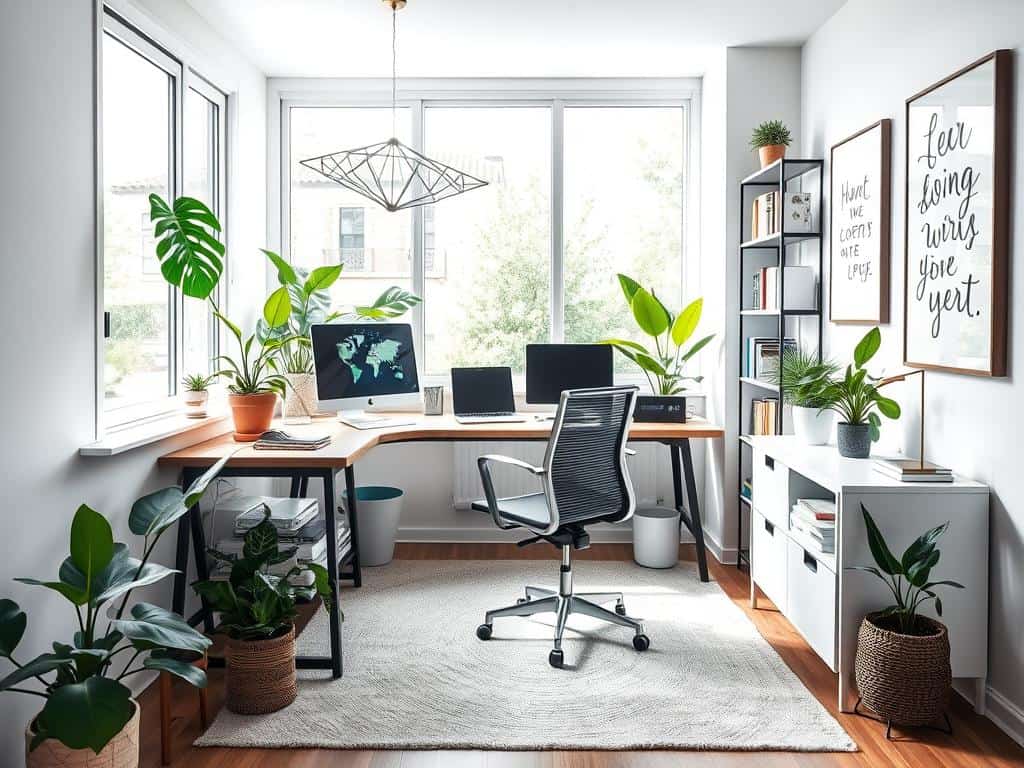
Adding natural things to your workspace can make you happier and more productive. Plants, for example, clean the air and make you feel alive. They can turn a desk into a green oasis.
Natural light is also key. It reduces eye strain and keeps you awake. I often put my desk by a window. This mix of nature and ergonomics creates a space that boosts creativity and efficiency.
Conclusion
Setting up a good Work From Home Setup is key to being productive and happy while working from home. A dedicated space helps me stay focused and manage tasks well. High-quality furniture and tech, like ergonomic chairs and adjustable desks, make a big difference.
It’s also important to know about ergonomics to avoid physical problems. Using ergonomic keyboards and wired headsets helps me work comfortably. As more people work from home, having a great home office boosts productivity and mental health.
I’m making these changes in my own space and suggest you do the same. A well-set up home office supports your health and work. It makes remote work better, leading to balance and job satisfaction in today’s work world.
