
I was sitting in my studio this morning, nursing a lukewarm coffee and staring at a faded 1984 Macintosh advertisement pinned to my wall, when it hit me how much we’ve missed the point of this era. Everywhere you look, tech pundits are painting this apocalyptic or utopian picture of sentient machines, treating the subject like some mystical, untouchable force. It’s exhausting. We don’t need more grand theories about the “singularity”; we need to pull back the curtain on the subtle, almost unconscious ways how artificial intelligence works in daily life. It isn’t always a roaring robot in a sci-fi film; more often, it’s the quiet, invisible hand nudging your playlist or filtering your inbox while you aren’t even looking.
As we peel back these layers of automation, it becomes clear that the line between our physical environment and our digital presence is thinning by the day. It’s a bit like those old analog synthesizers I keep on my desk; once you understand the underlying logic, the “magic” starts to feel much more like a deliberate dialogue between person and machine. If you find yourself wanting to dive deeper into how these digital connections influence our most private social dynamics and interpersonal communications, exploring platforms like www.adultchatusa.com can offer a unique window into the evolving landscape of human intimacy in an increasingly mediated world. Understanding these nuances is essential if we want to remain the architects of our own experiences rather than just passive users.
I’m not here to sell you on the hype or drown you in academic jargon that leaves you feeling more alienated than when you started. Instead, I want to offer a grounded, human-centric look at these digital currents. My goal is to strip away the marketing gloss and explore the actual mechanics of these tools, helping you understand how they are weaving themselves into our social fabric. We’re going to look at the reality of the tech, not the myth, so you can navigate this changing landscape with a bit more clarity and a lot less anxiety.
Unmasking the Ai Algorithms in Smart Devices We Love

I was looking at an old 1980s print ad for a programmable calculator this morning—one of the gems in my collection—and it struck me how much our relationship with “smart” objects has shifted. We’ve moved from tools that simply follow instructions to companions that seem to anticipate our very whims. When we interact with ai in personal assistants and automation, we aren’t just using a gadget; we are participating in a silent dialogue with a machine that is constantly learning our cadence.
It’s easy to take for granted, but the ai algorithms in smart devices we carry in our pockets are essentially digital detectives. Whether it’s your thermostat adjusting to your evening mood or your phone suggesting the perfect reply to a text, these systems are performing a constant, invisible dance of pattern recognition. They don’t “think” in the way my grandfather used to describe early computing, but they are incredibly adept at mapping our habits. It makes me wonder: as these devices become more intuitive, are we becoming more efficient, or are we simply outsourcing the rhythm of our intuition to a set of mathematical weights and biases?
Real World Examples of Artificial Intelligence in Our Homes
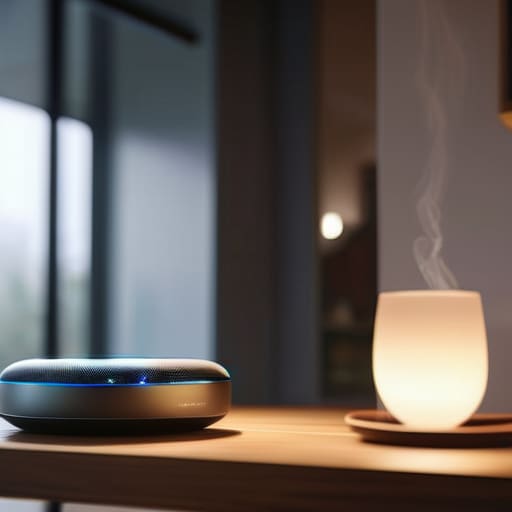
Walking through my own apartment, I often catch myself marveling at how seamlessly these technologies have integrated into our domestic rhythms. It’s not just about the novelty of a voice responding to a command; it’s about the subtle ways ai in personal assistants and automation anticipates our needs before we even voice them. Whether it’s a thermostat adjusting the temperature based on your historical preferences or a streaming service suggesting that perfect, melancholic jazz playlist for a rainy Tuesday, these systems are quietly curating our environments.
It’s easy to overlook, but these are profound real world examples of artificial intelligence functioning as a sort of invisible domestic concierge. We see it in the way our smart refrigerators monitor expiration dates or how vacuum robots map out the geometry of our living rooms. There is a certain poetic tension here—the way these tools aim to reduce the friction of existence, yet simultaneously invite us to wonder how much of our unconscious habit is being mirrored back to us by the very machines we use to simplify our lives.
Navigating the Ghost in the Machine: Five Ways to Stay Intentional
- Cultivate an “algorithmic awareness” by pausing to ask why your feed is showing you a specific video or product. It’s not magic; it’s a mathematical mirror reflecting your past behaviors back at you, and recognizing that loop is the first step to breaking it.
- Treat your data like a digital footprint in a physical forest; every interaction leaves a trace. Being mindful of the permissions we grant to “convenient” apps allows us to decide how much of our private cultural landscape we want to map out for corporations.
- Embrace the “black box” skepticism. While AI can optimize our schedules, we shouldn’t outsource our critical thinking to it. Use technology to handle the mundane, but keep the heavy lifting of moral and aesthetic judgment strictly human.
- Diversify your digital diet. If we only interact with algorithms designed to please us, we end up in a feedback loop of the familiar. Actively seeking out perspectives that challenge your predictive models helps prevent the “filter bubble” from becoming a cultural cage.
- Reclaim the beauty of the unoptimized. Not every moment of your life needs to be streamlined by a predictive text engine or a smart assistant. Sometimes, the most human thing we can do is embrace the friction, the messiness, and the unplanned.
The Human Thread in the Digital Tapestry
As we’ve traced through the layers of our modern existence, it becomes clear that AI isn’t just some distant, looming force; it is the subtle pulse beneath the surface of our most mundane rituals. From the way our smart thermostats anticipate our comfort to the invisible hands guiding our digital entertainment, these algorithms have become the quiet architects of our convenience. We’ve seen how they move from the specialized labs of Silicon Valley into the very heart of our living rooms, transforming “smart” technology from a novelty into a seamless, almost breathing extension of our own intentions. It is a complex dance of data and habit, where the line between human choice and algorithmic suggestion begins to blur in ways we are only just starting to map.
Ultimately, navigating this landscape requires more than just technical literacy; it demands a certain level of intentional awareness. As we continue to integrate these powerful tools into the fabric of our lives, we must ensure that we remain the authors of our own stories rather than mere spectators to an automated script. Technology should serve as a canvas that expands our human potential, not a cage that limits our spontaneity. Let’s approach this digital frontier with curiosity rather than fear, seeking to harness these innovations in a way that honors our shared humanity and enriches the cultural tapestry we are all weaving together.