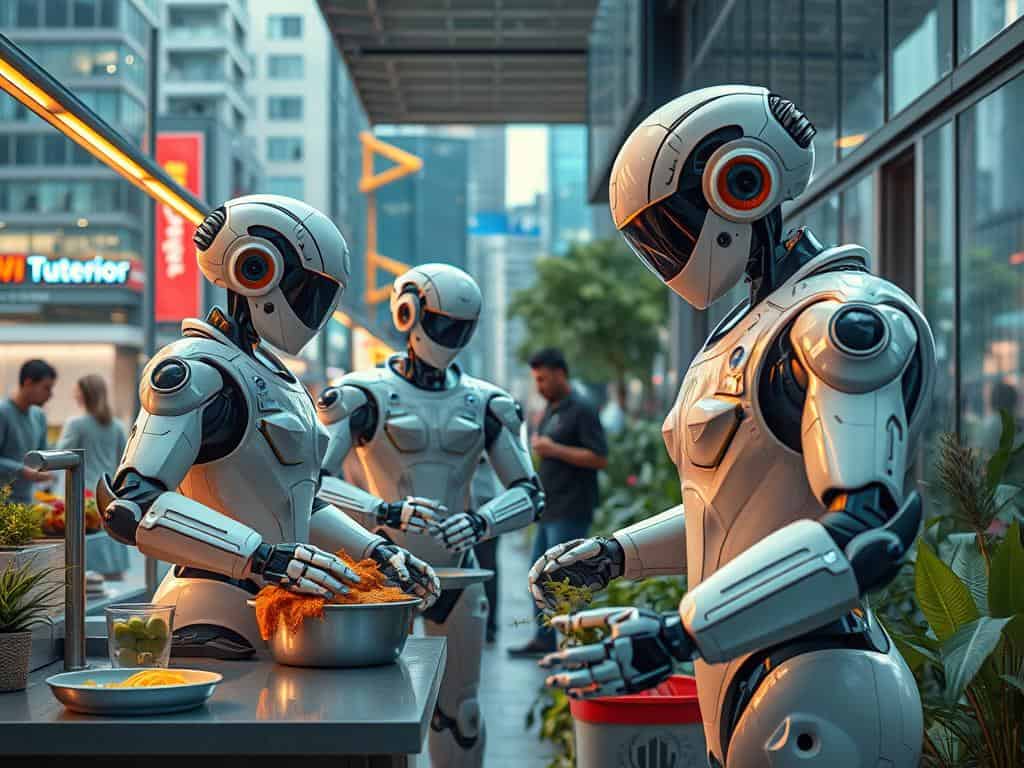
Did you know AI robots can do everything from simple chores to complex surgeries? This shows how far we’ve come in using robotics and AI. It all started in the 1950s with the Dartmouth Conference and the first robot, Unimate, in 1961. Over time, better AI and computers have made today’s robots very smart.
Companies like Boston Dynamics are leading the way in making robots move on their own. This makes us think about the endless possibilities of smart technology. It’s important to understand how these changes will shape our future.
AI in robotics is changing how we live and interact with each other. AI robots are making our lives easier and more efficient. This suggests a future where humans and machines work together in exciting ways.
Key Takeaways
- AI-Powered Robots are making our daily lives better, from home to healthcare.
- The mix of AI and robotics started in the mid-20th century but has grown fast.
- Companies like Boston Dynamics are leading in robot technology.
- Improvements in AI and understanding language are making robots smarter.
- It’s key to grasp the growth of AI robots to fully appreciate future advancements.
The Integration of AI in Robotics
The rise of AI in robotics is changing how machines interact with our world. AI-Powered Robots are now common in many industries. They make old ways of doing things more advanced and efficient.
These robots use artificial intelligence, like Machine Learning and Deep Learning. They can work on their own, learn from their surroundings, and talk to humans easily.
What Are AI-Powered Robots?
AI-Powered Robots are advanced machines that can do tasks that need human smarts. They can reason, solve problems, and talk to people. They learn from their environment thanks to Machine Learning and Deep Learning.
They can understand data and make smart choices. Natural Language Processing lets them have real conversations with us. This makes working with them better and more helpful.
The Evolution of Robotics
Robotics has come a long way from simple machines to today’s complex ones. At first, robots just did the same thing over and over. Now, with better sensors and computers, AI-Powered Robots can handle complex tasks on their own.
This change is making a big difference in fields like manufacturing, healthcare, and farming. Robots with AI are solving many problems. The future looks even brighter as AI keeps making robots better and more useful in many areas.
AI-Powered Robots Transforming Everyday Life
AI-Powered Robots are changing our daily lives, big time. They’re making Smart Homes and Healthcare better. These tech advancements make our lives easier, safer, and more efficient.
Smart Homes and Daily Convenience
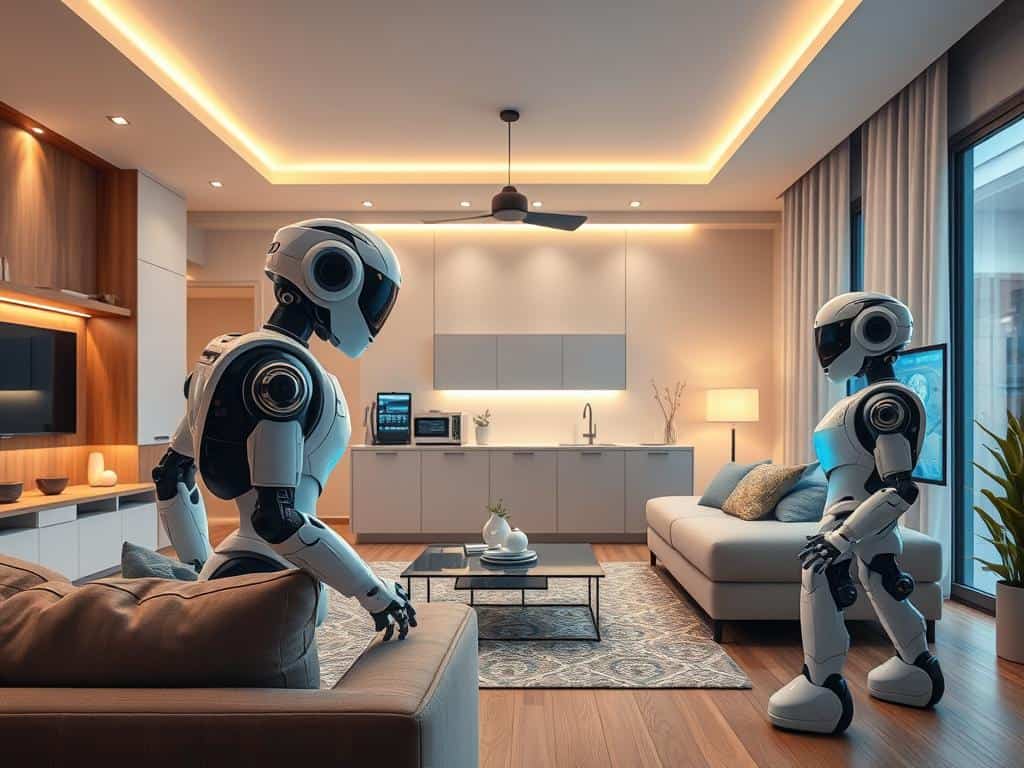
Smart Homes use AI and Robotics to make life simpler. They handle cleaning, security, and energy use on their own. For example, household robots are expected to grow from $3.3 billion in 2019 to $9.1 billion by 2024.
Products like the Stretch 3 by Hello Robot show how tech is getting more affordable. This is a big change from robots like the PR2, which cost around $400,000.
Robots in Healthcare
Healthcare is also getting a boost from AI-Powered Robots. Systems like the da Vinci have helped with over 6 million surgeries. They show how Robotics can make operations more precise.
New exoskeletons are being made for personal use. They help people do tasks that are hard for them. For example, one center used the Atalante X exoskeleton for 750 therapy sessions in under ten months.
Robots are now helping in many ways in healthcare. They assist in surgeries and act as virtual health aides. The innovation in this area is exciting and promising. It shows how Robotics can make healthcare better and more efficient.
Conclusion
The journey of AI-Powered Robots has been truly remarkable. They have changed our daily lives with smart tech. From making our homes smarter to improving healthcare, these innovations are game-changers.
By the end of the decade, AI could generate over a quarter of the global GDP. This shows how much we rely on these technologies. They are not just advancements; they change how we experience life.
The AI-driven robotics market is expected to grow fast, reaching US$36.78 billion by 2030. This growth shows how important these innovations are. They boost productivity in many industries, like cars and healthcare.
But, there are challenges like ethical issues and technical limits. Yet, the future of collaborative robotics looks bright. It shows that smart machines can work with us, making things safer and more efficient.
Looking back at robotics’ history, from the 1950s and 1960s, we see how far we’ve come. AI-Powered Robots have brought us many conveniences. But, we must also think about the ethics of these advancements.
It’s important to have good governance and rules as we move forward. The mix of AI and robotics could change our lives for the better. It offers us convenience, safety, and big improvements in many areas.
