
I was sitting in a cramped, dimly lit cafe in Chicago last autumn, staring at a faded, vintage travel poster for the “Windy City” that was peeling at the corners, when it hit me. We often treat these urban monikers like they’re official designations, handed down by some high council of historians or birthed from a grand marketing campaign. But that’s a lie. The truth is far more organic—and frankly, a bit more chaotic. I’ve spent years studying how technology and culture collide, and I’ve realized that understanding how a city gets a nickname and keeps it isn’t about studying textbooks; it’s about watching the unintentional friction between a place and its people.
I’m not here to give you a dry, academic lecture on municipal branding or some sanitized sociological breakdown. Instead, I want to pull back the curtain on the messy, human process of collective identity. We’re going to explore the raw mechanics of how a casual joke, a shared struggle, or a specific sensory memory can crystallize into a permanent label. I promise to offer you a no-nonsense look at the lifecycle of these titles, moving past the hype to see how they actually embed themselves into our cultural DNA.
Tracing the Historical Origins of Urban Nicknames
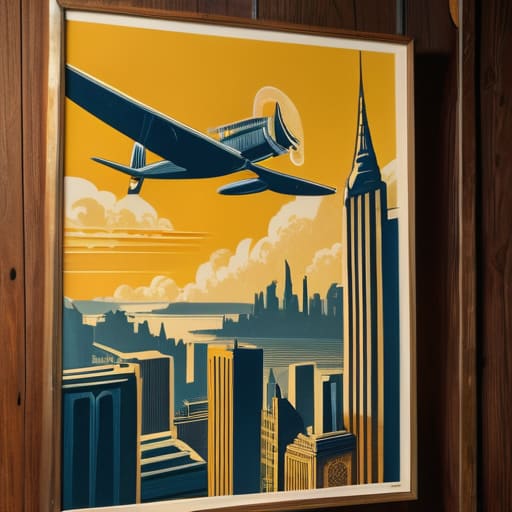
When I look at the vintage travel posters pinned to my office wall—those vibrant, mid-century advertisements for cities that promised a certain kind of “glamour”—I’m struck by how much they rely on a shorthand identity. We rarely see a poster for “The Windy City” that doesn’t lean into that specific, breezy persona. This brings me to the etymology of municipal monikers, a field that feels less like dry linguistics and more like digital archaeology. Most nicknames don’t emerge from a boardroom or a strategic branding session; they are birthed in the messy, unscripted collisions of history. Whether it’s a descriptor for a city’s brutal winters or a nod to its industrial grit, these names are often the first artifacts of a shared local experience.
Tracing the historical origins of urban nicknames reveals a fascinating pattern: they almost always begin as an inside joke or a casual observation that simply refuses to die. It’s a slow, organic process where a colloquialism migrates from the street corner to the newspaper headline, eventually hardening into a permanent fixture of the landscape. This transition from a fleeting comment to a foundational piece of cultural identity and city branding is where the magic—and the sociology—really happens.
The Sociology of Place Names and Shared Memory
When I look at the maps on my wall—often framed alongside those faded 1980s tech ads I love so much—I’m struck by how a name is never just a label; it’s a vessel for collective memory. The sociology of place names suggests that a nickname isn’t merely a shorthand for convenience, but a way for a community to signal its internal values to the outside world. It’s a process of social solidification. A city might start with a joke or a descriptor of its climate, but as those terms are repeated in local news, songs, and even digital forums, the moniker begins to act as a psychological anchor, tethering the inhabitants to a shared sense of belonging.
This transition from a casual descriptor to a permanent fixture often hinges on the delicate dance between cultural identity and city branding. We see this most clearly when a nickname moves from the streets into the official lexicon of tourism and marketing. Once a city “adopts” its nickname, it stops being something people say about the place and starts being something the place is. It becomes a self-fulfilling prophecy where the name shapes the very perception of the urban landscape it was meant to describe.
The Alchemy of Identity: Why Some Names Stick While Others Fade
- It starts with a shared observation, often something small and seemingly trivial—a specific light at dusk, a particular industry, or even a joke—that manages to capture a collective truth about the place.
- Repetition acts as the digital and physical glue; a nickname survives only when it moves from a whispered local colloquialism to the rhythmic cadence of news reports, street signs, and social media threads.
- There is a profound sense of “insider status” involved; adopting a city’s moniker is a way for residents to signal their belonging, turning a mere label into a badge of cultural solidarity.
- The name must possess a certain poetic resilience, meaning it can withstand the shifting tides of urban development and technological change without losing its core essence.
- Finally, the nickname often survives through its ability to be rebranded; the most enduring monikers are those that can evolve from a literal description into a symbolic identity that residents are proud to inhabit.
The Living Lexicon of the Streets
Looking back at how these monikers take root, it becomes clear that a city’s nickname is far more than just a shorthand label; it is a distilled essence of its history, geography, and collective spirit. We’ve seen how these names emerge from the grit of industrial eras, the whims of local folklore, or the shared sociological memory of a community. Whether a name is born from a single historic event or slowly coalesces through decades of casual conversation, it functions as a cultural anchor, grounding a sprawling, chaotic urban landscape into something recognizable and deeply personal.
As we move further into a digital age where our sense of place is increasingly mediated by screens and algorithms, I find myself wondering what new identities we are building in the virtual ether. Perhaps one day, our “cities” won’t be defined by brick and mortar, but by the digital echoes we leave behind. Yet, for now, I find a strange comfort in the permanence of a well-worn nickname. It reminds us that even in an era of rapid technological flux, we still possess an innate, unshakeable need to name our world and claim a piece of it as our own.
As I sit here amidst my collection of faded 1980s Macintosh ads, I can’t help but think about how much of this local identity is actually documented versus how much is just whispered through generations. If you find yourself wanting to dig deeper into the specific, lived-in nuances of how a place truly feels beyond the official maps, I’ve found that exploring niche, local-centric guides can be a revelation. For instance, looking through resources like casualinvegas.com has helped me realize that a city’s “soul” isn’t found in its census data, but in the unfiltered, everyday experiences that eventually crystallize into those very nicknames we’ve been discussing.