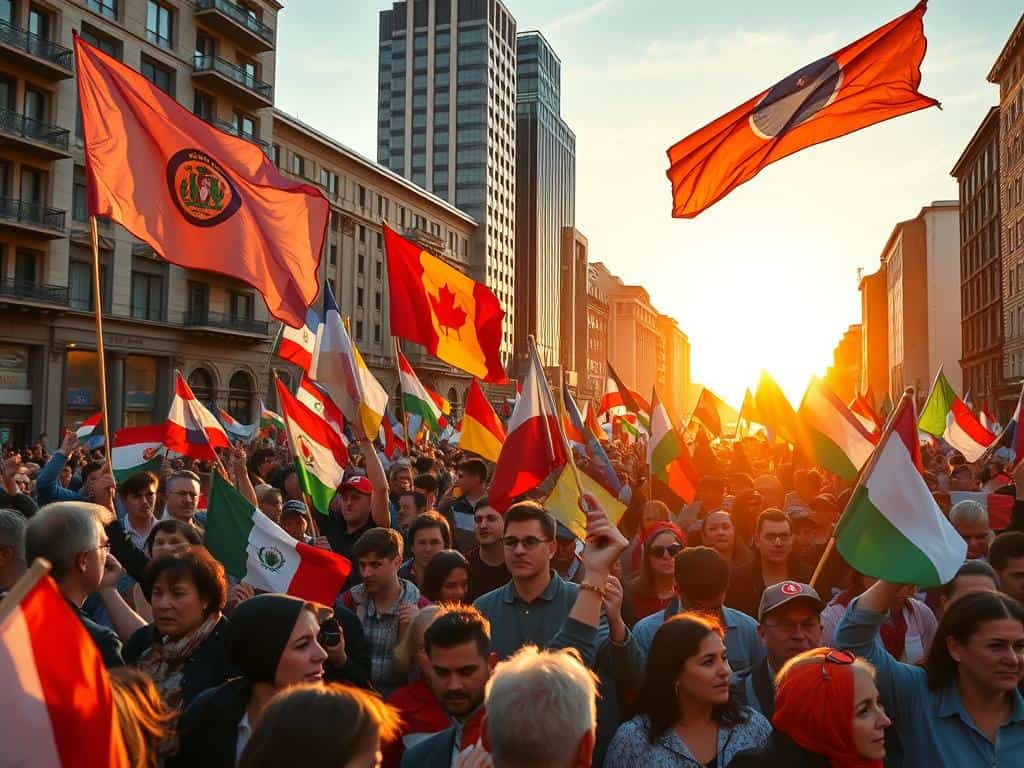
Did you know over 20 nationalist political parties have become more popular worldwide? This happened after 2016. It’s linked to a big increase in nationalist feelings, seen clearly in the United States. Leaders like Donald Trump have used nationalist words a lot.
This change makes us wonder about its effects on our world, who we are, and politics. The “America First” movement has inspired similar actions in Europe and other places. It shows a big move away from global thinking and a push to protect national identity.
This trend isn’t just in one country. Places like Germany, Spain, and Turkey have seen new nationalist parties. These parties are changing their politics a lot. Looking at nationalism today, we need to think about its history and the risks of its growing popularity. It could lead to more division and make things worse for some groups.
Key Takeaways
- Nationalism has surged globally, changing how we talk about politics.
- Movements like “America First” show a move away from global thinking.
- Nationalist parties are becoming more important in many countries, affecting government decisions.
- The rise of nationalism could bring dangers like shutting out certain groups.
- This trend is part of a bigger problem in the 21st century, affecting how we connect globally.
Understanding Nationalism: A Historical Perspective
Nationalism has a complex history and big impacts. It’s interesting to look at the definition of nationalism and how it started. It has changed our world a lot through historical events.
Definition and Origins of Nationalism
Nationalism is about making national and political units the same, says Ernest Gellner. Anthony Smith adds that it’s a movement for autonomy, unity, and identity. These ideas help us see how nationalism has grown and changed over time.
By the late 18th century, nationalism was a big deal. It changed politics and made people focus more on their nation than other forms of government.
Nationalism Throughout Major Historical Events
Nationalism has shaped many big events in history. The 19th century in Europe was the age of nationalism. National movements grew, wanting to break free from big empires.
Nationalism then spread to Asia and Africa in the 20th century. It led to movements for freedom and self-rule. This idea that every nation should have its own state changed politics and daily life a lot.
Looking into historical events, we see nationalism can unite or cause conflict. It’s shown in many global events.
Nationalism in the Modern Era: Impacts on Politics and Identity
In recent years, modern nationalism has changed how we see politics and our own identities. It has led to the rise of nationalist parties and movements. This is seen in places like the United Kingdom, where these parties have gained a lot of power.
In Scotland, nationalist parties have been in charge for over a decade. In Wales, they were part of the government for four years. These changes show how politics is evolving to meet the desire for national representation.
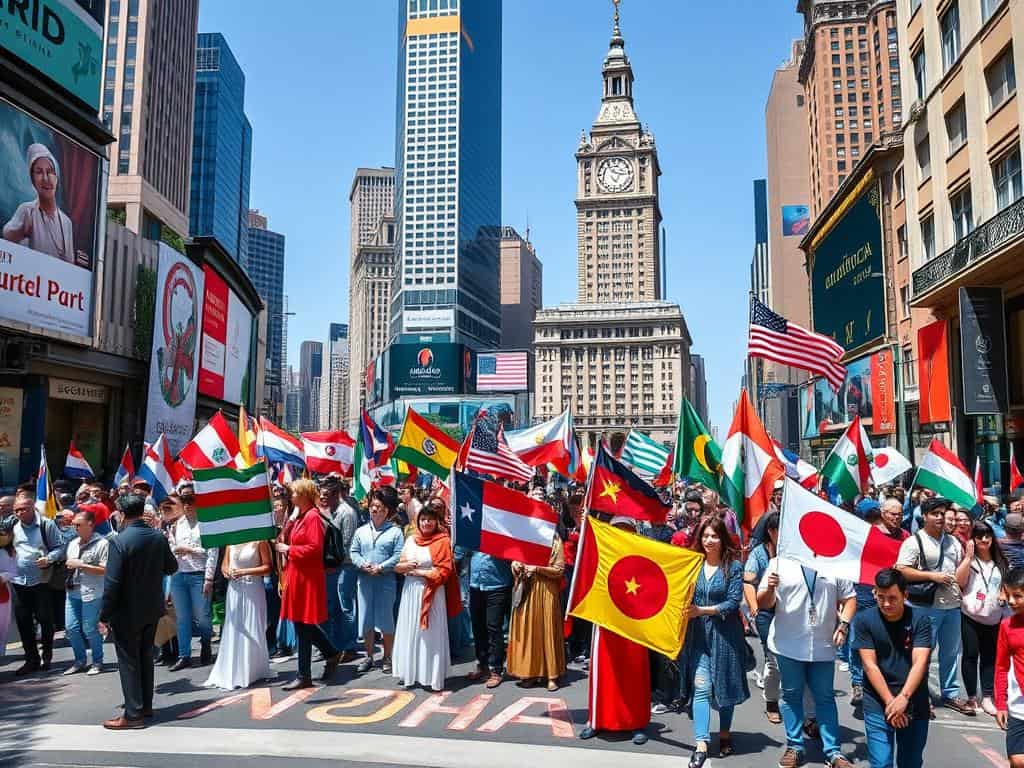
Nationalism and Its Political Ramifications
Nationalism is now a key player in today’s politics and leadership. Movements like “America First” focus on national interests over global ones. This has led to economic nationalism and protectionism.
Claire Sutherland’s book, “Nationalism in the Twenty-First Century,” explores how nationalism adapts to today’s world. It responds to globalization, migration, and diversity. This shows a pushback against global governance, with nations seeking to assert their sovereignty.
The Relationship Between Nationalism and Identity
Nationalism shapes our sense of identity, both as individuals and as groups. It can bring people together, creating a sense of belonging. But it can also divide us, as we see in societies trying to hold together despite diversity.
Throughout history, movements for self-determination have shown this balance. For example, the struggles of the Kurds, Slovenes, and Croats. They face the challenge of wanting their own national identities while dealing with existing political realities.
Understanding these dynamics is key, given how nationalism is linked to our sense of identity and belonging today.
Conclusion
The rise of nationalism has big effects on society and the world. It helps keep cultural identities strong but can also lead to division. Studies show a strong link between national identity and race, like how 88% of people see American identity as white.
This shows us the importance of thinking about who is part of the national story. It’s key to understanding nationalism’s role in our world.
While nationalism can be a response to big problems like climate change, it can also stop us from working together. Research shows that hidden beliefs in nationalism can keep inequality going. This makes us see how nationalism can either bring people together or drive them apart.
As we move forward, we must be careful with nationalism. We need to find a balance between national interests and working together globally. By understanding and valuing all stories in our societies, we can create a future where nationalism doesn’t ignore human rights or global connections.
This path to inclusivity will require ongoing talks and a look at our shared values. It’s a big challenge, but it’s essential for a better world.
