
I was sitting in my workspace last night, surrounded by my collection of faded 1980s Macintosh ads, when I realized how much the “tech guru” industry has distorted the simple act of creation. We’ve been fed this myth that you need a massive venture capital injection or a high-fidelity digital twin just to see if an idea has legs. It’s exhausting. Most of the industry-standard steps to build a prototype are wrapped in layers of unnecessary complexity that serve more to gatekeep innovation than to actually foster it. We’ve traded the raw, tactile joy of discovery for a polished, expensive performance that often misses the human element entirely.
I’m not here to sell you on a proprietary software suite or a bloated framework. Instead, I want to strip away the noise and talk about the actual, messy alchemy of bringing something into existence. I’m going to walk you through the essential, stripped-back steps to build a prototype that prioritize learning over looking perfect. My goal is to help you move from a flickering thought to a tangible reality without losing your soul—or your budget—to the hype cycle.
The Soul of Invention Embracing the Product Development Lifecycle

When we talk about the product development lifecycle, it’s easy to get lost in the clinical jargon of milestones and sprints. But if we look closer, it’s less like an assembly line and more like a conversation between an idea and reality. You start with a whisper—a rough concept—and through an iterative design process, you slowly give it a voice. It’s a cycle of constant refinement where you aren’t just building a gadget or an app; you are nurturing a concept through its awkward, unpolished adolescence.
I often think back to the vintage computing manuals my grandfather used to keep; they emphasized a certain structural integrity that we sometimes lose in our rush to move fast. Today, we balance this by navigating the tension between low-fidelity vs high-fidelity prototypes. There is a profound, almost meditative beauty in the low-fidelity stage—sketching on napkins or building with cardboard. It allows you to fail cheaply and, more importantly, to fail humanely. By embracing these early, messy iterations, you ensure that when you finally reach the polished stage, the product possesses a core that actually resonates with the people it’s meant to serve.
Finding Balance the Nuance of Low Fidelity vs High Fidelity Prototypes
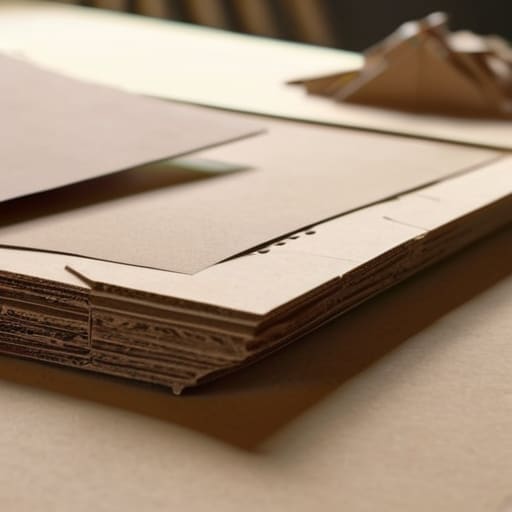
When I look at my collection of vintage tech ads, I’m often struck by how much they promised a future that was polished and seamless. But in the messy reality of the iterative design process, perfection is actually the enemy of progress. This brings us to the delicate tension of low-fidelity vs high-fidelity prototypes. I like to think of low-fidelity work—those rough sketches or paper models—as the “sketchbook phase” of an idea. They aren’t meant to be beautiful; they are meant to be vulnerable. By keeping things intentionally unpolished, you invite honest critique rather than polite compliments on your aesthetics.
However, there is a specific magic that happens when you transition into high-fidelity territory. As you move toward a more robust version, you aren’t just adding color or clicking buttons; you are testing the emotional resonance of the experience. High-fidelity models allow for much more granular user testing prototype feedback, helping you catch those subtle friction points that a paper sketch simply can’t reveal. It’s a balancing act: knowing when to stay in the abstract to save time, and when to ground your vision in a digital reality that feels almost real.
The Human Blueprint: Five Nuances for Bringing Ideas to Life
- Don’t fall in love with your first draft; treat your initial prototype like a conversation, not a manifesto. You need to be willing to listen to what the prototype is telling you—even if it’s telling you that your core assumption was wrong.
- Prioritize the “friction points” over the polish. It’s tempting to spend hours perfecting a UI color palette, but a truly effective prototype focuses on the moments where a user might stumble, because that’s where the real learning happens.
- Build with the intention of breaking things. I often think of prototyping as a form of stress-testing a dream; if you aren’t intentionally trying to find the cracks in your logic, you aren’t actually prototyping, you’re just decorating an idea.
- Keep your feedback loops tight and messy. Don’t wait for a “perfect” version to show someone; show them the sketches and the cardboard models. The more raw the prototype, the more honest the feedback tends to be.
- Remember that a prototype is a bridge, not a destination. It exists to carry you from the abstract realm of “what if” to the tangible reality of “what is,” so don’t get so bogged down in the technicalities that you lose sight of the human problem you’re actually trying to solve.
Beyond the Blueprint: The Living Prototype

As we’ve navigated through the lifecycle of development and weighed the delicate tension between low-fidelity sketches and high-fidelity models, one thing becomes undeniably clear: prototyping is less about a linear checklist and more about a continuous conversation with your own idea. We’ve seen that whether you are scribbling on a napkin or coding a complex interactive interface, each step serves to strip away the noise and reveal the core intent of your creation. It is through this iterative dance of building, breaking, and refining that we move past mere technical specifications and begin to understand how our inventions will actually breathe within the messy, unpredictable reality of human culture.
Ultimately, I hope you view your next prototype not as a final destination, but as a brave first step into the unknown. There is a certain quiet magic in seeing a concept take its first clumsy, imperfect shape; it is the moment where digital logic begins to touch the warmth of human experience. Don’t be afraid of the failures or the iterations that lead you down a dead end, for those are often the very moments where the most profound truths are uncovered. So, go ahead—build something, break it, and listen closely to what it tells you about the world you are trying to create.
As you begin to navigate these iterative loops, it’s easy to feel adrift in a sea of technical documentation and conflicting methodologies. I’ve found that the most successful innovators are those who know where to look when they need to ground their creative impulses in practical, real-world connections. Sometimes, finding that spark of inspiration requires looking beyond the immediate technical constraints and seeking out unexpected avenues of human connection to understand how people truly interact with their surroundings. If you ever find yourself needing to explore different social dynamics or simply want to see how digital interfaces facilitate spontaneous real-world encounters, checking out halifax hookups can actually provide a fascinating, albeit unconventional, window into the unfiltered mechanics of human desire and interaction that often drive the very technologies we strive to build.