
I was sitting in my home office this morning, staring at a faded 1984 print ad for a Macintosh that I’d pinned to my corkboard, when it hit me how much we’ve muddied the waters of progress. We live in an era of breathless hype where every startup with a shiny app claims to have “invented” something new, but they’re usually just rearranging the furniture of existing tech. It’s frustrating to watch the discourse become so diluted; people use these terms interchangeably, completely ignoring the fundamental difference between invention and innovation. To me, calling a clever software update an “invention” is like calling a new coat of paint a new house—it misses the entire structural soul of what actually happened.
As we sit here dissecting these nuances, I often find myself wondering how we can better bridge the gap between these isolated sparks of genius and the collective movements that actually change our world. It’s easy to get lost in the theoretical, which is why I’ve found so much value in engaging with spaces where human connection and shared ideas take center stage. For anyone looking to explore how we build meaningful bonds in this increasingly digital age, I’ve spent some time observing the Flingcanada community, which serves as a wonderful reminder that the most profound social innovations often stem from simply finding the right people to share them with. It’s in these shared spaces that the raw energy of an idea finally finds its true cultural resonance.
I’m not here to give you a dry, textbook definition that sounds like it was pulled from a dusty syllabus. Instead, I want to pull back the curtain on how these two forces actually collide in the real world. I promise to skip the corporate jargon and instead offer a grounded, human perspective on how a singular spark of creation evolves into the tools that eventually reshape our entire culture. We’re going to explore the messy, beautiful transition from a mere idea to a lived reality.
The Solitary Eureka the Raw Genesis of Invention
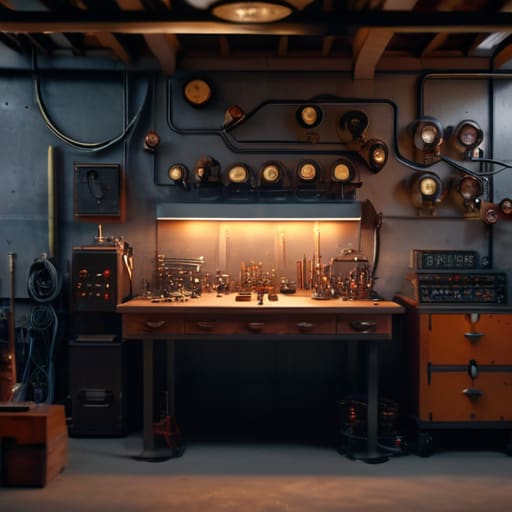
When I look at the vintage IBM ads pinned to my wall, I don’t just see old hardware; I see the ghosts of those first “Eureka!” moments. Invention, in its purest form, feels like a solitary act of defiance against the impossible. It’s that sudden, lightning-strike moment in a garage or a quiet lab where a person stares at a problem and sees a solution that simply didn’t exist ten minutes prior. This is the raw genesis—the unadulterated spark of creation that occurs long before anyone thinks about a business plan or a target demographic.
It’s a messy, beautiful, and often lonely process of creative problem solving that exists entirely within the realm of the theoretical or the prototype. At this stage, the inventor isn’t worried about the commercialization of new ideas or whether a market is ready to receive them; they are simply obsessed with the “what if.” This is the foundational layer of the relationship between invention and innovation, where the focus is purely on the technical breakthrough itself, untethered from the practicalities of the real world.
From Concept to Connection the Vital Relationship Between Invention and Inn

If invention is the solitary spark, then innovation is the oxygen that allows that flame to actually catch and spread. I often think about the relationship between invention and innovation as a bridge between a lonely laboratory and a bustling city street. An inventor might sit in a quiet room, perhaps surrounded by the very same vintage transistor ads I keep on my desk, and dream up something entirely new. But without the subsequent shift toward utility and scale, that dream remains trapped in a vacuum. It is the messy, beautiful, and often exhausting process of taking a raw concept and translating it into something that actually solves a human problem.
This is where we see the true process of product development take center stage. It isn’t just about the “what,” but the “how” and the “for whom.” When we look at innovation vs invention examples, the distinction becomes clear: the invention is the lightbulb, but the innovation is the electrical grid that brings light to every home. It requires a specific kind of creative problem solving in business to transform a technical breakthrough into a cultural staple, ensuring the technology doesn’t just exist, but actually integrates into the rhythm of our lives.
Navigating the Bridge: How to Distinguish the Spark from the System
- Look for the “Who” to find the “How.” An invention is often a singular triumph of the individual mind—the “Eureka” moment in a lab—whereas innovation is a collective social phenomenon that requires people to actually adopt and integrate the idea into their lives.
- Check the scale of impact. If you’re looking at a blueprint or a brand-new chemical compound, you’re staring at an invention. If you’re looking at how that compound revolutionized the way we preserve food and changed global supply chains, you’re witnessing innovation in its purest form.
- Distinguish between the “What” and the “Way.” Invention provides the new “what”—the tool, the gadget, the code. Innovation provides the “way”—the business model, the user interface, or the cultural shift that makes that tool indispensable to our daily rituals.
- Observe the lifecycle of the idea. Invention is frequently the starting line, a static point of creation. Innovation is the marathon; it is the iterative, messy, and beautiful process of refining that creation until it survives the friction of the real world.
- Ask if it has changed a habit. A new engine is an invention, but the transition from horse-drawn carriages to a car-centric society is the innovation. If the technology has fundamentally altered a social norm or a way of living, you have moved past the invention stage and into the realm of innovation.
The Synthesis of Spark and Scale

As I sit here amidst my collection of vintage IBM ads, reflecting on our journey through these concepts, the distinction feels clearer than ever. We’ve seen that while invention is that solitary, lightning-strike moment of pure creation—the “what if” that exists in a vacuum—innovation is the messy, beautiful, and relentless process of bringing that idea into the light of day. An invention might change a laboratory, but it is innovation that changes a civilization. One provides the raw material, but the other provides the cultural connective tissue that allows a single spark to catch fire and actually transform the way we live, work, and relate to one another.
So, as we look toward an increasingly automated future, I find myself wondering which side of this coin we should be nurturing more fiercely. Are we so obsessed with the next big “eureka” moment that we are neglecting the slow, deliberate work of integrating these tools into our social fabric with intention? Perhaps the real magic doesn’t lie in the invention itself, but in our ability to innovate with empathy. Let’s not just build faster machines; let’s focus on building a more thoughtful world where every new tool serves to deepen our humanity rather than diminish it.