I was sitting in my home office last Tuesday, surrounded by my collection of vintage IBM advertisements, trying to lose myself in a deep-dive research session. Just as I hit my flow, the neighbor’s lawnmower roared to life, followed by the rhythmic, intrusive thud of a nearby construction site. It hit me then: we live in an era of hyper-connectivity, yet we’ve completely lost our ability to cultivate true solitude. Most people assume that reclaiming your peace requires a massive renovation or a professional-grade studio setup, but that’s a total fallacy. I’ve spent weeks deconstructing the physics of sound versus the reality of our wallets, and I’ve realized that learning how to soundproof a room on a budget isn’t about expensive foam panels; it’s about understanding how sound behaves in a lived-in space.
In this guide, I’m stripping away the marketing fluff to give you a practical, no-nonsense roadmap for creating your own sanctuary. We aren’t going to talk about impossible architectural shifts; instead, we’ll focus on clever, tactile interventions—from repurposing heavy textiles to sealing those sneaky air gaps that let the chaos in. You’ll walk away with a realistic strategy to dampen the digital and physical noise of the world, allowing you to finally hear your own thoughts again.
Guide Overview
Tools & Supplies
- Measuring tape for dimensions
- Utility knife for cutting foam/sealant
- Caulking gun for applying sealant
- Weatherstripping rolls for door/window gaps
- Heavy blackout curtains for window coverage
- Acoustic foam panels or egg crates for wall dampening
- Door draft stopper for bottom gap seal
Step-by-Step Instructions
- 1. Start by performing a “sound audit” of your space, which is essentially a sensory investigation of where the noise is leaking in. Walk around the room with your eyes closed and try to pinpoint whether the intrusion is a low-frequency hum from a neighbor’s stereo or the sharp, piercing whistle of wind through a window frame. Often, we realize that the “noise” isn’t coming through the walls themselves, but through the tiny, overlooked gaps that act as highways for sound waves.
- 2. Tackle the “low-hanging fruit” by sealing your doors and windows with weatherstripping or heavy-duty door sweeps. I like to think of this as giving your room a digital firewall against the physical world; if air can get through, sound certainly can. You can pick up rolls of adhesive foam or rubber stripping at any hardware store for a few dollars, and it’s one of the most immediate ways to dampen the chaotic energy of the outside world.
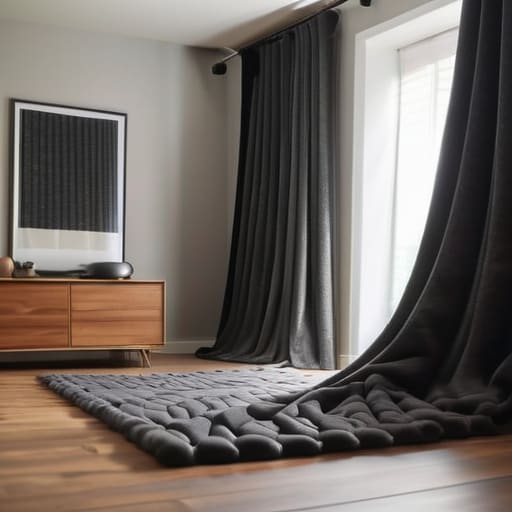
- 3. Address the “reverb” by introducing soft, porous materials that act as acoustic absorbers rather than reflectors. If your room feels like a hollow echo chamber, it’s because your hard surfaces—the floor, the bare walls, the ceiling—are bouncing sound around like a pinball machine. Layering thick, plush rugs on the floor or hanging heavy, velvet-style curtains over your windows can transform a sterile environment into a much more dampened, intimate sanctuary.
- 4. Utilize the power of “mass” by strategically rearranging your furniture to create a physical buffer. If you have a noisy neighbor on the other side of a specific wall, move your largest, heaviest bookshelf against that partition and fill it completely with books. This creates a dense, irregular surface that is incredibly effective at breaking up sound waves before they can penetrate your personal headspace.
- 5. For those of us who enjoy a bit of DIY experimentation, consider crafting your own acoustic panels using repurposed materials. You don’t need expensive studio foam; instead, try stretching thick fabric over old towels or even dense foam scraps tucked into wooden frames. It’s a bit of a creative hack that allows you to customize the aesthetic of your room while providing a much-needed layer of sonic insulation.
- 6. Finally, if you find that the structural vibrations of the building are still getting to you, look into decoupling your electronics. If you have speakers or a computer tower sitting directly on a hard desk, they are likely sending vibrations straight through the furniture and into the floor. Placing them on small, inexpensive isolation pads or even thick cork coasters can prevent that subtle, rhythmic buzzing that often disrupts deep focus.
Finding Peace With Cheap Acoustic Foam Alternatives

I was looking at one of my vintage IBM advertisements this morning—a piece celebrating the “quiet efficiency” of early computing—and it struck me how much our definition of quiet has shifted. Today, we aren’t just fighting the hum of a machine; we’re fighting the ambient chaos of a hyper-connected world. If you find yourself staring at those expensive professional panels and feeling a bit of sticker shock, don’t lose heart. There are plenty of cheap acoustic foam alternatives that don’t require a Silicon Valley budget. I’ve found that heavy, plush textiles—think velvet curtains or even a thick tapestry hung with a bit of intention—can act as surprisingly effective DIY sound dampening solutions by breaking up the hard surfaces that bounce sound around.
Sometimes, the most profound changes come from the most mundane objects. If you’re living in a space where you can’t tear down walls, you have to get creative with soundproofing materials for renters. I often suggest looking toward your bookshelf; a wall of books is essentially a natural, irregular diffuser that excels at reducing echo in small rooms. It’s about layering textures to absorb the energy before it can vibrate through your sanctuary.
Diy Sound Dampening Solutions for the Modern Soul
Sometimes, the most profound shifts in our environment don’t come from heavy-duty construction, but from the intentional layering of our personal history. I often look at the heavy, velvet curtains in my study—not just as aesthetic choices, but as functional shields. If you are navigating the constraints of an apartment, searching for soundproofing materials for renters, think about the textiles you already own. A thick, woven tapestry or even a well-placed bookshelf filled with unevenly sized books can act as a natural diffuser. These aren’t just decor; they are subtle tools for breaking up sound waves before they can bounce off those sterile, hard surfaces.
Beyond the walls, we often overlook the literal gaps where our peace leaks out. I’ve found that blocking noise through doors and windows is frequently a game of millimeters. A simple, heavy draft stopper at the base of a door can work wonders, much like how a single line of code can patch a massive vulnerability in a system. It’s about finding those small, strategic interventions that transform a chaotic space into a sanctuary for thought.
The Tactile Art of Muffling the Chaos: Five Low-Cost Interventions
- Soften the hard edges of your reality by layering heavy, velvet-like textiles over windows; it’s not just about blocking the street noise, but about creating a visual and auditory cocoon that feels intentional.
- Don’t underestimate the power of the “library effect”—filling your bookshelves with actual, physical books acts as a brilliant, organic diffuser that breaks up sound waves and adds a layer of intellectual warmth to your sanctuary.
- Address the invisible leakages by placing thick, plush rugs or even remnants of heavy carpet over hardwood floors, effectively grounding the room’s energy and preventing sound from bouncing erratically off the surface.
- Seek out the “mass” in the mundane by repositioning heavy furniture, like a substantial dresser or a stuffed armchair, against the wall shared with a noisy neighbor to create a makeshift, physical buffer.
- Seal the gaps where the modern world sneaks in by using simple weatherstripping or even heavy fabric door snakes; it’s a small, almost meditative ritual of closing the door on the digital and physical clamor outside.
The Architecture of Stillness
As we pull these various threads together—from the strategic placement of heavy bookshelves to the clever repurposing of soft textiles and DIY foam alternatives—it becomes clear that soundproofing isn’t about building a fortress. It’s about making intentional choices to curate your immediate environment. We’ve explored how even the most modest budget can yield significant results if we focus on absorbing vibration and sealing the invisible gaps where noise leaks through. Whether you’ve opted for thick rugs or repurposed acoustic materials, you aren’t just managing decibels; you are actively reclaiming the sanctity of your personal space from the relentless hum of the outside world.
Ultimately, this pursuit is about more than just technical acoustics; it is a way of reclaiming our cognitive sovereignty in an era that is increasingly loud, both literally and figuratively. In a world that demands our constant, fractured attention, creating a pocket of silence is a radical act of self-care. I hope these small, budget-friendly adjustments help you build more than just a quiet room—I hope they help you cultivate a sacred sanctuary where your thoughts can finally breathe. After all, in the quietest corners of our homes, we often find the clearest versions of ourselves.
As we layer these tactile, physical barriers to dampen the noise, I often find myself reflecting on how much our external environment dictates our ability to connect with others on a deeper, more vulnerable level. Creating a sanctuary of sound isn’t just about blocking out the hum of the street or the neighbor’s television; it’s about carving out a private stage where authentic human expression can actually breathe. I’ve found that when we finally achieve that sense of acoustic intimacy, it opens up new dimensions for exploring our identities and desires, much like how finding a safe space within the SexInAtlanta community allows for a different kind of unfiltered connection away from the chaotic static of the outside world.