I was sitting in my home office last Tuesday, surrounded by the comforting glow of a vintage 1980s Macintosh poster, when I saw it—a clip of a tech mogul making a statement that felt off. It wasn’t just a gut feeling; it was that unsettling realization that the digital veil is thinning. Most experts will try to sell you on expensive, high-end forensic software or complex algorithmic detection tools, but let’s be honest: for the rest of us living in the real world, that’s just noise. We don’t need a PhD in computer science to start learning how to identify deepfake videos; we need to sharpen our own human intuition and learn to spot the subtle glitches in the digital mask.
I’m not here to give you a lecture on neural networks or drown you in technical jargon that leaves you more confused than when you started. Instead, I want to share the practical, human-centric patterns I’ve picked up from years of watching the intersection of code and culture. My promise to you is a straightforward toolkit of visual cues and logical red flags that you can actually use in your daily scroll. We’re going to strip away the hype and focus on the nuanced realities of digital authenticity, so you can navigate this era with a bit more clarity and a lot less doubt.
Chasing Shadows Spotting Deepfake Visual Inconsistencies
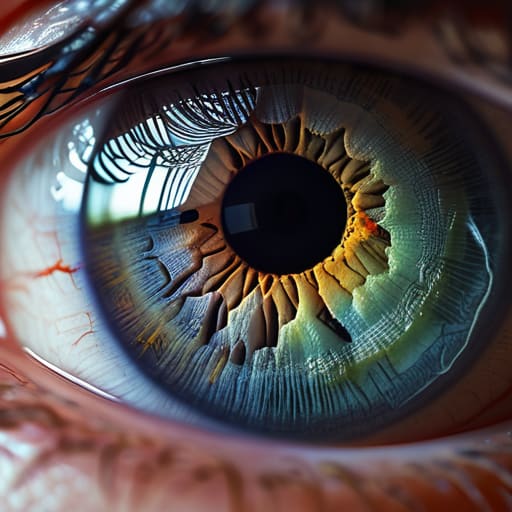
When I was looking through some old 1980s Macintosh print ads this morning, I was struck by how much we used to rely on the “grain” of a photo to prove its reality. Today, that grain is being smoothed away by algorithms. When you’re detecting synthetic media, your best weapon isn’t a high-tech scanner, but rather your own biological intuition. Start with the eyes. AI often struggles with the subtle, rhythmic dance of a human gaze; look for a lack of natural micro-movements or a strange, glassy stillness that feels uncanny.
Beyond the eyes, pay close attention to the boundaries where biology meets physics. I often find that deepfake visual inconsistencies hide in the periphery—the way a shadow falls across a jawline or how hair interacts with a moving collar. In many cases of artificial intelligence video forgery, the lighting on the face doesn’t quite match the ambient environment, creating a ghostly, floating effect. It’s as if the subject is wearing a digital mask that hasn’t quite been calibrated to the world around it.
Unmasking the Machine Detecting Synthetic Media in Motion

If visual glitches are the cracks in the porcelain, then the rhythm of movement is where the machine truly struggles to breathe. When I’m watching a clip, I find myself looking past the face and focusing instead on the cadence of life. Humans are beautifully asymmetrical; we tilt our heads with a certain weight, and our blinking is rarely a perfect, metronomic beat. In contrast, many examples of artificial intelligence video forgery suffer from a strange, liquid quality. The movement often feels too smooth, or perhaps jarringly stilted, as if the subject is sliding through a digital medium rather than occupying physical space.
It’s also worth tuning your ears to the soundtrack. We often get so caught up in the visual spectacle that we forget that sound is half the experience. I’ve started paying closer attention to the way a voice interacts with the mouth—is there a natural resonance, or does it feel detached? While detecting synthetic media is becoming an arms race, one of my favorite deepfake audio detection tips is to listen for unnatural breathing patterns or sudden, robotic shifts in pitch. When the eyes and ears tell two different stories, you’ve likely found the mask.
The Human Glitch: Five Intuitive Ways to Spot the Synthetic
- Watch for the “uncanny valley” in the eyes. Deepfakes often struggle with the subtle, wet shimmer of a real human eye or the way light dances across a pupil; if the gaze feels static or strangely hollow, your intuition is likely picking up on a mathematical approximation rather than a soul.
- Listen for the rhythm of the breath. Real speech is tied to the physical mechanics of the body—the slight rise of a chest or a subtle pause for air—but synthetic audio often lacks these organic, micro-rhythms, resulting in a flow that feels eerily seamless yet strangely breathless.
- Pay attention to the edges of the frame, specifically around the jawline and hairline. This is where the digital “mask” often meets the reality of the skin, and you might catch a shimmering distortion or a slight blur where the algorithm is struggling to stitch the fake face onto the real head.
- Look for the “lighting mismatch” between the subject and the background. In a real world, light is a cohesive force, but in a deepfake, the illumination on a person’s face might not quite align with the shadows or the light sources present in the rest of the scene, creating a subtle, jarring disconnect.
- Check for unnatural blinking patterns. While AI is getting better, many deepfakes still exhibit “blink-latency”—either blinking too frequently, not enough, or in a way that doesn’t match the emotional weight of what the person is actually saying.
The Human Filter in a Synthetic Age
As we’ve navigated through the uncanny valley together, it becomes clear that spotting a deepfake isn’t just about looking for a glitchy eyelid or a strange shimmer around a jawline. It’s about developing a more disciplined way of seeing. We have to look for those subtle inconsistencies in motion, the unnatural cadence of speech, and the way light fails to dance correctly on a synthetic surface. While the technology is evolving at a breakneck pace—much like the rapid shifts I witnessed during my years in Silicon Valley—our best defense remains a combination of technical scrutiny and healthy skepticism. We can no longer afford to be passive consumers of the pixels we see; we must become active investigators of the digital truth.
Ultimately, this isn’t just a battle of algorithms versus human perception; it is a fundamental question of how we preserve our shared reality. As machines become more adept at mimicking the nuances of human expression, our value lies in our ability to cherish the authentic. We shouldn’t let the fear of the fake rob us of our wonder, but rather let it sharpen our intellect. By staying curious and questioning the source, we ensure that even in an era of digital masks, the human connection remains something that can be felt, trusted, and truly known.
While we can train our eyes to catch the glitches in a pixelated smile or a flickering shadow, I’ve learned that true vigilance often requires a bit of community insight. Sometimes, the most effective way to stay ahead of these digital deceptions is to engage in active dialogue within niche spaces where people are constantly dissecting new trends and sharing what they’ve discovered. Whether you’re browsing a specialized forum or perhaps looking for a more personal connection through a cuckold chat to unwind and discuss the complexities of modern intimacy and digital presence, the key is to never stop questioning the authenticity of the spaces we inhabit.